
It's 11 PM. Your flight landed late. You're tired and hungry. The last thing you want is a check-in line.
Instead, you walk through the lobby, take out your iPhone, tap the door lock on the fourth floor, and walk into your room. Four minutes from curb to pillow.
This is not a concept video. It is a normal Tuesday night at a Hilton Garden Inn.
Hilton has issued over 100 million digital keys since launching its Digital Key program. Internal modeling and vendor commentary across the industry suggest that once you factor in printing, encoding, replacing, and disposing of plastic cards across billions of room-nights per year, the all-in cost per physical key card often reaches the low single dollars. That is not a rounding error. It is a real line item you can reduce.
The shift from plastic RFID cards to mobile wallet passes, specifically Apple Wallet and Google Wallet, is moving faster than most hospitality decision-makers expect. It is driven by hard numbers. Real adoption data. Concrete cost savings. Measurable guest satisfaction gains.
The scale of the shift: adoption data from major hotel brands
Hilton's numbers tell a clear story. Over 7,000 properties now participate in the Digital Key program. The company has reported that the program supports Hilton Honors engagement. Internal analyses indicate that app-using digital key guests are more likely to stay active in the program and book direct.
Marriott is close behind. Marriott Bonvoy mobile check-in penetration has climbed steadily since 2020. Mobile check-in is now available at thousands of properties worldwide. Hyatt's World of Hyatt app has expanded digital key capabilities across multiple brands, including many lifestyle and upper-upscale properties.
Industry data points in the same direction. According to hospitality technology analysts, the share of full-service hotel brands piloting or deploying some form of mobile key has more than doubled since 2019.
Two main catalysts explain the shift.
Apple added hotel key support to Apple Wallet in iOS 15, working with certified lock vendors to enable NFC-based room access. Google Wallet expanded its NFC pass ecosystem in parallel. Together, these moves lowered the integration barrier for digital keys. Independent and boutique hotels can now adopt the technology. It is no longer limited to mega-chains with large R&D budgets.

From 2018 to 2024, adoption has accelerated instead of creeping forward. We are in the middle of that curve.
Breaking down the real costs: what a key card actually costs a hotel
You feel key card cost in several places.
Branded RFID key cards often cost a few tens of cents each, for example around $0.20 to $0.40, depending on volume and specifications. Once you add staff time to encode and issue each card, internal models often add another $0.50 or more per guest to the cost of physical keys. When a guest loses a card or it stops working, some operational analyses put the effective cost of each replacement incident in the low single dollars. That includes staff time and interruptions.
These numbers compound quickly. At many properties, internal tracking shows that a meaningful share of key cards, often in the low double-digit percentage range, are lost, deactivated early, or replaced mid-stay. For a busy property, that becomes hundreds of replacement interactions per month.
There are also indirect costs. Front desk hours consumed by check-in procedures. The queue that builds between 3 PM and 6 PM during peak arrival windows while staff re-encode keys and handle complaints. The environmental impact of disposing of PVC plastic cards. These do not always appear as a clean line item on your P&L, but they reduce your margin.
Now compare that to wallet pass economics.
NFC lock hardware is a one-time investment that you amortize over several years. Creating and updating wallet passes via Apple Wallet or Google Wallet generally has near-zero marginal cost per issuance from the platform vendors. Properties that achieve a substantial share of guests using mobile keys to bypass the front desk often report clearly reduced peak-hour staffing pressure.
Consider a modeled scenario. A 300-room full-service hotel running at 70% occupancy can plausibly see on the order of $40,000 to $80,000 in annual savings from reducing physical key card workflows. This does not count revenue upside from using the wallet pass as a marketing surface. If you are a GM explaining the investment to ownership, those savings frame the conversation quickly.
How wallet-based check-in reshapes the guest journey
A wallet pass does more than replace a key card. It changes the entire guest journey from pre-arrival to post-checkout.
Pre-arrival. About 24 hours before check-in, the guest receives an email or SMS with a link to add their wallet pass. They tap, and it drops into Apple Wallet or Google Wallet. It is ready before they board their flight. The pass can show hotel branding, check-in time, and, once assigned, the room number.
Arrival and bypass. The guest arrives at the lobby. GPS-based geofencing or Bluetooth beacons, where implemented, can trigger a "You've arrived" notification on their phone. They walk straight to their room, tap the NFC-enabled lock, and enter. The pass can update dynamically with the assigned room number after check-in confirmation. Last-minute room changes are handled by server-side updates.
In-stay utility. The pass surface becomes a persistent touchpoint during the stay. You can show loyalty point balances, F&B promotions, spa booking links, and Wi-Fi credentials on the pass. No app download is required. No extra push notification permissions. The information sits in the wallet the guest already checks.
Checkout and loyalty loop. At checkout, the pass can update to show a post-stay receipt or loyalty summary. You can follow with a review prompt or a points redemption offer. The guest relationship continues through the same pass they used to open the door.
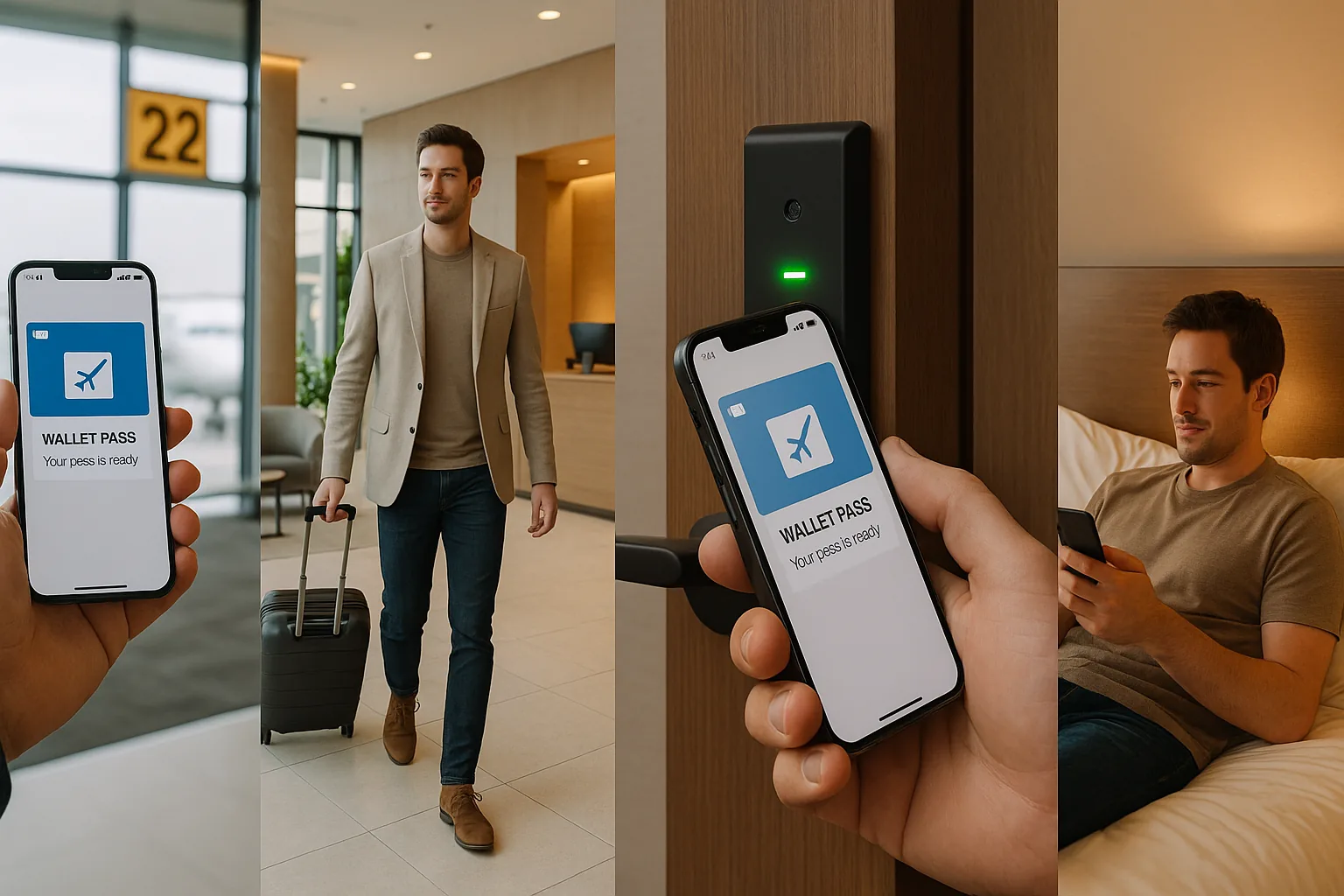
This full lifecycle, from booking confirmation to post-stay engagement, can run inside the native wallet app on the guest's phone. There are no downloads and minimal account creation friction. No forgotten passwords.
Case study: a mid-scale property goes wallet-first
Consider a 180-room lifestyle hotel, similar to a Courtyard by Marriott or an Aloft. It has no proprietary mobile app and no large technology team. The property decides to go wallet pass-first. It distributes digital keys through a Passmint-style infrastructure instead of building a custom app.
The integration architecture is straightforward. The Property Management System (PMS) fires a webhook on booking confirmation. That webhook triggers pass creation. The pass payload includes dynamic fields such as room number, check-in window, and NFC key credential. The pass is delivered to Apple Wallet via PKPass format and to Google Wallet via the Google Wallet API. The guest adds it in two taps.
In an internal case study of a property with this profile, the first six months showed results along these lines:
- Front desk transaction volume dropped during peak arrival hours
- Key card printing costs were eliminated for wallet-adopting guests, who made up a significant share of all check-ins
- Guest satisfaction scores improved, especially among business travelers and repeat guests
The key advantage is the zero-app-download approach. Major chains like Hilton and Marriott gate their digital key programs behind loyalty app downloads and enrollment. That works for frequent travelers who already commit to the brand. It misses the many guests who will never download a hotel app for a two-night stay. A wallet pass-first approach lets you reach those guests with almost no added friction.
The friction points you can't ignore
You still need to account for real obstacles.
NFC infrastructure gaps. Not every property has NFC-enabled locks. Many mid-scale and economy hotels still run older magnetic stripe or RFID lock hardware from vendors like Vingcard, ASSA ABLOY, or Dormakaba. Upgrading often costs hundreds of dollars per door, for example $200 to $600. A 300-room property might face a $60,000 to $180,000 hardware bill.
Guest demographic hesitancy. Smartphone penetration is high, but willingness to use a digital key varies by age and travel type. Surveys show that younger business travelers are far more willing to adopt digital keys than older leisure travelers. Some guests will still prefer physical cards. Some international guests may be less familiar with local wallet configurations.
Lock vendor and PMS fragmentation. Apple's hotel key capabilities and Google's hotel key integrations each require compatible lock firmware and cooperation with approved vendors. Not every PMS has native wallet pass APIs. For smaller operators, this integration work can look complex.
Brand app dependency. The most mature digital key implementations at Hilton, Marriott, and Hyatt all deliver keys through branded apps. Independent hotels and non-loyalty guests are often left out of these ecosystems.
One factor that helps is Apple's Express Mode. It lets supported keys work without unlocking the phone. On some newer iPhone models, certain keys can function for a period in power-reserve mode when the battery is low. This reduces some "dead phone" concerns, although exact behavior depends on the device and implementation.
Overcoming the barriers: a practical playbook
You do not need a massive tech budget or a full-chain rollout. You need a phased, practical strategy.
Start with pass-first architecture. Decouple digital key delivery from app downloads. Use Apple Wallet PKPass files and Google Wallet pass objects, sent by direct URL, email, or SMS. Any guest with a modern smartphone can add the pass in a couple of taps. No App Store visit. No hotel-app login screen.
Phase your hardware rollout. Upgrade NFC locks on your highest-volume room types and VIP floors first. Maintain physical card fallback for the rest of your inventory. Track wallet adoption rate by room tier. Use that data to build the ROI case for expanding upgrades across the property.
Turn the pass into a revenue channel. Use pass update APIs, such as those offered by Passmint, to push mid-stay offers, room upgrade prompts, or restaurant deals to the wallet pass. The key becomes a marketing surface that does not require separate notification permissions. Guests see the offer every time they open the pass to access the room.
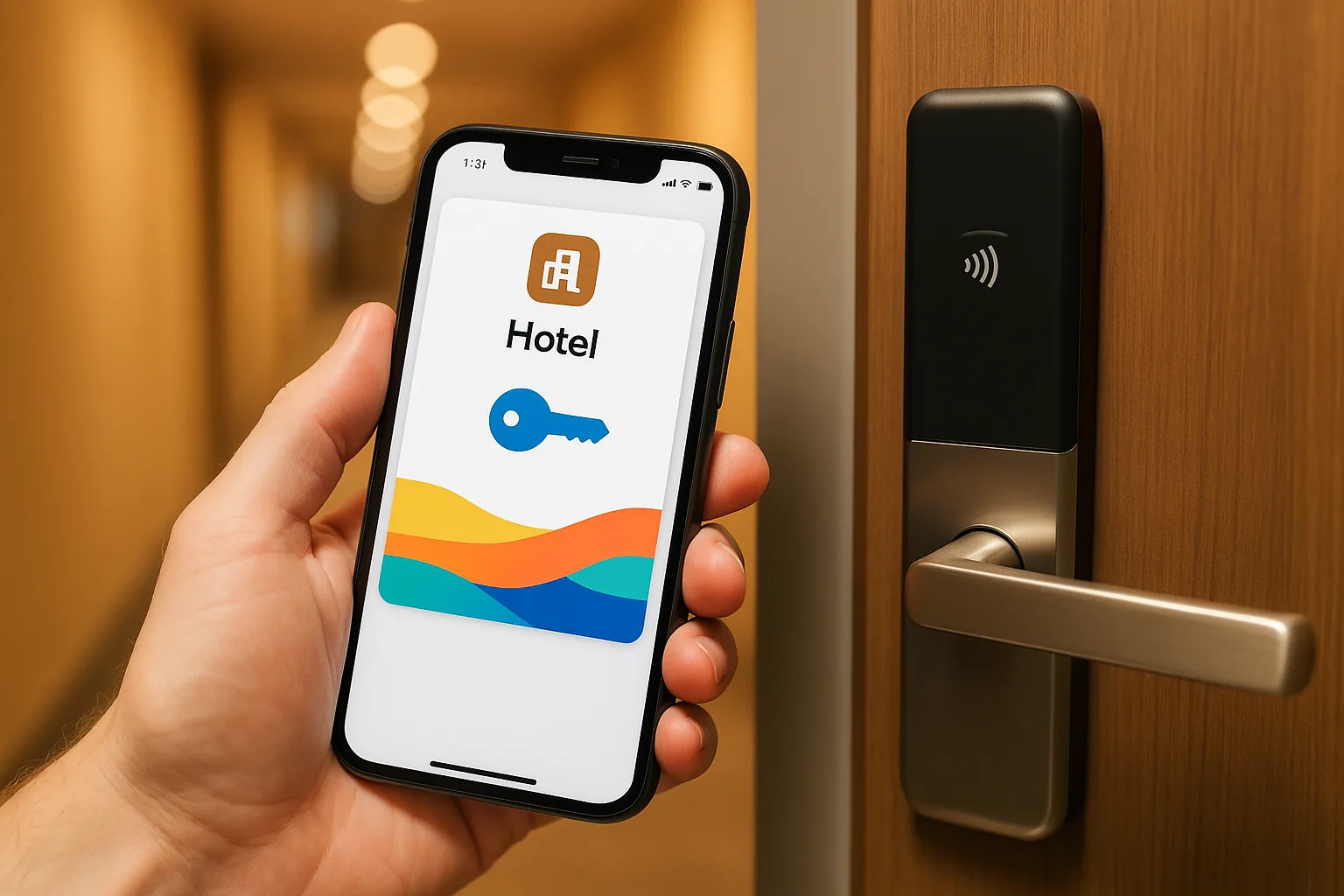
Level the playing field for independents. Boutique and independent properties can use third-party pass platforms like Passmint instead of building and maintaining their own PassKit and Google Wallet integrations. This cuts the technical lift. You still need to comply with Apple and Google developer and platform requirements. In some cases you must also work with certified lock vendors.
Measure what matters. Track these metrics from day one:
- Wallet pass add rate, for example targeting 40% or more of check-ins within 12 months
- Reduction in physical key card issuance
- Front desk bypass rate during peak hours
- Pass-driven ancillary revenue attribution
These numbers give your ownership group or investors a clear story.
The front desk queue is shrinking
The hotel industry's move from plastic key cards to Apple and Google Wallet passes is no longer experimental. It is financially quantifiable and operationally proven at major brands. Hilton alone has issued over 100 million digital keys. Across the industry, it is reasonable to say that hundreds of millions of digital keys have already been issued. In published case studies, some properties report annual savings in the tens of thousands of dollars as they shift more guests to digital keys. Guest satisfaction scores are rising at wallet-enabled hotels.
For hospitality technology leaders, the most effective version of this shift does not require a loyalty app, a six-figure tech budget, or a chain-wide mandate. A wallet pass-first approach is lightweight and app-free from the guest's perspective. It fits into the iOS and Android ecosystems your guests already use. It gives independent properties and challenger brands a way to compete on guest experience without matching Hilton's R&D spend.
For developers and product managers, the hotel digital key use case offers a clear, repeatable touchpoint. The pass is not a nice-to-have. It is part of the core operational system.
The plastic card is on its way out. The question for your property is not whether you adopt wallet passes. It is how fast you get there.
Primary sources
Common questions
Technical content writer, Passmint
Julio is a technical content writer at Passmint. He writes about Apple PassKit, the Google Wallet API, and what breaks when wallet passes meet production traffic.
More from Julio Song →