
A regional coffee chain with 12 locations spent 18 months building a branded loyalty app. The launch went well. Downloads looked promising. Then reality set in.
Twelve months later, fewer than 1 in 4 people who downloaded the app ever used it a second time. The app cost about $4,000 a month to maintain. Push notifications were increasingly muted or ignored as users limited app notifications. Every major iOS update triggered a multi week scramble for the dev team.
This is not an isolated failure story. Patterns like this are common among mid market brands.
For a wide category of mid market brands, the branded loyalty app often becomes one of the most expensive, underperforming tools in the marketing stack. A leaner, faster, higher converting alternative has been available in Apple Wallet and Google Wallet all along: the mobile wallet pass.
The loyalty app dream vs. the loyalty app reality
It is easy to see why branded loyalty apps became such a popular goal. Starbucks made it look effortless. Nike made it look cool. Sephora made it look inevitable. If those brands built apps, it feels like every brand should, right?
Here is the problem: survivorship bias.
The brands we associate with successful loyalty apps are not typical. They have eight and nine figure marketing budgets, dedicated mobile engineering teams, and entire departments focused on app retention. They do not represent the typical brand running a loyalty program.
The uncomfortable baseline reality: only a minority of loyalty app installs convert to active, recurring users. That means you are paying to acquire and maintain a largely dormant user base.
The perception says, "We have 50,000 app downloads." The operational reality might be, "We have perhaps 10,000 to 15,000 active users and six figures per year in overhead to serve them."
Before you can make a smart decision about loyalty infrastructure, you need to see the full cost picture. Most brands never do.
Breaking down the true total cost of ownership
The initial development budget is the number that gets approved in the boardroom. It is often the smallest part of the story.
Layer 1: Initial development. In many markets, a custom branded loyalty app often costs around $80,000 to $250,000 or more, depending on scope and vendor. White label platforms often charge setup fees in the low to mid five figures. Either way, this is the line item everyone remembers.
Layer 2: Ongoing OS compliance. Apple and Google release major OS updates annually and ship additional updates on a regular cadence. Maintaining App Store and Play Store compliance is a recurring development cost that many brands significantly underestimate in year one.
Layer 3: Push notification deliverability decay. iOS permission prompts, notification fatigue, and rising opt out rates often cause push engagement to degrade sharply over time. Many loyalty apps see push open rates fall from strong initial performance into low double digits or single digits within 12 to 18 months. This steadily undermines the primary engagement channel.
Layer 4: App Store fees, review cycles, and compliance risk. The 15 to 30 percent fee structures on in app purchases are well known. Less discussed are unpredictable review timelines and the risk of policy driven rejections or delisting that brands rarely factor into their projections.
Layer 5: Support, QA, and crash monitoring. Device fragmentation across Android alone spans thousands of hardware and OS combinations. QA and crash monitoring for a loyalty app is a non trivial, ongoing operational burden.

When you stack these layers, the cumulative cost for a mid market brand can easily reach several hundred thousand dollars over a three year period. That full number rarely appears in the original business case.
The install to active user funnel: where ROI often fails
Here is how the loyalty app acquisition funnel usually looks, step by step:
- Brand awareness of the app
- App Store page visit
- Install
- Account creation
- First loyalty action
- Recurring engagement
Each step has significant drop off. App Store discovery is weak unless you pay for it. Install to account creation often sees substantial abandonment, frequently leaving only around half to two thirds of installers completing signup. Account to first use drops further. Multiple app analytics benchmarks show that 30 day retention for retail apps is often only in the 20 to 25 percent range.
Then there is the problem of inactive loyalty members. These are users counted in the install base who have not opened the app in six months or longer. They still cost money: push infrastructure, cloud storage, customer records, backend maintenance. They show up in your numbers but generate little to no value.
Make the math concrete. If a mid market brand spends $180,000 per year on its loyalty app ecosystem and only 22 percent of installs are active, the effective cost per engaged loyalty member can easily reach $40 to $80 per year, depending on scale. For many brands, that is more than the incremental revenue those members generate.
So what if the install step, the single biggest source of friction, could be dramatically reduced or removed?
How wallet passes change loyalty economics
If you are less familiar with the model: Apple Wallet and Google Wallet passes are native capabilities on modern smartphones.
On iOS, Apple Wallet is a built in app. Customers can add a Wallet pass directly from an email, SMS link, website, or QR code. There is no separate app download and often no need to create a new account just to hold the pass.
On Android, Google Wallet is widely available in supported regions through the Play Store and may come pre installed on many devices, though not on every Android phone worldwide.
Because passes are managed through the wallet framework, once a pass template is built, the initial work is often measured in days instead of months. Issuing additional passes then has very low marginal cost, aside from any messaging or media spend you use to promote them.
The native OS integration is where things get interesting. Wallet passes are stored on the device in the Wallet app. They can trigger lock screen notifications and appear as relevant suggestions when the user is near a store or at a specific time. They support location based and time based relevance. They can be updated dynamically from your server, so changes to balances or offers are reflected on the pass shortly after you make them.
There is an important difference here. Wallet passes reduce some of the friction associated with standalone app push permissions. Pass related notifications are handled through the Wallet framework and OS notification settings, not a separate app.
Engagement data from many programs suggests that wallet related notifications can achieve much higher engagement. Many teams report 40 to 60 percent engagement on relevant notifications. Typical app push notifications for loyalty apps often settle into single digits over time.
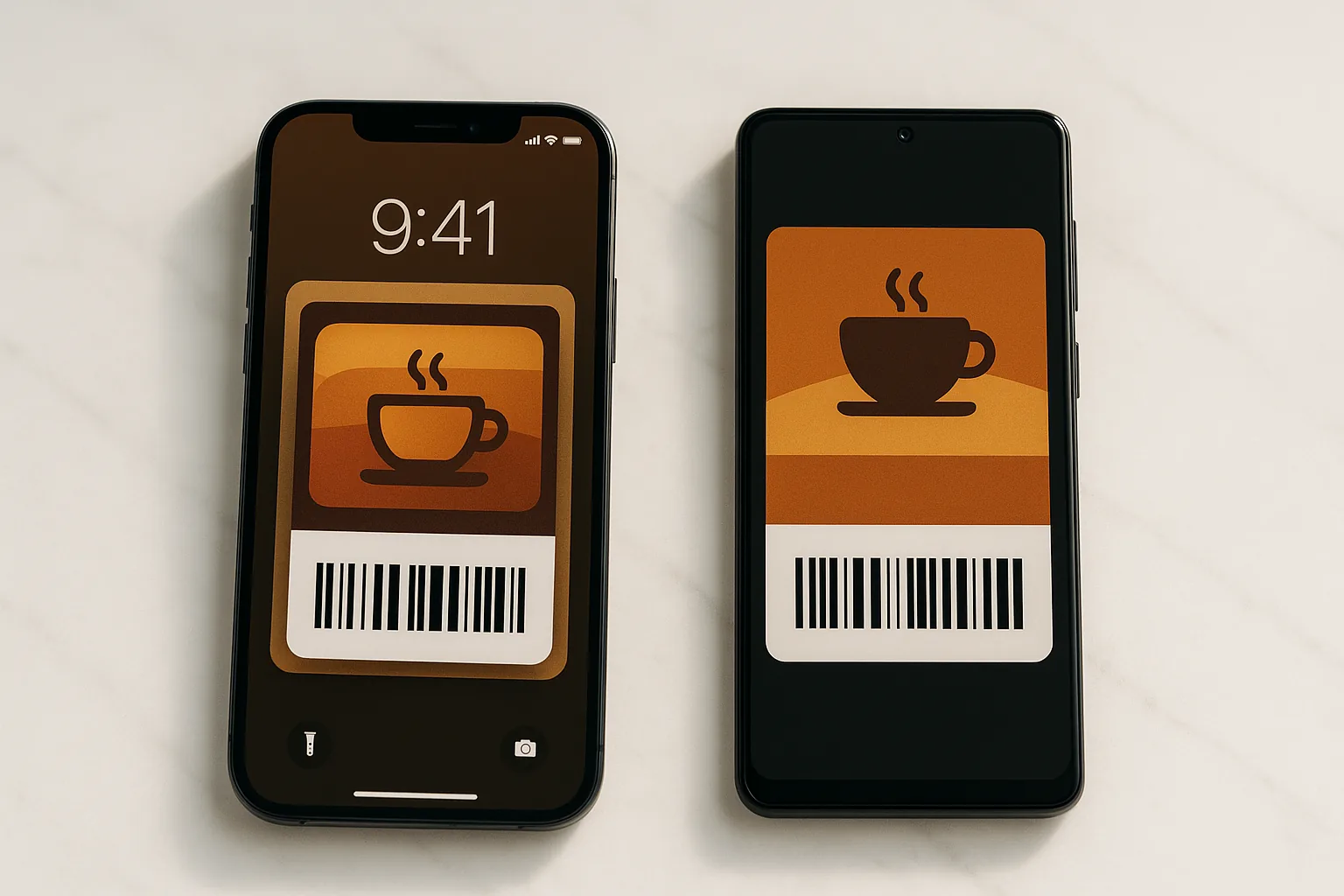
The total cost of ownership shift can be dramatic. For many mid market brands, a wallet pass loyalty program can be launched in the low five figure range and maintained for a fraction of the ongoing cost of a custom app, often with stronger engagement metrics.
Case study: a regional coffee chain cuts loyalty costs by 70%
Consider a representative mid market brand, based on an anonymized example. A regional coffee chain with around 20 locations, a loyal but time poor customer base, and a loyalty app that looked impressive in the quarterly report but was burning budget behind the scenes.
Before: Annual loyalty app total cost of ownership in the low to mid six figures. An active user rate under one third of total installs. Push notification open rates in the high single digits. The development team was pulled into multiple emergency patches per year for OS updates. Franchisees were frustrated with inconsistent app behavior across Android devices.
An internal audit showed the cost per engaged member at roughly $60 to $70 per year. Leadership asked the team to find a leaner model without losing the loyalty mechanics customers actually cared about: stamp cards, points, and exclusive offers.
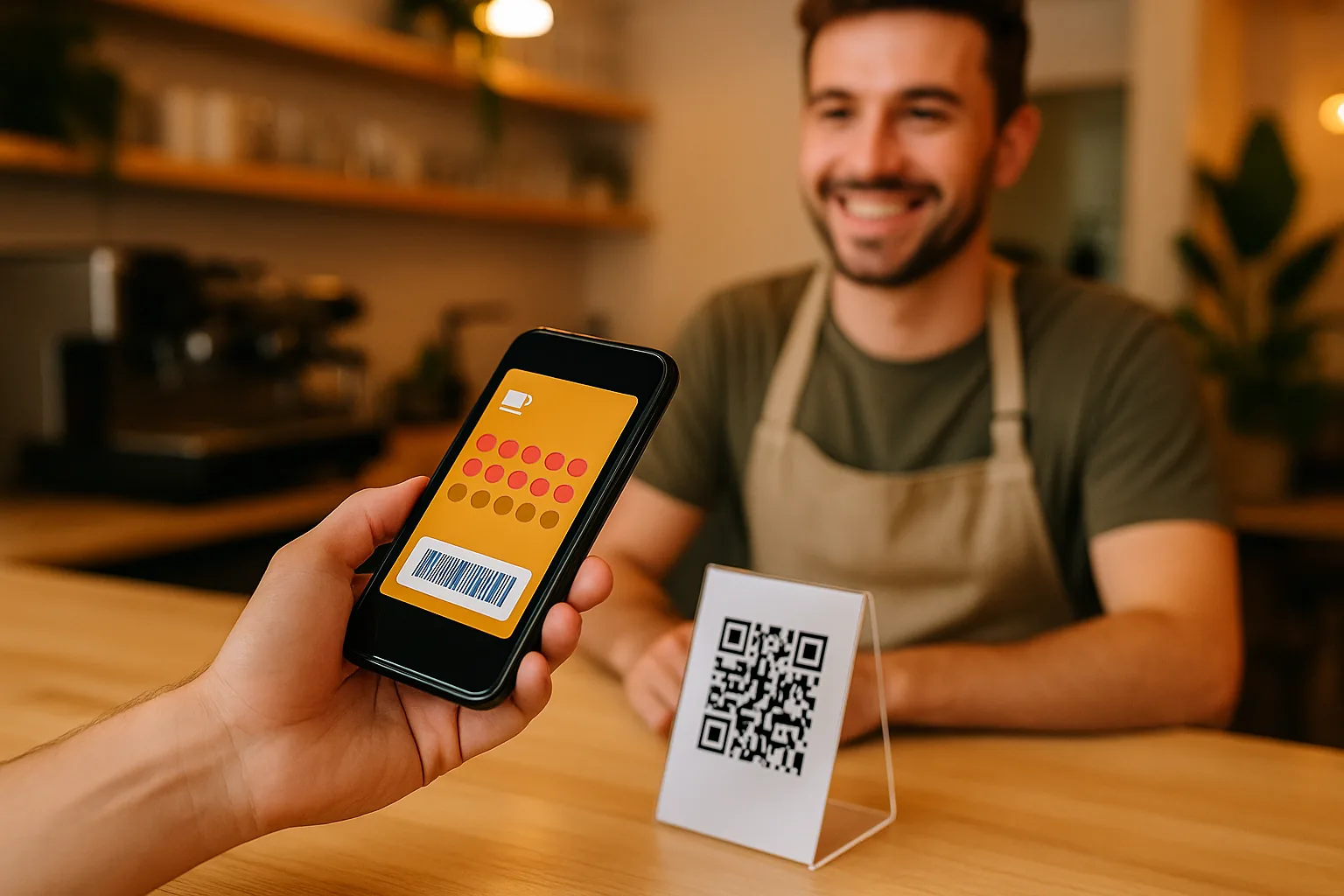
After: A full wallet pass loyalty program launched in a matter of weeks through a platform like Passmint. Distribution happened through QR codes at the POS and email campaigns to existing members. Within the first month, a majority of existing loyalty members had added the pass. Notification engagement climbed into high double digits. Annual program cost dropped by roughly 70 percent.
The wallet pass did more than cut costs. It improved every measurable engagement metric because it removed friction instead of adding it.
The side by side ROI framework: app vs. wallet pass
Here is a structured comparison across five dimensions that matter most for mid market brands. These are indicative ranges based on common market patterns.
| Dimension | Branded loyalty app | Wallet pass |
|---|---|---|
| Setup and development cost | Often around $80,000 to $250,000 or more for custom builds. Around $15,000 to $40,000 or more for white label setup | Often around $5,000 to $20,000 to get started |
| Ongoing annual maintenance | Often around $80,000 to $180,000 for OS updates, QA, and infrastructure | Often around $10,000 to $30,000, depending on scale and integrations |
| Customer acquisition friction | High. App Store visit, download, account creation | Low. Tap or scan to add from web, email, SMS, or POS |
| Notification engagement | Many apps end up with long term push open rates in single digits to low teens | Many wallet programs report 40 to 60 percent or higher engagement on relevant notifications |
| Update agility | App Store and Play Store review cycles. Days to weeks of delay | Server side pass updates. Changes appear on passes within minutes, with no app review process |
A quick note on fit. For brands at the scale of Starbucks or Nike, a branded app can still make strategic sense. This comparison is calibrated for mid market brands with roughly $5 million to $100 million in revenue, 5 to 50 locations, and no in house mobile development team.
You might be overpaying for a loyalty app if:
- Your active user rate is below roughly 35 percent
- Push open rates have dropped into the low teens or single digits
- You have had more than two emergency development patches in the last 12 months
- Your cost per engaged loyalty member exceeds roughly $30 per year
- Franchisees or location managers regularly report inconsistent app behavior
For this brand tier, a wallet based solution is often both the cheaper option and the strategically correct one, with better economics and better performance.
What to look for in a wallet pass platform
If you are evaluating wallet pass platforms, here are the capabilities that matter.
- Apple Wallet and Google Wallet support. You want both ecosystems, not just one.
- Near real time pass updates. Points balances, offer changes, and tier upgrades should update dynamically from your backend with minimal delay.
- Targeted notifications. Ability to trigger relevant notifications or pass updates for specific segments, such as location, tier, activity, or custom attributes, within Apple and Google wallet framework limits.
- Analytics dashboard. Visibility into installs, active passes, redemption rates, and notification engagement.
- POS and CRM integration. Connect to your existing systems like Square, Shopify, HubSpot, or Salesforce through APIs, webhooks, or middleware.
- No code or low code pass builder. Your marketing team should be able to create and modify passes without filing a development ticket.
If you are migrating from an existing app, the transition does not require abandoning your loyalty data. Pass platforms can ingest existing member databases and issue passes through email, SMS, or QR codes with minimal friction.
For technical evaluators, the differentiators worth reviewing include PassKit compatible APIs, webhook support, and documentation quality. These determine how smoothly the platform will integrate with your stack.
In many real world projects, a basic wallet pass loyalty program can go live in one to two weeks. A full migration from an existing app with data portability often takes four to eight weeks, depending on complexity.
Passmint was built specifically for this use case. It offers Apple Wallet and Google Wallet pass generation through a clean API and SDK. If you are exploring a switch, start on the free plan or browse the developer documentation to see how it fits your setup.
Back to that coffee chain
Return to the regional coffee chain from the opening. Eighteen months of app development. Twelve months of disappointing engagement. Thousands per month in maintenance. A development team perpetually on call for OS patches.
If they had issued wallet passes at the POS on day one instead of building a full app, they likely would have spent less, launched faster, reached more active members, and spent far less budget handling operating system updates.
The central thesis is simple. For many mid market brands, the branded loyalty app is not the default gold standard. It is an expensive pattern copied from companies with very different resources. Wallet passes do not represent a compromise. For the right brand tier, they are a more effective solution.
The gap is also widening. Apple and Google continue to expand wallet pass capabilities, including more dynamic and expressive passes, tap to add NFC flows, and tighter loyalty integrations such as loyalty IDs linked with Apple Pay. As these evolve, the economics are likely to tilt even further toward wallet passes. Brands that recognize this shift early will not only save money. They will also build stronger, more responsive loyalty programs with customers who actually engage.
Primary sources
Common questions
Technical content writer, Passmint
Julio is a technical content writer at Passmint. He writes about Apple PassKit, the Google Wallet API, and what breaks when wallet passes meet production traffic.
More from Julio Song →