
A major concert venue runs a post-event audit and finds something serious. Many tickets scanned at the gate trace back to a single original purchase. One buyer paid $180. The ticket was screenshotted and shared. The venue recorded one legitimate scan. Staff turned away a line of fans holding worthless images.
This scenario is now common. Screenshot fraud and static barcode duplication are a major problem in digital credentialing. Live events, transit, and couponing see it every day. Public estimates put ticket fraud losses in the low billions of dollars annually, with static code reuse as a core driver. The same pattern is now showing up in transit, retail couponing, and membership programs.
Over the last decade, Apple and Google have shipped platform features that change the security model for wallet passes. Apple Wallet supports push-based automatic pass updates. Google has built rotating barcode infrastructure into Google Wallet for supported pass types such as transit and event tickets. These are not niche developer tools. They change how digital credentials are secured at the OS level.
This article explains what these features mean for your business, why they matter now, and what you need to configure to get real fraud reduction.
The static barcode problem: why screenshot fraud is growing
A static barcode or QR code is just an image. Once someone captures it, they can duplicate it without effort. Screenshot. AirDrop. Group chat. The barcode stays the same.
This weakness shows up in every industry that issues digital passes:
- Event ticketing: Resold screenshots circulate in Telegram and WhatsApp groups. A single $200 ticket can create multiple fraudulent copies before gates open.
- Retail couponing: A QR coupon from a targeted campaign goes viral. Redemption volume jumps far beyond the intended cap.
- Transit passes: One rider taps through a turnstile, then texts a screenshot of their pass to a friend at a different station.
More businesses now issue wallet passes. Many still default to static barcodes because they are easy to implement. That creates a gap between pass adoption and pass security.
Physical credentials do not have this issue. A plastic hotel key card cannot be screenshotted. A physical concert wristband cannot be duplicated with a tap. Many digital passes with static barcodes offer less security than the physical items they replaced.
Apple and Google now provide platform-level tools that close this gap. Many issuers have not turned them on yet.
How Apple's push-based pass updates work (business view)
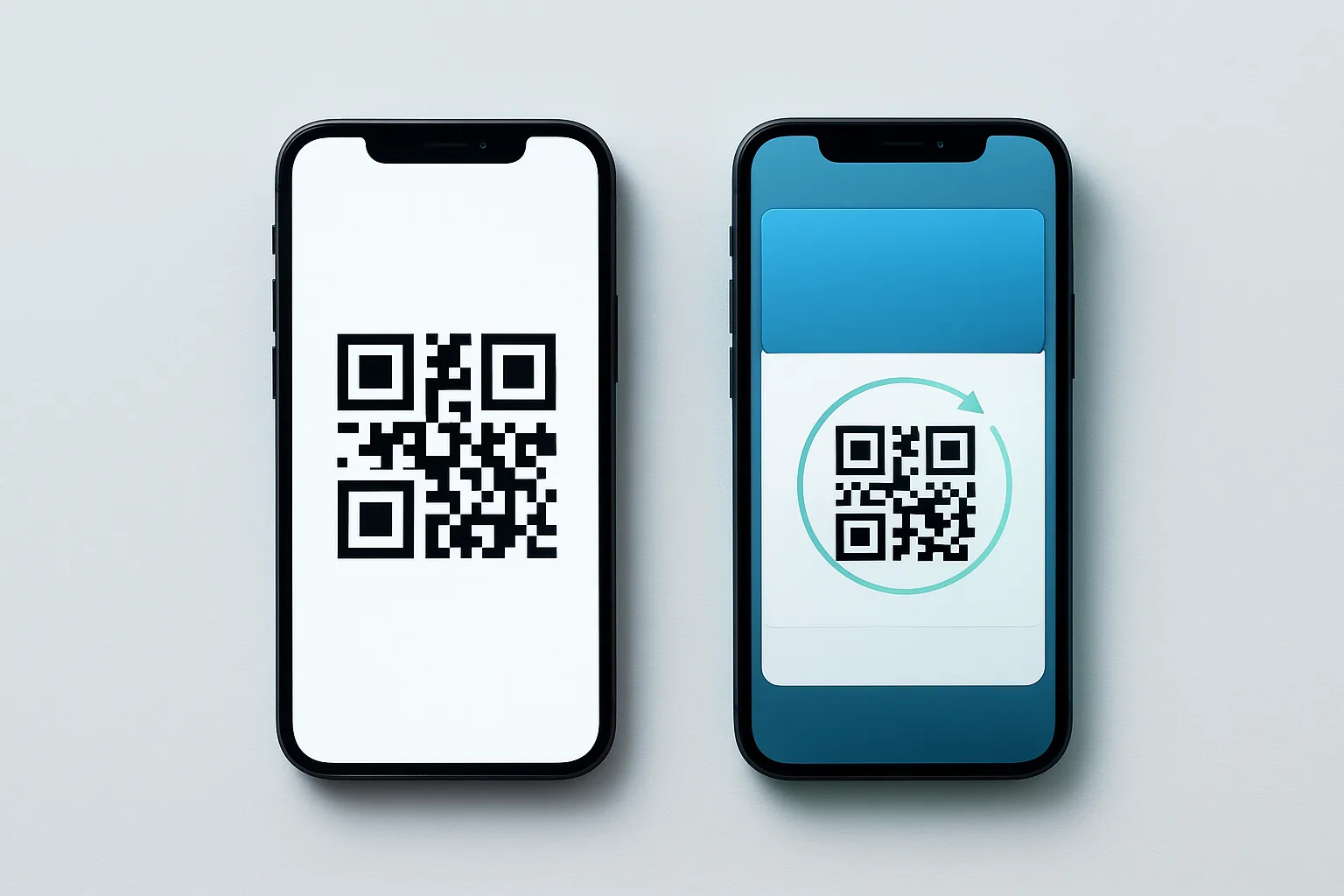
Apple uses APNs, the Apple Push Notification Service, to update passes. The same system powers app alerts and iMessage delivery.
For wallet passes, the flow looks like this:
- Your server sends a push through APNs to indicate that a pass has changed.
- The iPhone receives the push in the background with no alert.
- The device calls your web service endpoint to fetch the updated pass.
- Your server returns a fresh pass. It can include a new barcode value, updated metadata, or visual changes.
The word "automatic" matters. The user does not tap anything. They do not open an app. When they open the pass, the barcode they see may be different from the one they saw an hour ago. You control how often it changes.
That makes a clear strategy possible. You can implement time-rotating barcodes by regenerating the barcode value on each update. At scan time, you validate against the current expected value. Any screenshot of an older barcode becomes useless. It still looks like a valid pass, but the barcode no longer matches what your scanner expects.
There is one key requirement. You must run a reliable web service endpoint that serves updated pass data on demand. This is not a simple toggle in Apple Wallet. It is infrastructure. Your server needs to respond every time a device calls for an update.
If you do this well, every pass becomes a live credential that stays in sync with your systems. It is no longer a static image you lose control of the moment it is downloaded.
How Google's rotating barcodes change the game
Google Wallet uses a different architecture.
Instead of a network call for each refresh, Google can generate a new barcode value directly on the device on a set schedule. For some transit cases, the code rotates every few seconds. The system uses a shared secret between you and Google Wallet. A time-based algorithm, similar to TOTP (Time-based One-Time Password) apps like Google Authenticator, drives the rotation.
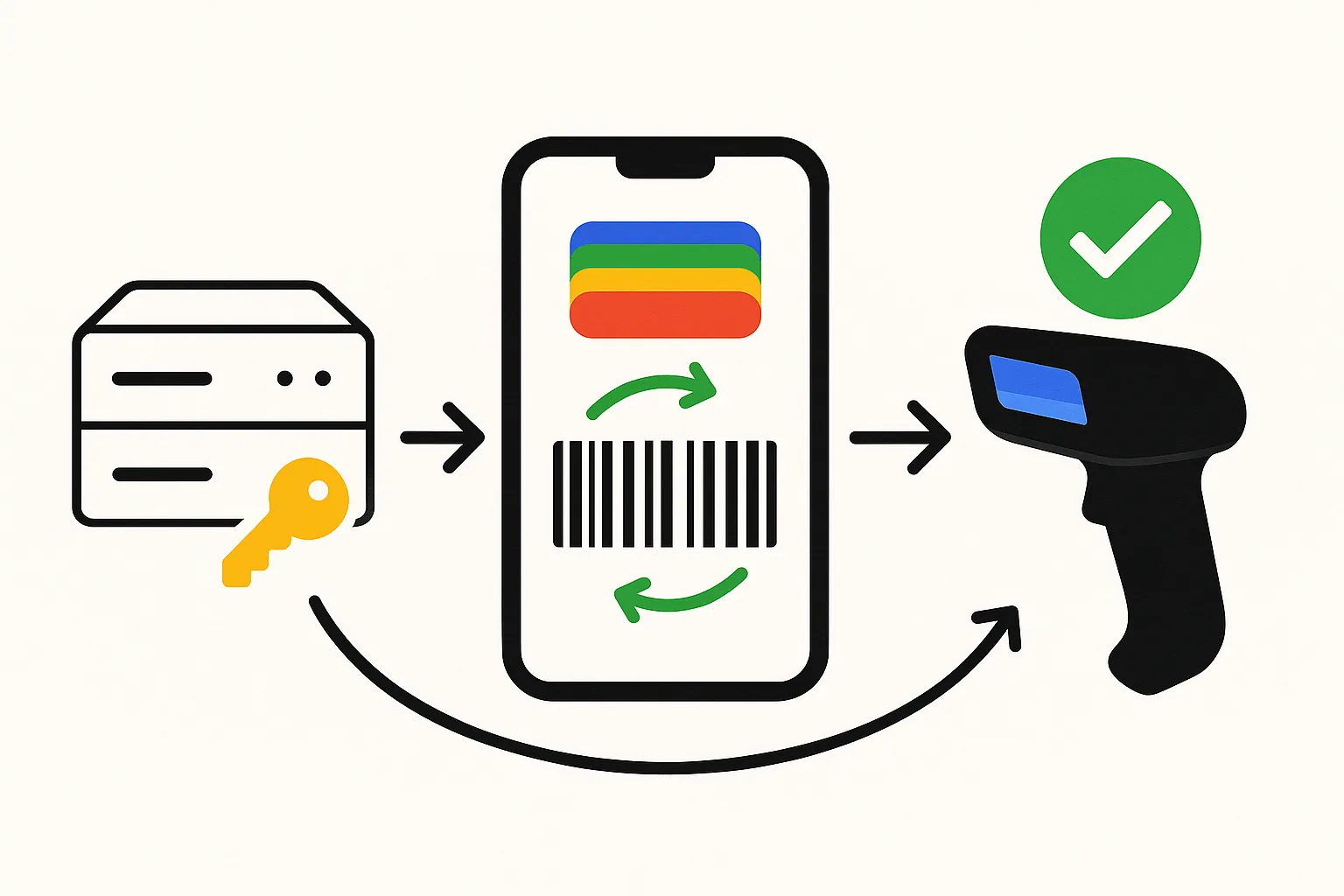
On-device rotation is powerful for offline use. Think about a subway turnstile underground with weak or no connectivity. The barcode keeps rotating on the phone. It does not need to contact your server. The scanner at the gate runs the same algorithm and checks that the barcode is current and valid.
From a business setup view, the flow looks like this:
- You provide a TOTP-like seed or shared secret to Google when you define the Wallet pass class.
- Google handles on-device rotation.
- Your scanner or backend implements the matching algorithm. It calculates the expected value for the current time and compares the presented code.
Google currently supports rotating barcodes for transit passes and event tickets through the Google Wallet API. Support is expanding to more pass types. If you already use the Google Wallet API, enabling rotation is mostly configuration and validator deployment, not a full rebuild.
The outcome is simple. A screenshot of a rotating Google Wallet pass stops working quickly. The image looks right, but the barcode has already expired.
Apple and Google anti-fraud mechanics side by side
The two platforms solve screenshot fraud with genuinely different architectures, and the difference decides where each one is strongest.
| Apple Wallet push updates | Google Wallet rotating barcodes | |
|---|---|---|
| Trigger | Your server sends an APNs push when the pass changes | Time-based rotation on a fixed schedule |
| Where the new value is produced | Your server, fetched by the device | On the device, from a shared secret |
| Network needed at scan time | Device must have fetched the update beforehand | None, rotation continues offline |
| Rotation speed | As often as you push | As fast as every few seconds for transit |
| Underlying mechanism | Push notification plus a pass update web service | TOTP-style algorithm over a shared seed |
| Strongest fit | Retail coupons, event tickets, any pass with connectivity | Transit gates and underground turnstiles |
| What you configure | A web service endpoint and APNs credentials | A TOTP-like seed on the Wallet pass class |
Industry impact: ticketing, transit, and retail couponing
These features target concrete fraud and revenue problems.
Event Ticketing
A festival or stadium with dynamic barcodes can shrink the secondary screenshot market. Each barcode at the gate was generated shortly before use and is valid only for a narrow window. Many platforms still issue static PDFs or wallet passes with fixed QR codes. Ticketmaster, for example, promotes its SafeTix dynamic barcodes. Many mid-sized or independent platforms have not followed yet. The result is uneven security across the market.
Transit
Transit agencies that adopt Google Wallet rotating barcodes can block casual pass sharing. Rotation windows are tight, often just a few seconds. Screenshot sharing between riders becomes unrealistic. For agencies expanding contactless fare payment, rotating barcodes can serve as a software-based alternative to dedicated NFC cards. This can lower card production and distribution costs while keeping strong security.
Retail and Couponing
Consider a retailer that issues a QR coupon for "$10 off" to 5,000 targeted customers. The code leaks on Reddit. With a static barcode, the store may see 50,000 redemptions. The promotion budget is gone.
With push-updated or rotating codes, you can tie each coupon to a single customer, device, or time window. The barcode the customer sees when they open their wallet pass at checkout can be valid only for that visit or that day.
Loyalty and Membership Passes
Gyms, co-working spaces, and clubs see similar behavior. Members share static barcodes with friends. Revenue erodes quietly.
Dynamic barcodes turn the pass into a live credential. You can limit use to a specific device or time window. Shared screenshots stop working reliably.
Across all of these, the benefits extend past fraud reduction. Cleaner scan data means better analytics. You see real unique visitors, not inflated counts from duplicates. Inventory and staffing plans improve. Customer service time spent on disputed entries drops.
What pass issuers need to configure: strategy, not just code
Enabling dynamic barcodes is a strategic choice. It affects operations and infrastructure. You cannot flip a switch and walk away.
For Apple Wallet passes, you need to:
- Run a reliable web service endpoint that responds to device callbacks with fresh pass data.
- Decide how often to update. Every 15 minutes. Every hour. Triggered by geofence near a venue. Triggered by status changes in your system. Match the cadence to your fraud risk and server capacity.
- Confirm your scanners validate the latest barcode value against live backend data. If scanners use a static list loaded at the start of the day, you will not see the full benefit.
For Google Wallet passes, you need to:
- Choose barcode behavior. Fully rotating for high-risk use like transit and many ticket types. Slower rotation for lower-risk passes.
- Provision the shared secret securely. Protect the seed. If it leaks, the rotation model is compromised.
- Keep your validation system in sync with Google's rotation timing. Handle small clock drift between devices and scanners.
The scanner side is often the blocker. Many venues and retailers use scanners that check static codes against a fixed list. Dynamic validation means work with POS vendors, access control providers, and front-line staff. Staff need to understand why a barcode that "looks right" can still be rejected.
A phased rollout helps. Start with high-value passes where fraud risk is highest. VIP tickets. Unlimited transit passes. High-denomination coupons. Measure ROI through fraud reduction and better data. Then extend dynamic credentials across your full pass set.
The competitive advantage of early adoption
As of early 2025, many pass issuers still rely on static barcodes. That creates a short-term advantage for early adopters.
If you adopt rotating or dynamic barcodes, you gain two things. You cut fraud. You also get a clear security story for your customers. For example, you can say that your tickets use the same style of protections that modern boarding passes use. That builds trust with users who are more aware of digital fraud.
The economics are often favorable. If a venue loses around 5% of ticket revenue to screenshot duplication, savings from dynamic barcodes can cover implementation in one season.
Specialized wallet platforms lower the barrier. They provide APIs and SDKs for automatic pass updates and rotating barcodes. You configure options instead of building systems from scratch.
By late 2025 or 2026, static barcodes on high-value credentials will likely be viewed as a known, avoidable risk. The shift to dynamic credentials is not a question of if. It is a question of timing. You can lead that shift or respond under pressure later.
Make static barcode fraud a 2024 problem
The venue in the opening example does not have a staffing problem. It has an infrastructure problem.
Apple and Google provide the security building blocks. Push-based pass updates and rotating barcodes are live and ready for issuers who configure them correctly.
The question in 2025 is not whether dynamic barcodes are possible. They are. The question is whether your pass strategy treats security as a core feature.
If you configure your passes for dynamic validation now, you get lower fraud, cleaner data, and stronger customer trust. If you do not, screenshots of your barcodes will keep circulating, and your scan counts will keep drifting away from your revenue.
Start with your highest-value passes. Turn on the platform features Apple and Google already ship. Make static barcode fraud a problem you handled last year.
Primary sources
Common questions
Technical content writer, Passmint
Julio is a technical content writer at Passmint. He writes about Apple PassKit, the Google Wallet API, and what breaks when wallet passes meet production traffic.
More from Julio Song →