
A loyalty program manager at a national coffee chain checks the dashboard one morning and something is off. The location-based notifications that usually nudge customers near a store have stopped firing. Engagement is down. No error logs. No spike in pass deletions. Nothing broke.
Then it clicks. A recent iOS update quietly tightened Apple's entitlement requirements for location relevance, and the chain's pass, stuffed with hundreds of coordinates, got caught in the new filter. No developer email. No App Store bulletin. Just silence and a feature that stopped working.
This isn't hypothetical. It's where Apple Wallet is heading. The platform is maturing, moving from a relatively open "issue a pass and forget about it" system into a structured, permission-layered ecosystem with real consequences for issuers who don't keep pace.
Here's what that shift means for sophisticated issuers: Apple's expanding permissions model rewards programs that understand the rules. If you understand them, the friction works in your favor. If you don't, you face compliance failures with no warning and no obvious fix.
This article is for product managers and marketers, not engineers. You don't need to read a single line of code to act on what follows. You just need to understand how Apple Wallet's rules are changing and what that means for your program. That's where Passmint comes in.
A brief history of how Apple Wallet permissions got here
Apple launched Passbook in 2012. It was simple. A pass was basically a file, a JSON bundle wrapped in a signed package, and if you had a pass type identifier, you could issue one. Location triggers, NFC hints, rich metadata, all of it flowed with minimal oversight.
The platform grew fast. Its governance model did not. Any developer could embed location relevance, drop in dozens of coordinates, and ship a pass with barely a glance from Apple.
Then Apple's broader privacy push arrived. App Tracking Transparency. HealthKit restrictions. Tighter location prompts across iOS. Wallet was never going to be exempt. Passes are data surfaces, and once Apple started treating user data as something to protect by default, Wallet permissions followed.
Two words matter here, and they mean different things. Entitlements are what Apple grants your organization at the account level. Think of them as capabilities Apple has to approve before you can use them. Permissions are what the user controls on their own device, like whether they let a pass surface based on location. Both matter. In Wallet, they work differently than they do in apps, and issuers who assume app rules apply get surprised.
Three change vectors drive everything that follows: location relevance, NFC access, and pass type identifier policies.
Location-based relevance triggers: the permission you might not know you need
Location relevance is the ability for a pass to surface automatically on a user's lock screen when they're near a relevant place. Walk toward the airport gate, and your boarding pass appears. Stroll past your favorite coffee shop, and the loyalty card pops up. It is the single highest-engagement feature in any pass program.
That's exactly why Apple is guarding it.
Apple has moved toward requiring explicit entitlement approval for passes that use more than a threshold number of location entries. It has also tightened validation of location accuracy. Vague coordinates, overlapping zones, and sloppy clusters increasingly get flagged during review.

Take a national retail chain with 400 store locations. Under the old rules, they could embed all 400 coordinates into a single pass and it worked fine. Under current review standards, that same pattern looks like abuse. It can trigger a review, and in the worst case, a pass type identifier suspension. When that happens, passes stop behaving as expected across your entire program, and you're left untangling it after the damage is done.
Apple's reasoning is about user trust. When location-triggered passes fire in irrelevant contexts, people get annoyed. Annoyed people delete passes. Apple is policing abuse to protect the feature's usefulness for everyone.
So what should a product manager do? Stop treating location entries as a bulk data dump. Treat them as curated, high-value triggers. Pick your top 20 locations by foot traffic. Document a business justification for each cluster. For enterprise-scale programs, that documentation is now effectively required, not optional.
NFC access for non-payment passes: the feature Apple is carefully opening
For years, NFC on the iPhone was locked to Apple Pay. Full stop. The gradual opening of NFC to third-party pass issuers, through the Core NFC framework and expanded PassKit entitlements, is one of the most consequential platform shifts in Wallet's history.
But "opening" doesn't mean "wide open."
There's a hard line between two kinds of NFC. Payment passes run through the Secure Element and follow payment network rules. Non-payment passes, like transit cards, event tickets, loyalty cards, and access credentials, use different entitlements and a separate approval track. Don't confuse the two.
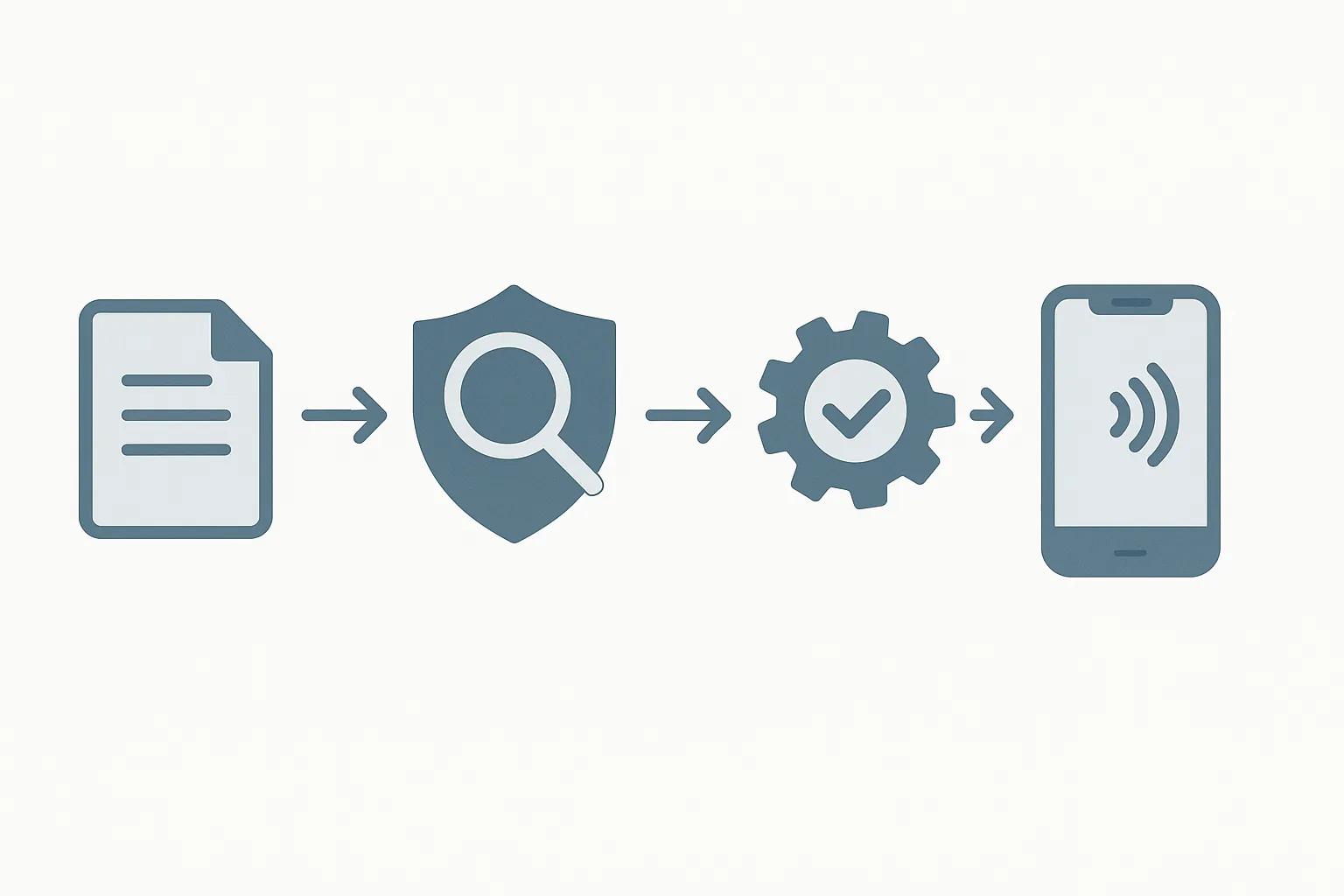
Getting NFC for a non-payment pass is not self-serve. You file a formal request with Apple. You demonstrate a legitimate business use case. For high-sensitivity categories like physical access control, there's an extra security review. Apple wants to know who you are and why you need it.
Consider a regional transit authority planning NFC passes in 2025. First comes the entitlement request. Then technical and policy review, where Apple examines both the code and the intended use. Then the operational reality of running NFC transit passes at the scale of millions of daily taps. Notice who's on the critical path: procurement, legal, and product, not just the engineering team. The developers are often waiting on the business side to clear approvals.
Corporate badge and building access is the category to watch. Employee access to offices via Apple Wallet is growing fast, and Apple's requirements here are stricter than for loyalty or ticketing. If that's your use case, you'll be working with Apple's enterprise partnerships team, not clicking through the developer portal alone.
Pass type identifier policies: the invisible governance layer
A pass type identifier is the registered ID for your pass program. It ties every pass you issue to your Apple Developer account. Apple uses it to attribute all pass activity to your organization, and increasingly, to enforce policy compliance.
Apple has moved toward stricter policies around sharing a single identifier across unrelated brands or client programs. This practice is common among wallet-as-a-service platforms that issue passes for many clients under one identifier. It's convenient. It's also a growing compliance risk.
Apple is moving toward a "one brand, one identifier" principle. Each distinct brand or issuing entity should have its own registered identifier, its own certificates, and its own accountable contact at Apple.
The reason this matters is the cascade. Take a platform serving 50 brands under just three shared identifiers. One client commits a policy violation. Apple flags the identifier. Now every brand sharing that identifier goes dark at the same time, through no fault of their own. Fifty client relationships damaged by one bad actor. That's the failure scenario every platform operator needs to plan for.
The fix is a governance task, not a coding task. Audit your current identifier structure now. Map each identifier to the brands it serves. If you find shared identifiers spanning unrelated programs, build a remediation roadmap. Do it before Apple does it for you.
Apple vs. Google: two philosophies, one issuer strategy
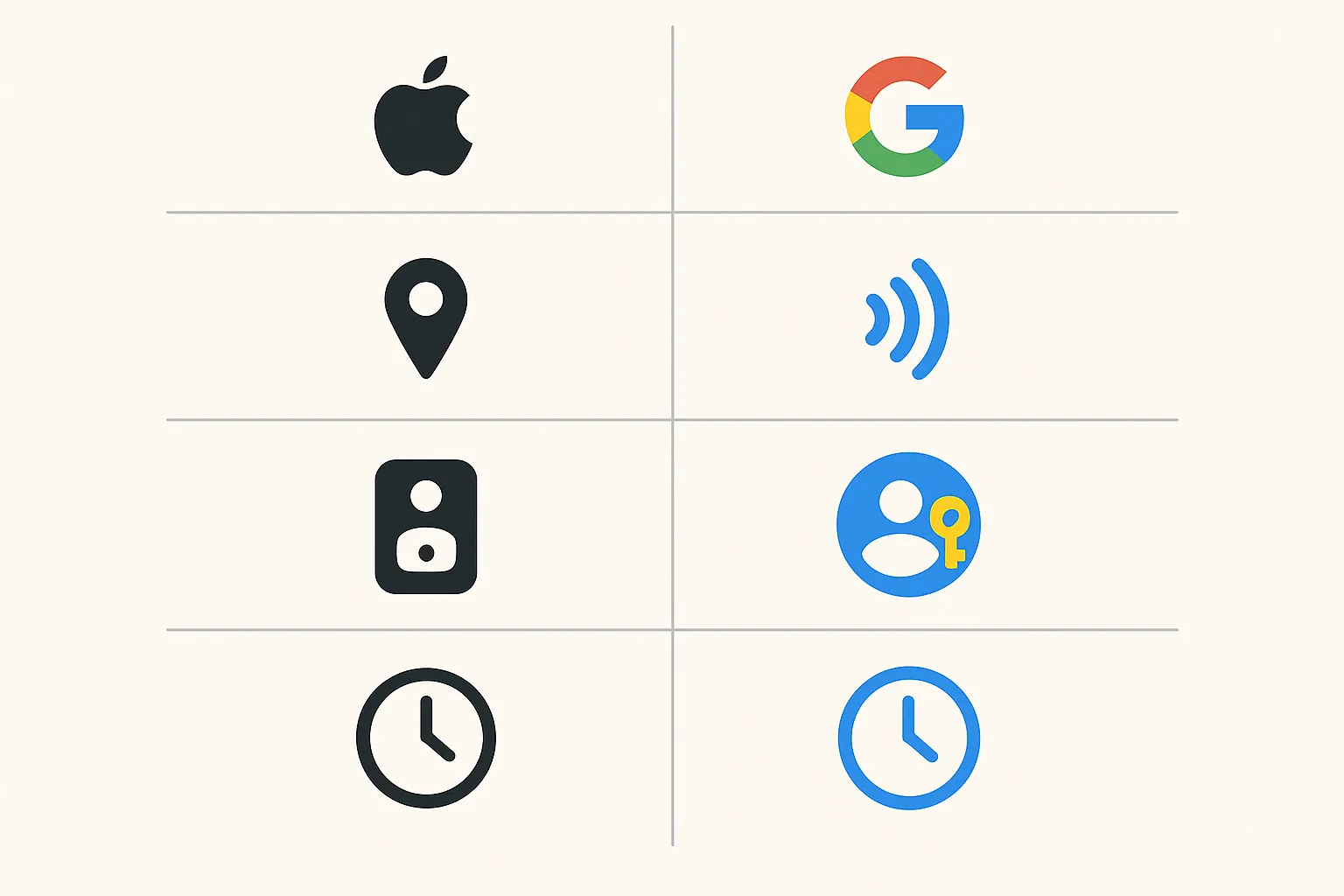
Google Wallet runs on a far more open model. Issuers access the Google Wallet API with standard OAuth credentials. Location-based features are more freely configurable. NFC for non-payment passes is available without the same formal entitlement process.
Sounds easier. It is easier. But easier cuts both ways.
The lower barrier means more pass programs live on Google Wallet, which means more noise and less quality control. It's harder to stand out. Apple's friction, frustrating as it feels, acts as a filter. Fewer low-quality programs get through, so the ones that do get more trust and attention from users.
The strategic payoff is this. If you design your program to meet Apple's stricter standards, curated locations, legitimate NFC entitlements, clean identifier governance, your Google Wallet build will almost certainly clear Google's baseline by default. Apple compliance becomes a forcing function for overall program quality. Meet the tougher bar, and the easier one follows.
Watch out for the Android-first trap. Some issuers see Google's easy onboarding and build their canonical pass experience there, treating Apple Wallet as a secondary port. In 2025, with iPhone holding a majority share of mobile wallet transactions across North America and the UK, that's backwards. You're optimizing for the smaller slice of your highest-value audience.
What this means for your pass program strategy
Here's a simple three-tier framework. Find your tier.
Tier 1 covers basic passes: loyalty cards, coupons, boarding passes with no NFC and few location triggers. Your main job is identifier governance hygiene, plus making sure any location entries are documented and defensible. Low urgency, but the risk is never zero.
Tier 2 covers location-optimized passes. Run a location trigger audit. Cut your entries down to a curated set. Write the business rationale for each cluster. Review Apple's current pass type identifier terms before you get a surprise, not after.
Tier 3 covers NFC-enabled passes, access control, and transit. Start your entitlement application well before your launch date demands it. Apple's review process runs on its own clock, not your product roadmap. If your use case warrants it, engage Apple's enterprise or transit partnership channels early. Bring legal, security, and product leadership into the application. This isn't an engineering errand.
One recommendation applies regardless of tier. Treat your Apple Developer account and pass type identifier portfolio as a business asset with compliance obligations, not a technical utility. Assign a named owner on the business side. When something shifts, you want a person accountable, not a shrug between teams.
The quiet failure you can avoid
Remember that coffee chain manager watching engagement metrics drop with no explanation? That outcome was entirely avoidable.
The issuers who thrive in Apple's structured Wallet ecosystem aren't the ones fighting the governance model. They're the ones getting ahead of it. Apple's expanding permissions framework is a quality signal. The platform rewards pass programs that are deliberate, well-governed, and genuinely useful to real people.
For product managers and marketers, the takeaway is direct. Wallet pass strategy in 2025 is no longer just a design and distribution problem. It's a platform relationship management problem.
The trend line points one way. Apple's trajectory suggests more tightening, not less, especially as Wallet becomes a home for identity credentials like driver's licenses and national IDs, plus physical access. The issuers building disciplined programs today are building on solid ground.
Passmint monitors Apple Wallet policy changes and helps you stay ahead of them. Start by auditing your pass type identifier structure today.
Primary sources
Common questions
Technical content writer, Passmint
Julio is a technical content writer at Passmint. He writes about Apple PassKit, the Google Wallet API, and what breaks when wallet passes meet production traffic.
More from Julio Song →