It's 7:42am at the University of Alabama. A 19-year-old freshman taps her iPhone against a reader and walks into the dining hall. By 8:15, that same phone gets her into the campus gym. She checks out a library book at 9, boards a shuttle across campus, and pays for a coffee on the way to her first lecture. She never once touched a plastic card. She might not even own one.
Meanwhile, Fortune 500 companies and national retailers have poured millions into getting shoppers to use mobile wallet passes, and the results have been uneven. Here's the twist. The most functionally advanced multi-use wallet pass deployments in the world right now aren't at Starbucks or Delta. They're on college campuses.
Over 100 universities now issue student IDs directly to Apple Wallet and Google Wallet. Quietly, higher education has become one of the richest, most pressure-tested laboratories for credential infrastructure anywhere. The lessons those campus IT teams learned, often the expensive way, apply directly to anyone building a serious wallet pass program.
Here's what happened, why it worked, and what you can take from it.
The campus ID revolution: from plastic cards to pocket credentials
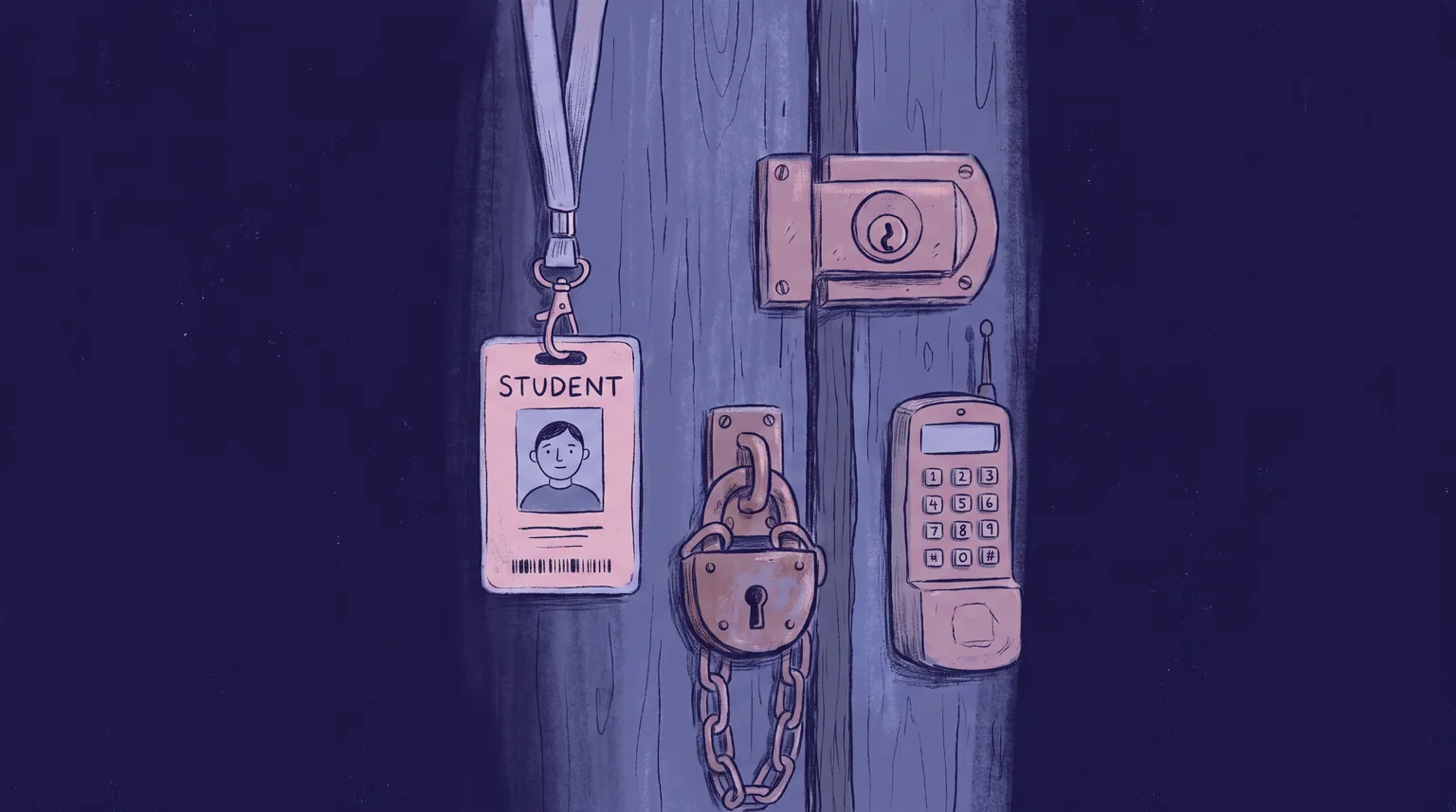
Campus IDs have a longer technology history than most people realize. They started as mag-stripe cards swiped at the dining hall. Then came proximity RFID, with HID and iCLASS readers letting students tap a card against a door reader. The move to NFC-based mobile credentials wasn't a radical leap. It was the next logical step on a path the industry had already been walking for two decades.
What makes this an industry and not a pilot is the ecosystem behind it. Apple maintains a public list of university partners for its student ID program. Google's campus credential program is expanding steadily. Underneath both sit platform vendors like Transact, CBORD, and Allegion, the companies that actually run the credential management systems most campuses depend on.
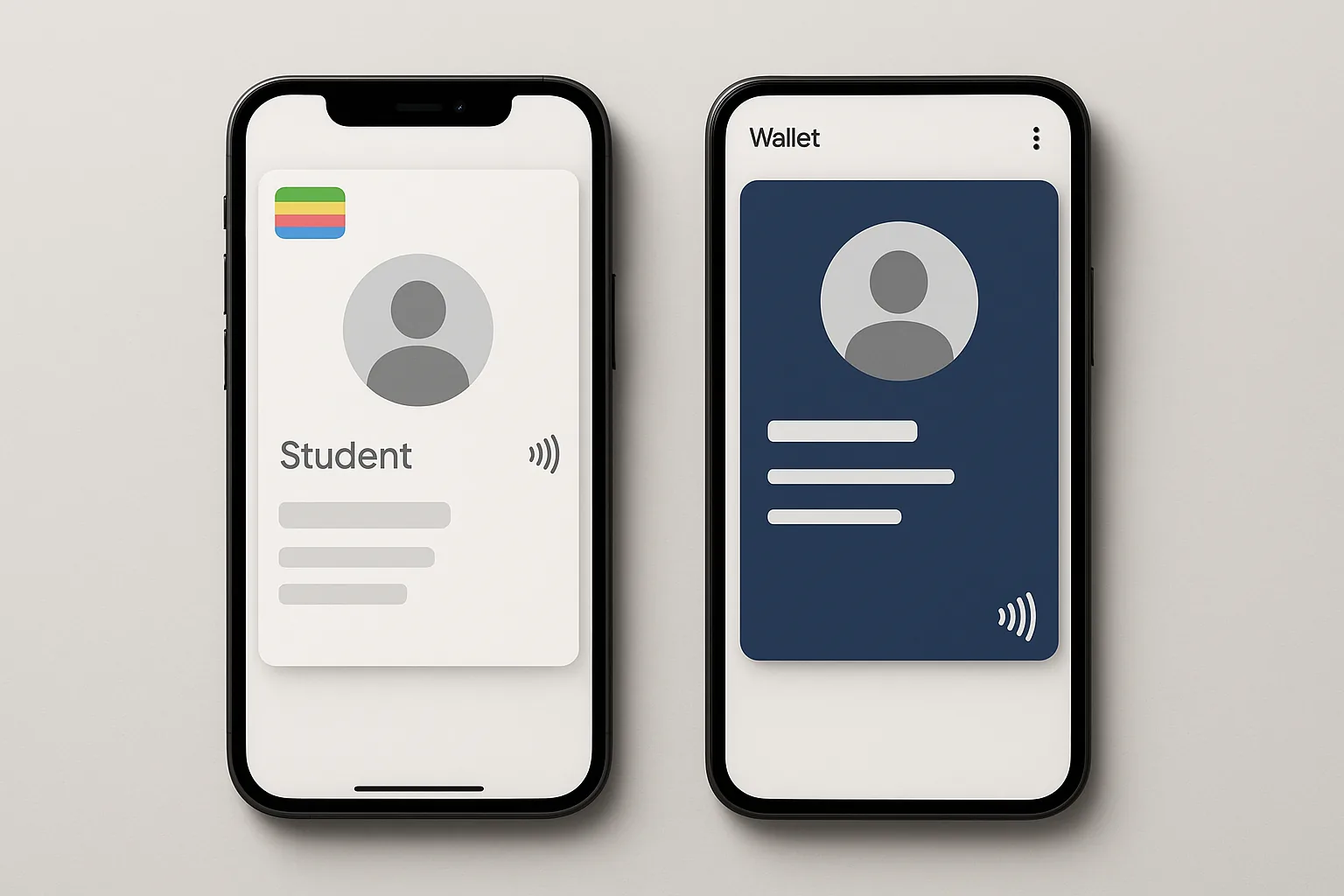
One nuance worth noting if you're building on these platforms: campus IDs don't use the standard PKPass format you'd build for a loyalty card or boarding pass. Apple issues them through a dedicated Student ID pass type that supports NFC, and Google uses its own campus credential format. These are provisioned differently, secured differently, and behave differently from the barcode passes most developers build first.
Here's the paradox. Universities carry a reputation for moving slowly. Committees, budgets, faculty senates, the works. Yet they've outpaced most corporate and retail environments in deploying functional, multi-use NFC wallet credentials at real scale. The slow-moving institutions got there first.
Inside a real rollout: how Alabama and Duke did it
The University of Alabama was one of Apple's earliest and most-cited campus ID partners. Their rollout was phased and deliberate. First came hardware. Then a provisioning workflow. Then student onboarding, timed to moments when students were already paying attention. They ran the whole thing on Transact's Mobile Credential platform, and adoption numbers climbed fast once the pieces were in place.
Duke University took the multi-function idea further. Their mobile credential became part of a broader smart campus effort. One tap handles residential building access, Dining Dollars, printing, and entry to athletic events. That's the multi-function credential thesis made concrete: a single pass, many jobs.
Now for the part that surprises people. The bottleneck wasn't software. It was hardware. Before a single mobile pass could be issued, institutions had to upgrade door readers, dining terminals, and transit validators to NFC-capable equipment. That often meant HID Signo readers or Allegion NDE series locks across an entire campus. That makes it a capital expenditure story before it is an app store story.
Then there's identity. How do you make sure the right student gets the right credential? Campuses lean on their existing identity providers, whether Shibboleth, Okta, or Active Directory. Apple and Google's credential issuance flows plug into that verification step, so the pass only lands on a phone after the institution confirms who's asking.
The friction points were real and worth naming:
- Older Android devices without NFC left some students unable to use a mobile credential at all.
- Apple's Express Mode had to be configured so students could tap without Face ID or a passcode. Building access needs to be instant. Nobody wants to authenticate twice at a door in the rain.
- Campus IT helpdesks absorbed a support surge during rollout. Every new system generates tickets.
None of these are dealbreakers. But they're exactly the details that separate a smooth launch from a rocky one.
The multi-function credential: the most demanding pass in the wild
Count the systems a campus ID has to talk to. Physical access control. Point-of-sale for dining and retail. Transit. Library management platforms like Ex Libris Alma. Laundry. Printing. Parking. Event ticketing. No other wallet pass deployment routinely spans this many integrations at once.
So how does one pass do all that? It doesn't, not directly. The campus credential is a secure NFC credential, held in a Secure Element or through Host Card Emulation. Different reader terminals query that credential against a shared credential management backend. The pass isn't running the logic. It's presenting a trusted identity that many separate systems validate independently.
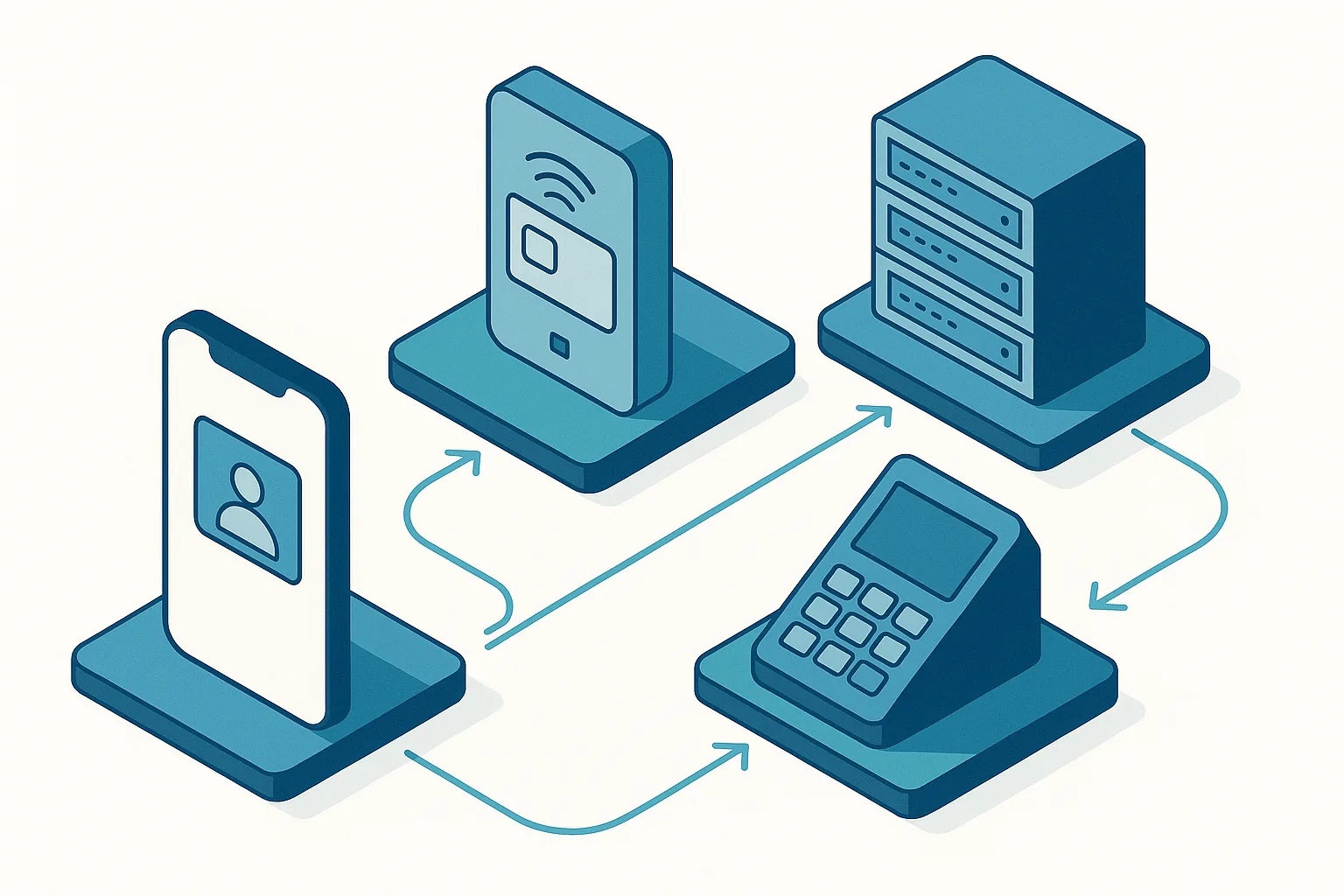
That's a very different model from the barcode or QR pass most developers build first. A QR loyalty card carries its data on its face. A campus NFC credential is a key that unlocks answers from a backend.
There's another requirement that changes everything: offline first. A loyalty pass can fail gracefully if the network drops. A building access credential cannot. If the campus WiFi goes down, students still need to get into their dorms. Campus deployments use offline-capable readers and cached credential validation. The door works even when the internet doesn't.
Put this on a complexity spectrum. Coupons and event tickets sit at the simple end. Loyalty cards a step up. Campus IDs live at the far end, spanning payments, access, and transit with offline resilience built in. That's exactly why they're such a rich source of lessons.
The privacy and data governance challenges campus programs had to solve
Every tap generates a record. Dining hall at 7:42am. Gym at 8:15. Library at 2:30. Across every system the credential touches, a mobile ID produces timestamped, location-tagged event logs. A plastic card technically did some of this too, but never at this granularity or this scale. And FERPA, the federal law governing student education records, wasn't written with tap logs in mind.
The tension is genuine. Student ID transaction data arguably counts as education records under FERPA. But that data often lives inside third-party vendor platforms, plus whatever Apple and Google retain during provisioning. That raises real questions about data processing agreements, what qualifies as legitimate educational interest, and when student consent is required. Campus legal and IT teams are actively wrestling with these right now.
Apple and Google add another layer. Both hold provisioning data. Apple, in particular, manages device-side credential state. Institutions have to understand what these platforms retain, what they can access, and how that squares with the institution's own data governance policies.
Students have noticed. Some student governments and digital rights groups have raised concerns about surveillance creep from mobile ID logs. For administrators, that is a reputational and stakeholder issue as much as a legal one.
The regulatory picture keeps shifting. State student privacy laws are multiplying, including California's SOPIPA, and GDPR thinking is bleeding into U.S. policy debates. Institutions launching mobile ID today are building data pipelines that will face tighter scrutiny tomorrow. The governance choices made now will matter for years.
Adoption dynamics: what the campus curve tells us
Campus mobile ID adoption rates blow past what most retail or hospitality wallet programs ever achieve. A few structural reasons stack up.
Students are a captive audience with high daily use. The mobile credential is genuinely better than the alternative, because a phone is harder to forget than a card and impossible to leave in your other jacket. Campuses also have built-in onboarding moments, like orientation week, that create adoption triggers no retailer can replicate. You can't schedule a mandatory orientation for shoppers.
There's a generational signal here too. College students are the demographic most likely to already have Apple Pay or Google Pay set up. The setup friction that kills so many retail programs barely exists. As this cohort enters the workforce and becomes consumers everywhere else, expect wallet pass expectations to travel with them.
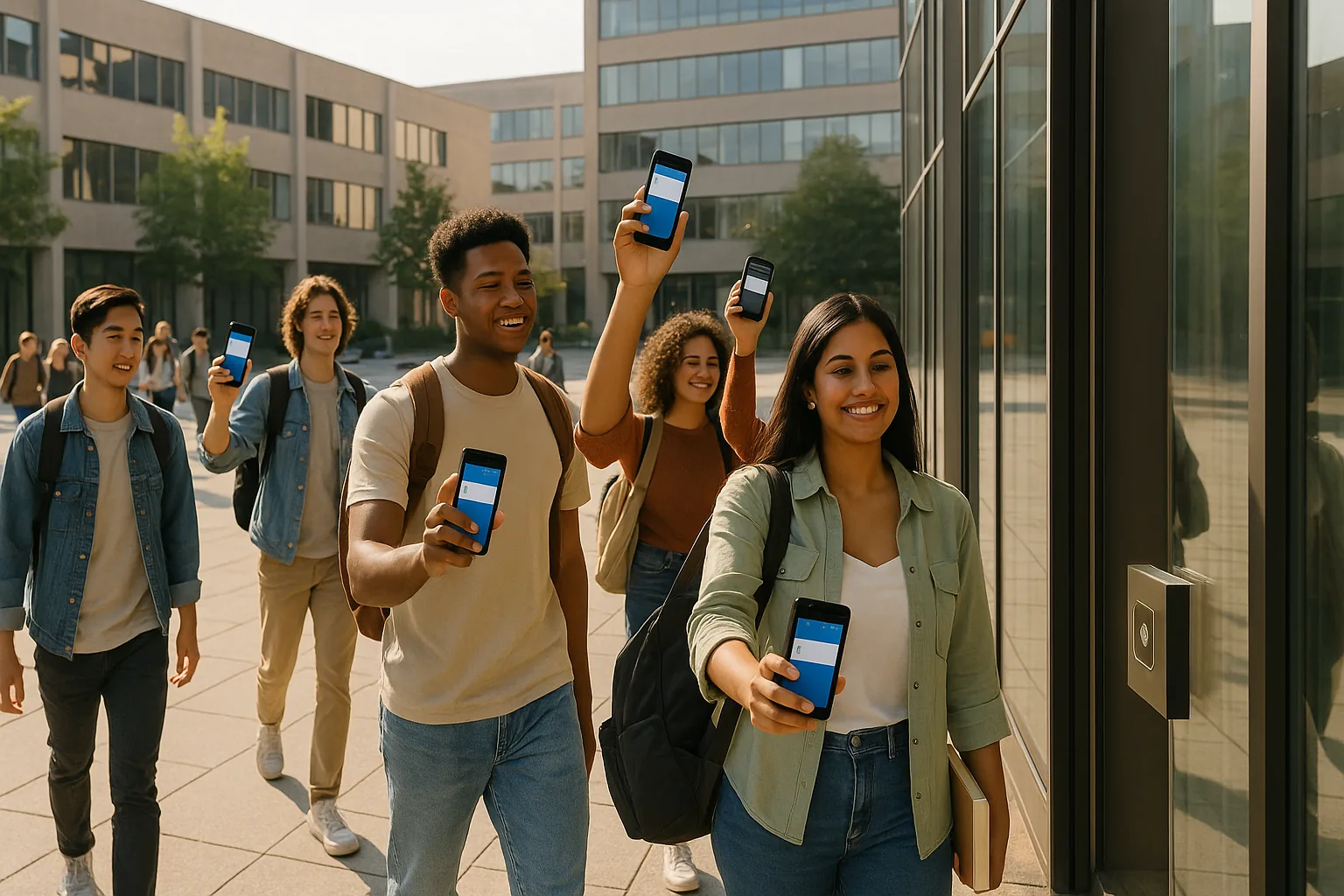
Then comes the network effect of necessity. Once enough campus services prefer or require the mobile credential, adoption stops being linear. When the physical card gets deprecated or a replacement costs $25, the mobile pass wins fast. That's the lesson most businesses miss. Real utility combined with a structural nudge drives adoption. Optional enhancements rarely reach scale.
One practical note: Apple's campus program has gotten more marketing attention, but Google Wallet's campus credential program is growing, and institutions serving diverse student populations have to support both. Your issuance infrastructure can't be single-platform. Real deployments are always Android and iOS.
What developers and businesses can learn from campus programs
Five lessons transfer cleanly to any serious wallet pass program.
Design for multi-function from day one. Campus programs that bolted extra use cases onto a single-purpose access pass struggled. The ones that built a credential management layer supporting multiple reader types and services from the start scaled smoothly. If your pass might someday span access, loyalty, and payments, architect for that now.
Treat offline resilience as a requirement. The campus requirement that credentials work without connectivity forced architects to build properly. Most commercial programs never confront this discipline. But any pass used for physical access, whether for an office building, an event, or transit, deserves the same standard.
Provisioning and identity are the hard part. The pass template is the easy bit. Identity verification, credential lifecycle management (suspension, revocation, re-issuance), and integration with existing identity systems are where programs succeed or fail. Campus IT learned this expensively. You can learn it here.
Make data governance a product decision. Institutions that defined data retention, access, and sharing policies before launch avoided painful retrofits. Treat your data architecture as a first-class product concern with privacy by design built in, not a compliance box you tick at the end.
Pair real utility with a forcing function. The best campus programs combined true value, your phone as your key, your wallet, and your transit pass, with a structural nudge like charging for physical card replacements. Optional enhancements rarely reach scale. Credential programs need to offer something the alternative genuinely cannot match.
The tap that took years to build
Go back to that freshman moving through her morning with a series of taps. That experience looks effortless. It isn't. It's the product of years of infrastructure investment, hard-won integration work, privacy debates, and platform negotiations that mostly happened out of public view, inside university IT departments.
Higher education became an unlikely testing environment for exactly the kind of sophisticated, multi-function, high-frequency wallet pass infrastructure that businesses are now trying to build. The campus got there first by solving the hard problems in the open.
As Apple and Google keep expanding their credential ecosystems into driver's licenses, employee IDs, and healthcare passes, the patterns and governance frameworks proven on campuses will shape the next wave. If you're building a serious wallet pass program in retail, healthcare, hospitality, or enterprise access, the most useful thing you can do is study what those university IT teams built and why it worked.
Ready to build credentials that hold up in the real world? Explore Passmint's resources on NFC pass infrastructure, credential lifecycle management, and the Apple Wallet and Google Wallet developer ecosystem to get your program started on solid footing.
Primary sources
Common questions
Technical content writer, Passmint
Julio is a technical content writer at Passmint. He writes about Apple PassKit, the Google Wallet API, and what breaks when wallet passes meet production traffic.
More from Julio Song →