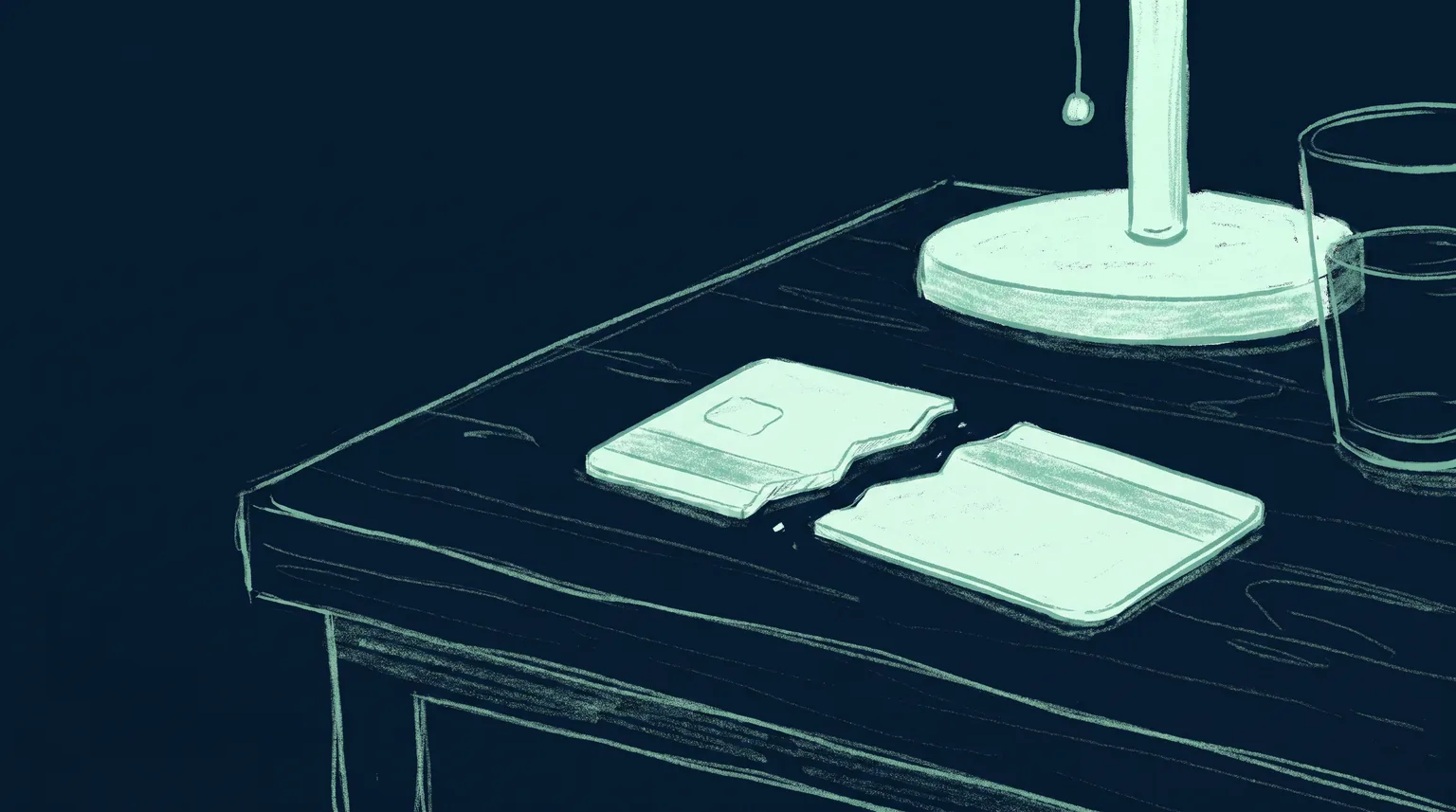
It is 11 PM on a Tuesday. A business traveler walks into the lobby after a delayed flight and a missed dinner. She joins a check-in line seven people deep.
Fourteen minutes later, she gets a plastic key card. She drags her bag to the fourth floor and taps the card on the lock. Red light. She taps again. Red light. She walks back to the front desk.
Many hotel guests have a version of this story. The stay usually recovers. The first impression does not. The arrival experience starts with friction.
Hotel leaders often focus on the visible cost of plastic cards. A 200-room hotel can spend tens of thousands of dollars per year on key cards alone. The real cost is higher. You also pay for failed encodings, front desk bottlenecks, environmental impact, and the slow hit to guest satisfaction that shows up in reviews.
Hotels that replace plastic key cards with Apple Wallet and Google Wallet digital room keys see a clear pattern in internal data and case studies. Guest satisfaction scores rise compared with plastic-key baselines. Cutting plastic spend is the smaller half of it. The bigger change is how arrival feels.
What follows is the business case for hospitality decision-makers weighing that switch. If you run an independent or mid-size property and worry about technical complexity, platforms like Passmint make wallet pass integration accessible through a straightforward API.
The true cost of plastic key cards (it is well above $0.15 per card)
On paper, the per-unit cost looks harmless. Bulk RFID or magstripe key cards often cost around $0.10 to $0.50 each. Volume tells a different story.
Depending on length of stay, replacements, and guests per room, a 200-room hotel with 75% average occupancy can use tens of thousands of cards per year. That total includes replacements for demagnetized cards, duplicates for multi-guest rooms, and the share of travelers who keep their cards or forget to return them. At this scale, procurement alone can land in the mid four figures to low five figures per year.
Then you have labor cost. Key card failures and replacements send guests back to the front desk. Each issue can take several minutes of staff time. Across a year, these small events add up to hundreds of staff hours. That is time your front desk could spend on guest engagement, upselling, or simply keeping the line short.
There is also the environmental cost. Industry estimates suggest that hundreds of millions of plastic hotel key cards go to landfill worldwide each year. Guests notice this. Booking.com's Sustainable Travel Reports show that a majority of travelers say sustainability practices influence booking decisions, and this share has been rising.
If your hotel promotes green initiatives while handing out disposable plastic cards at every stay, you create a credibility gap. Travelers who care about sustainability see that gap clearly.
Front desk bottlenecks are another hidden cost. Encoding problems are a common reason check-in times stretch beyond three minutes. When the first physical touchpoint is a line at the desk, guest satisfaction scores are harder to lift later in the stay.
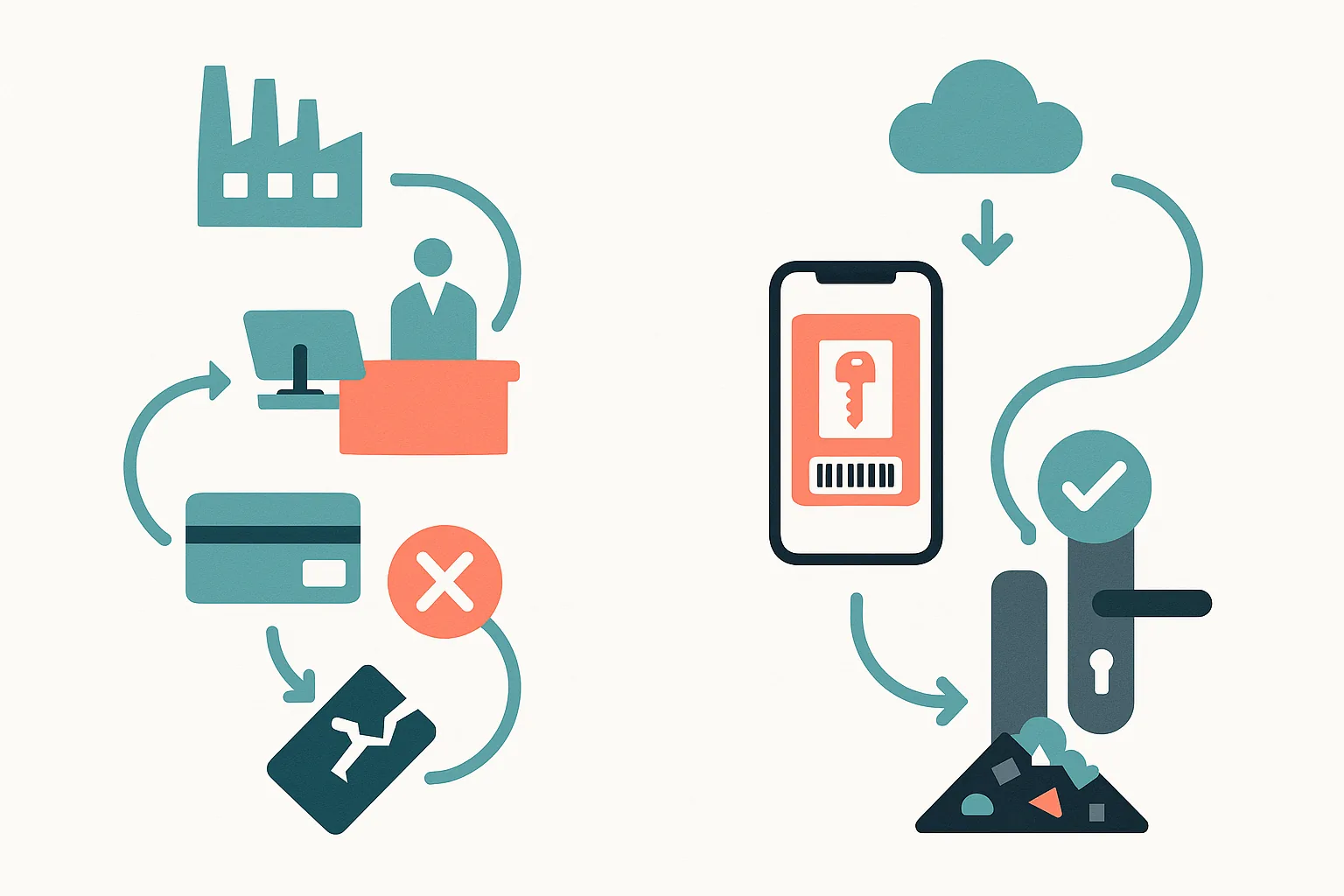
Put these factors together and a plastic key card program costs far more than the line item on your P&L suggests. The next question is what you replace it with.
How digital wallet room keys actually work
From the guest's point of view, the experience is simple. In a good implementation, a traveler receives a push notification or email before arrival. They tap a link and add a pass to Apple Wallet or Google Wallet. When they reach their door, they hold the phone near the lock. It opens.
In many setups, the guest does not need to download a hotel app or create a new account. Their existing booking details are enough.
The low friction matters. It separates wallet-native passes from proprietary hotel apps. A branded app often needs a download, an account, a password, and permissions that some guests view as intrusive. Wallet passes live in infrastructure already on the guest's phone. They work like a boarding pass or concert ticket. When you implement them cleanly, adoption can be high.
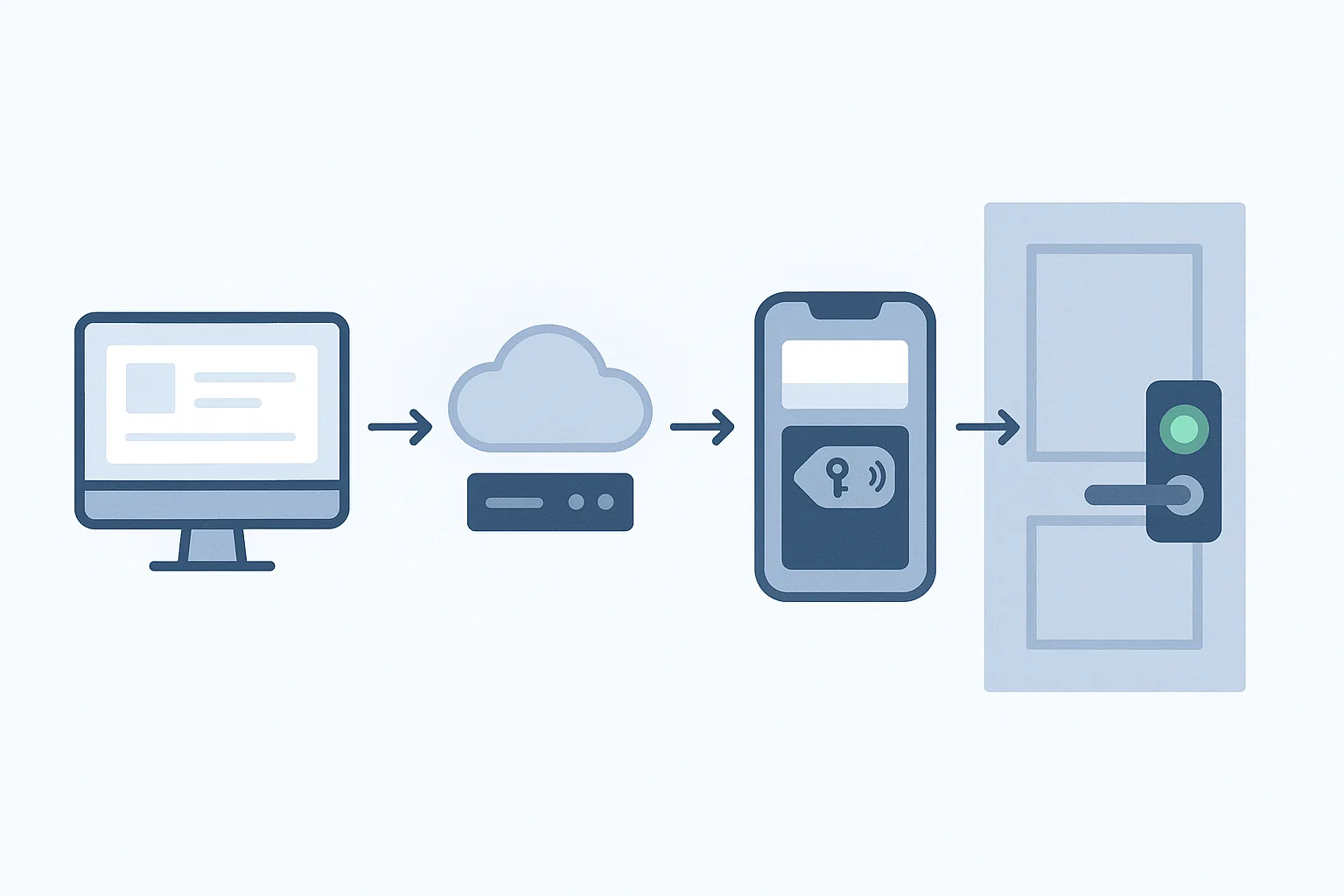
Behind the scenes, the integration path is straightforward. Your Property Management System (PMS) triggers pass creation through an API. Passmint's platform, for example, generates a signed .pkpass file for Apple Wallet or a JWT-based pass object for Google Wallet. The wallet pass links to secure room-access credentials managed by your access-control and lock system.
When the guest holds their phone to the lock, the phone and the lock communicate over NFC (near-field communication) or BLE (Bluetooth Low Energy). They use encrypted credentials stored on the device and in your access system. The interaction happens locally between the phone and the lock hardware.
Lock hardware is usually the key dependency. Modern smart locks from manufacturers like Assa Abloy, Dormakaba, and Salto support mobile access over NFC or BLE. If you still run legacy magstripe locks, you will need to upgrade to NFC or BLE capable locks.
In many projects, hoteliers report retrofit costs of a few hundred dollars per lock. Actual pricing depends on vendor, model, and installation scope. For a 200-room property, this is often a one-time capital expense in the tens of thousands of dollars. Many hotels time this spend with a standard FF&E refresh cycle.
The satisfaction advantage: what the data shows
Data from vendors and brands points in the same direction, even if exact numbers vary by flag and implementation. Hotels that deploy digital keys, often as part of mobile check-in programs, report higher guest satisfaction scores compared with their plastic-key processes.
The biggest gains come from two friction points:
- Shorter check-in wait times
- Fewer room key failures
Some properties also see Net Promoter Score (NPS) gains in the high single to low double digits, often around 8 to 15 points. Guests describe the experience as "effortless arrival" or "easy check-in." When arrival feels simple, guests credit the brand.
Repeat stays often rise too. In internal analyses from several case studies, guests who use mobile keys show higher repeat-booking rates than those who do not. Convenience creates habit. Guests who have a smooth mobile-key stay are more likely to return.
Reviews reflect the same pattern. Properties that roll out digital keys often see more mentions of "easy check-in," "seamless," and "modern" in their review text. These keywords influence conversion when future guests scan reviews before booking.
You should treat correlation with care. Hotels that invest in digital keys tend to be more focused on guest experience in general. Still, in pilots where hotels test digital keys on certain stays or floors and hold other stays on plastic within the same property, the difference is clear. Guests who use digital keys score the stay higher. The technology itself moves the metric when rollout is planned and supported.
Case study-style example: a 180-room boutique hotel's 12-month digital key rollout
Consider a modeled but representative scenario based on patterns from multiple deployments. A 180-room boutique hotel runs 72% average occupancy with three front desk staff per shift. The property moves from magstripe key cards to Apple Wallet and Google Wallet passes using a platform like Passmint.
Months 1 to 3 (Pilot Phase)
The hotel offers digital keys to loyalty members and direct-booking guests. This is about 30% of check-ins. Key card procurement drops. Front desk interactions caused by encoding issues fall for the pilot group. Staff report shorter lines during peak evening hours.
Months 4 to 8 (Expansion Phase)
The hotel rolls out digital keys to all guests with smartphones. Plastic cards stay available as a fallback. Digital adoption passes half of all check-ins. The team removes one encoding station and reallocates a front desk staff member to concierge and upsell work. This generates more revenue from room upgrades and local experience packages.
Months 9 to 12 (Optimization Phase)
Adoption reaches about 70%. Annual key card spend drops significantly, for example from around $18,500 to about $5,000 in this scenario. Guest satisfaction scores rise in the high teens in percentage terms.
The hotel also starts sending pre-arrival wallet passes with check-in details, local tips, and targeted offers. The room key becomes a persistent surface for information and promotions as well as an access tool.
ROI Summary (Modeled)
In this example, the first-year investment for lock upgrades, the digital key platform, and staff training totals roughly $40,000 to $45,000. Savings and incremental revenue together reach around $60,000. The project pays back within the first year. This estimate does not include long-term benefits from better reviews and higher achievable average daily rates.
Addressing the objections: elderly guests, dead phones, and offline scenarios
Most general managers raise the same concerns. They are valid. Each has a practical response.
"What about elderly guests or people without smartphones?"
No credible digital key rollout removes plastic on day one. The best implementations offer a clear fallback. Physical cards stay available at the front desk for any guest who asks.
In many early-adopter properties, when you present digital keys as the default, only a minority of guests, often under 15%, consistently choose plastic. That share tends to drop over time as more demographics become comfortable with smartphones.
"What if the phone battery dies?"
On supported iPhone models, Apple Wallet passes with Express Mode can work for several hours after the battery appears drained because of power reserve. This is similar to how transit cards work in cities like New York and London.
On Android, support for low-power or power-off NFC for transit and access is expanding in newer devices, but behavior varies by handset. For edge cases, your staff can issue a temporary backup code or a plastic key in under a minute.
"Does it work without Wi-Fi?"
Yes. Wallet passes are stored on the device. The NFC or BLE interaction between the phone and the lock is local and offline. The door does not need an internet connection to open for an authorized pass.
"Is it secure?"
Modern mobile access systems use encrypted credentials that are much harder to clone than magstripe cards. Magstripe cards can be copied with cheap readers. Digital keys also piggyback on the phone's security, such as device passcodes and biometrics. This adds protection that plastic cannot match.
"How do we train the front desk?"
The technology can stay mostly invisible to staff. Training focuses on the new conversation, not on low-level tech.
The most effective rollouts coach front desk teams to present digital keys as an upgrade. For example: "Would you like your room key on your phone for instant access?" That short question reframes the interaction from a transaction to a service.
Building the business case: ROI framework for your property
If you are ready to build an internal case, you can use a simple framework.
- Current annual key card spend. Include procurement, shipping, and storage.
- Estimated staff hours lost each month to encoding failures and key replacements.
- Lock upgrade cost per door. Ask your lock vendor for a quote on NFC or BLE capable retrofits.
- Digital key platform cost. Include the monthly SaaS fee from your provider.
- Projected adoption rate by quarter. Use a conservative early target. For example, about 30% in the first quarter, then increase as guests become more familiar.
On cost benchmarks, SaaS fees for digital keys are often in the low hundreds of dollars per month for a single mid-size property. Many solutions are priced in the range of a few hundred dollars monthly.
Compare that to the total cost of a plastic key card program for a 200-room property. When you factor in procurement, labor, failures, and waste, the all-in cost can reach the low thousands of dollars per month in many markets.
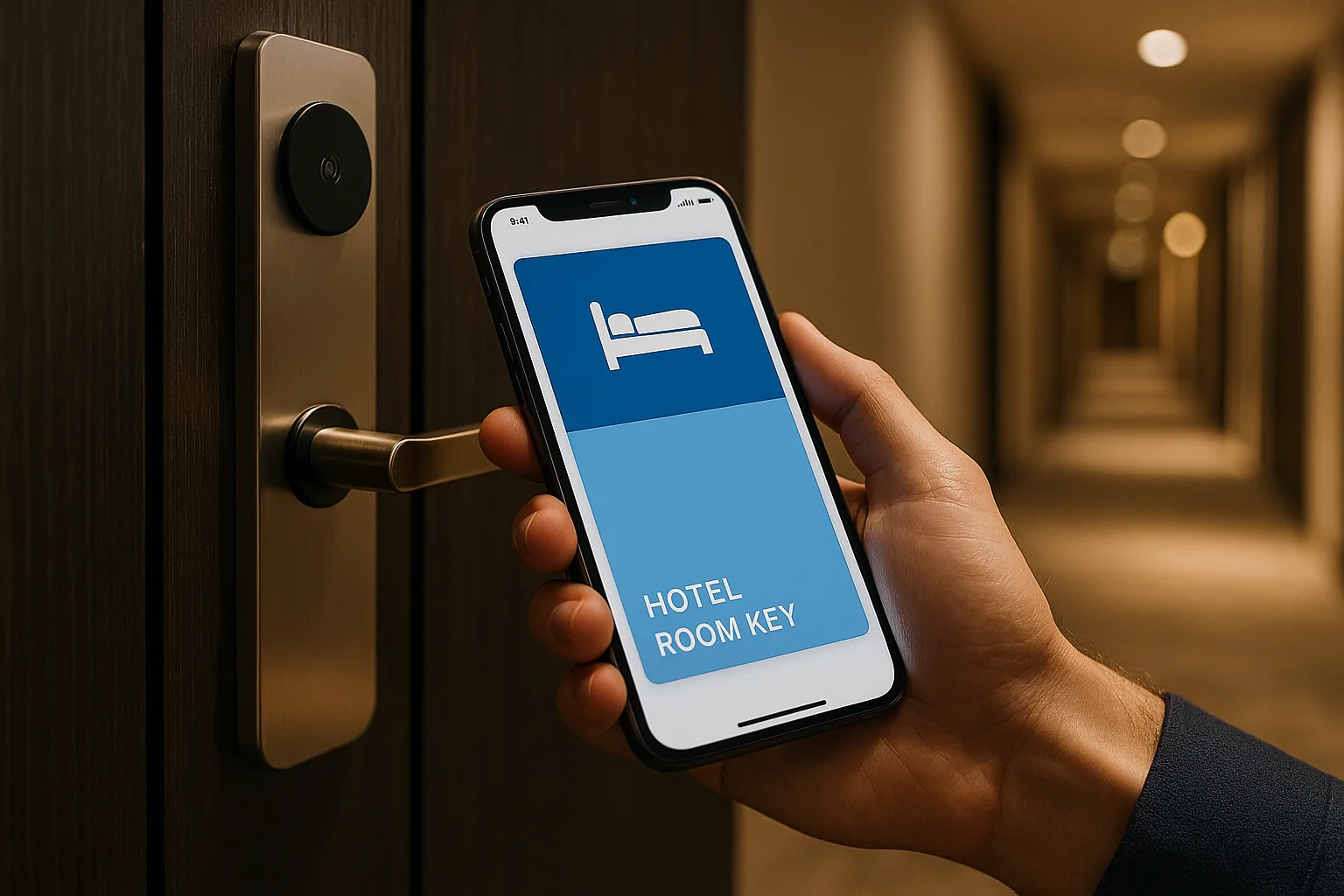
Do not stop at savings. A wallet pass is a persistent, updateable surface on your guest's phone, and it can show on the lock screen when relevant.
You can send spa promotions, late checkout offers, or restaurant specials through pass updates. This shifts room access from a pure cost center to a channel that can drive incremental revenue.
There is also sustainability value that you can include in RFPs. You can quantify plastic reduction, for example "tens of thousands fewer plastic cards sent to landfill this year," and present it as a clear proof point. This detail carries weight in corporate travel bids where ESG criteria now influence hotel selection.
If you want to see how integration might look for your property, start with Passmint's pass API, which generates and manages Apple Wallet and Google Wallet room key passes through a simple API connection to your existing PMS.
The 90-second arrival
Return to our business traveler. Same Tuesday. Same delayed flight. This time, her phone receives a wallet pass two hours before landing. It includes her room number, floor map, and a late-night room service offer.
She walks through the lobby, past the front desk, and straight to the elevator. At her door, she taps her phone on the lock. Green light. She is in her room within 90 seconds of entering the building.
That experience is what the satisfaction advantage of digital keys looks like at the guest level.
The shift from plastic to digital room keys is now well underway. Adoption is growing across global chains and independent boutiques. The ROI argument gets stronger each quarter.
Hotels that treat the room key as "just access" miss revenue, loyalty, and guest goodwill. With platforms like Passmint making wallet pass integration straightforward through a clean API, the question is no longer whether to switch, but when you want your property to start seeing the benefits.
Primary sources
Common questions
Technical content writer, Passmint
Julio is a technical content writer at Passmint. He writes about Apple PassKit, the Google Wallet API, and what breaks when wallet passes meet production traffic.
More from Julio Song →