
It is 5:45 PM on a Monday, one of the busiest hours at most gyms. A line of members stretches past the front desk. Some are patting pockets for a plastic card they thought was in their bag. One member has not checked in since January and their card is deactivated. Another needs a replacement that costs five dollars and takes several minutes. Everyone behind them waits.
At another gym, members walk up, tap their phone on a reader or show a barcode from their lock screen, and walk through in a few seconds. No card. No separate app. Less friction.
The difference is a simple wallet pass in Apple Wallet or Google Wallet.
The global health and fitness sector is a multi billion dollar market. It struggles with high annual member churn. More operators now see that a wallet pass is more than a digital card. It is an engagement tool, a real time promotion channel, and an operational fix that cuts front desk congestion.
This article explains how wallet passes work, why they matter, and how you can implement them as a gym operator or fitness SaaS platform.
The plastic card problem: why gym check in is stuck
Many gyms still rely on plastic key tags, barcoded cards, or manual name lookups. The basic model is the same as it was decades ago. You issue a physical token and require members to present it at the desk. Member volumes and visit patterns have changed. The process has not.
Here is what that creates in practice:
- Card based check ins are slow. Each check in can take several seconds. During peak hours like weekday evenings and Saturday mornings, this leads to multi minute queues at higher volume locations.
- Plastic cards cost money to print and replace. Printing often costs a few dollars per card depending on volume and vendor. A meaningful share of cards will need replacement every year. Staff also spend time managing inventory.
- Lost and forgotten cards never go away. Staff spend time on manual lookups, temporary passes, and replacement card processing, often during the busiest times of the day.
There is a bigger issue than cost or speed. Plastic cards are static. Once you hand a card to a member, you cannot change it. You cannot push a message through it. You only get basic data from swipe timestamps. After printing, the card never changes.
Enter the wallet pass: what it actually is (and is not)
A wallet pass is a digital card stored in Apple Wallet or Google Wallet. It is not a separate app. It is not a mobile website. It is not a PDF.
For gyms, three pass types matter most:
- Membership cards with a barcode or QR code for check in
- Event tickets for class bookings and reservations
- Coupons and offers for promotions, referrals, and win back campaigns
The key difference is that you install a wallet pass once. After that you can update it from your systems in near real time. You can change a member's status, push an update, or modify class details without any action from the member. The pass on their phone refreshes automatically.
Many operators ask why they should not just build an app. In practice, gym apps reach only part of the member base and see high uninstall rates. Many members do not want another app. Wallet passes live at the operating system level in a place members already use for payments, boarding passes, and tickets.
There is no app store download and no new account to create. In a typical flow, a member taps a link, sees an "Add to Wallet" or "Save to Google Wallet" prompt, and confirms once.
On the technical side, passes are often created via APIs from a wallet pass platform. You distribute them through links, QR codes, or email and manage them through a dashboard. You do not need to build native apps yourself.
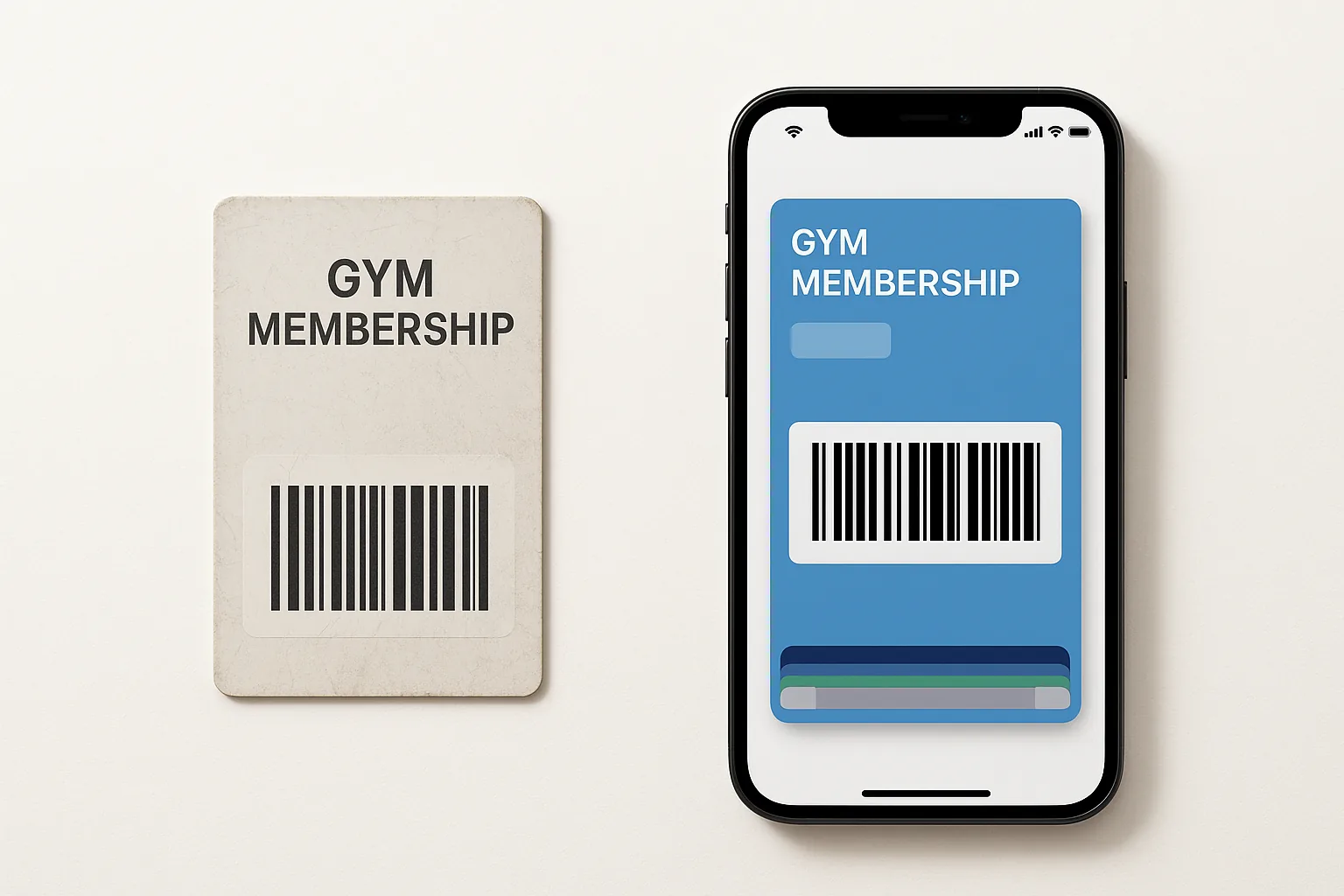
A plastic card is static once printed. A wallet pass is an updatable communication channel.
From scan to entry in seconds: the operational gains
Wallet pass barcodes or NFC taps can be read in a few seconds using compatible scanners. Compared to slower manual lookups or multi step card workflows, this reduces check in time per member.
If you process a few hundred check ins during a peak hour and save a few seconds per interaction, you remove many minutes of cumulative queue time. When you also reduce manual lookups, forgotten card workflows, and on the spot replacement processing, you can see a clear drop in front desk bottlenecks.
Here is what disappears when the pass lives on the member's phone, which most gym goers carry anyway:
- Fewer "I forgot my card" conversations
- Less need to print temporary passes
- Fewer five dollar replacement transactions
- Less time spent spelling out last names while a line builds
In many cases, you can use the barcode scanners you already have. Common formats such as Code 128, QR, and PDF417 work with modern imaging scanners. Many gyms do not need new hardware.
When you reduce front desk friction, you change how staff spend time. Some gyms report that they can trim or redeploy part of a front desk shift during peak hours. Staff spend more time on member support and personal training sales instead of administration.
The retention play: how wallet passes address gym churn
Many gyms lose a large share of new members in the first few months. Most cancellations do not happen at the desk. Members simply stop visiting. By the time you notice, they have already checked out mentally.
Wallet passes give you passive, persistent touchpoints that email and apps often cannot match.
Email open rates sit near 20 percent in many industries. Native app push notifications require an installed app. For many gyms, only a minority of members actively use the gym app.
Wallet passes can surface on the lock screen at the right moment. Exact visibility varies by device settings and platform, but this position is often more prominent than an email.
Three retention mechanics matter most.
Location based engagement
When a member with a wallet pass comes near the gym, supported wallets can show the pass on their lock screen based on location. This creates a simple reminder. For lapsed members, it can prompt a return visit.
Time sensitive promotional pushes
You can send wallet pass updates for off peak class discounts, referral bonuses, or expiring guest passes. For example, "Tuesday 2 PM yoga, member pricing." These updates appear on the lock screen or in the notification center without an app install.
Dynamic membership status
You can change the look and content of the pass based on behavior. For example, you can add a "Gold status" badge after 20 visits, show a streak counter, or add a "We miss you" offer after a period with no visits. The pass reflects the member's current status and activity.
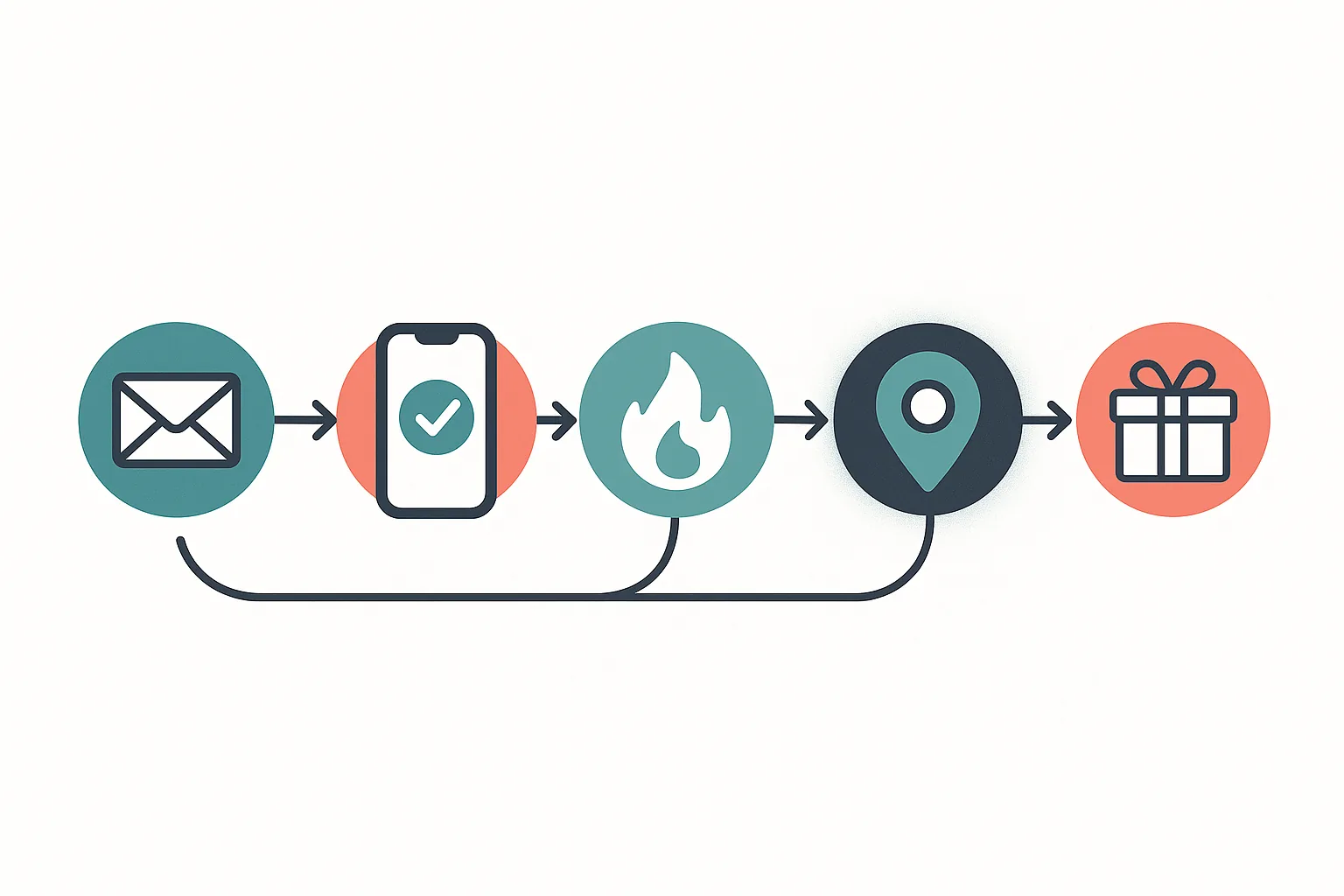
You can automate this loop in the background. Your member database and rules engine trigger pass updates. Once configured, the pass handles much of the day to day engagement.
Beyond check in: class bookings, promos, and a lightweight CRM channel
Check in speed is the first clear benefit. The larger value comes from how wallet passes support bookings and promotions.
Class booking confirmations as wallet passes
When a member books a spin class or yoga session, you send a wallet pass ticket with the class name, time, instructor, and a scannable code. The booking sits on their phone instead of in an email thread. Some operators report lower no show rates after this change.
Promotional offers that stay visible
Referral cards such as "Give a friend a free week," seasonal promotions, and challenge incentives can all go out as wallet passes. They stay in the member's wallet until they use them. Many gyms see better performance than with one off email coupons that disappear in the inbox.
A lightweight CRM channel
Each pass that you issue and each installation is tracked by the wallet and the pass provider. You can target updates and messages to specific passes or groups. You can do this without building your own CRM app.
When you integrate passes with your access control or member management system, each scan ties back to a member profile. Over time, you can see:
- Check in volume and peak times
- Visit frequency and recency
- Class popularity and capacity use
If you run multiple locations, you can also update wallet passes based on member context. For example, you can show the closest club, local offers, or links to local schedules. Plastic cards cannot do this.
Case study: a 12 location fitness chain's wallet pass rollout
Consider a mid size fitness chain with 12 locations and roughly 15,000 members. They have standard cardio and weights floors plus group fitness classes. The numbers below come from a single anonymized rollout. Results will vary, but they show what is possible.
Phase 1: Digital membership cards
New members received wallet passes at signup through SMS and email links. Existing members were prompted to switch at the front desk using a QR code and through an email campaign. Within 90 days, 62 percent of active members adopted the digital pass.
Phase 2: Class booking passes
Group fitness bookings started to generate wallet pass tickets. No show rates dropped from 25 percent to 14 percent over the next period. Members appeared to keep commitments more often when bookings were visible on their phones.
Phase 3: Retention automation
The gym's system flagged lapsed members and triggered wallet pass updates with personalized win back offers. Geo fenced lock screen surfacing was enabled within a set radius of each location. In this rollout, members with wallet passes showed an 18 percent higher 90 day retention rate than members who did not adopt passes.
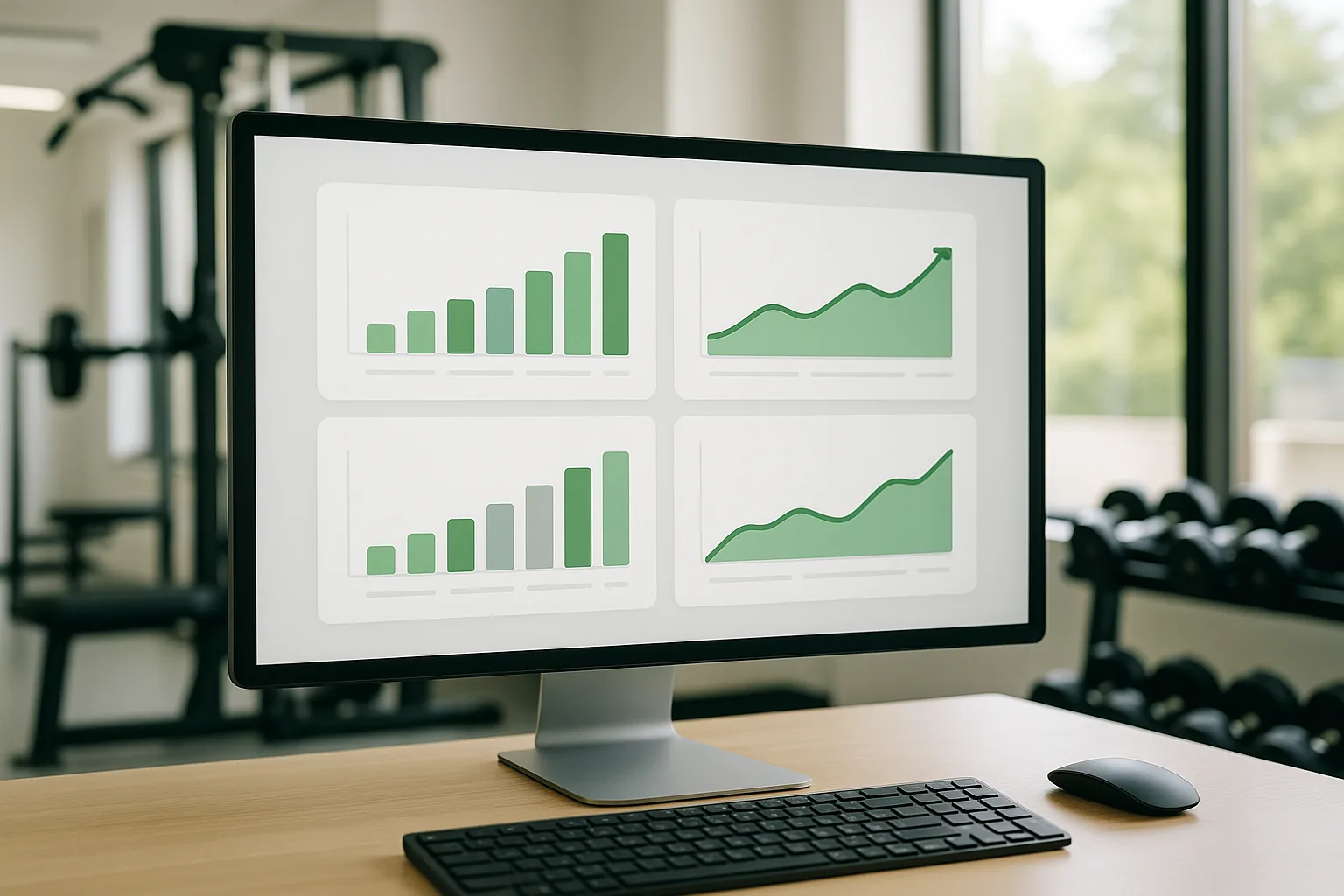
The chain also saw clear operational gains. Front desk check in complaints fell by about 40 percent. Card replacement costs dropped by roughly 18,000 dollars per year. Staff reported spending about 30 percent more time on member engagement instead of administrative tasks.
Implementation: how to get started
There are three main integration paths. The right one depends on your setup.
- Standalone wallet pass platform
You use a hosted platform with a dashboard and templates. This lets you design and issue passes without an internal engineering team. This is often the fastest way to start. - API integration into gym management software
You connect wallet pass APIs into systems such as Mindbody, ClubReady, or ABC Fitness. Passes generate programmatically when members sign up or book classes. - Hybrid approach
You issue passes manually at first and automate later as you connect systems.
For a basic gym membership pass, the process usually looks like this:
- Design the pass template: branding, barcode type, and member fields
- Connect to your member database or upload a CSV file
- Generate unique passes for each member
- Distribute passes via email or SMS with install links, or through QR codes at the front desk
- Manage updates and messaging from the dashboard or through API calls
You need to cover both Apple Wallet and Google Wallet. Apple Wallet uses .pkpass files. Google Wallet uses a JSON Web Token and "Save to Google Wallet" flow. Modern platforms hide this complexity so you can build one template and deploy to both.
If you want fast return on investment, start with digital membership cards for check in. That is where the largest operational impact appears first. Then add class booking passes and promotional offers once the basics run smoothly.
Most operators who make this change see visible results in the first few weeks. Lines get shorter. Replacement card requests fall. Staff spend less time on manual tasks and more time talking to members.
The line that costs you members
The long front desk line does more than waste time. It hurts member satisfaction. Every extra step at check in, every forgotten card, and every promotion that never reaches the member contributes to churn.
Wallet passes are a mature, low friction technology that addresses these daily problems. They support faster check ins, lower plastic card costs, higher class attendance in many cases, and more persistent and personalized contact with members who might be close to cancelling.
In the case study above, the chain saw a 40 percent reduction in front desk issues. The bigger impact comes from smaller effects over time. A lock screen prompt that brings a member back after two weeks away. A class reminder that turns a potential no show into a regular visit. A referral pass that turns one member into two.
If you want to modernize access and engagement at your gym or within your fitness software, wallet passes are a clear next step.
Explore Passmint's wallet pass templates or talk to us to see how a wallet pass program can replace plastic membership cards in your system.
Primary sources
Common questions
Technical content writer, Passmint
Julio is a technical content writer at Passmint. He writes about Apple PassKit, the Google Wallet API, and what breaks when wallet passes meet production traffic.
More from Julio Song →