
A patient named Sarah arrives at a large hospital system for a scheduled MRI. Her iPhone buzzes as she walks through the entrance. A lock-screen notification from her hospital wallet pass reads: "Welcome back, Sarah. Your 2:15 PM appointment is confirmed. Tap to check in." She taps, confirms her details, and sits down. Total time: 12 seconds.
No paper insurance card. No clipboard. No 15-minute wait at the front desk.
Healthcare still relies heavily on fax machines and paper forms. At the same time, it is becoming one of the fastest-growing verticals for mobile wallet pass adoption. The numbers explain why. U.S. hospitals and health systems spend billions of dollars each year on patient scheduling and check-in administration. No-show rates often average 18-25% industry-wide, with missed appointments estimated to cost the U.S. healthcare system over $150 billion per year.
Wallet passes solve several of these problems at once, and the payoff shows up in cost and compliance as much as in patient convenience. Healthcare product teams that move early gain a clear advantage.
Why healthcare is a natural fit for wallet passes
Think about what wallet passes do well. They deliver time-based notifications, location-based alerts, and real-time updates. Now think about healthcare interactions. They are appointment-driven, time-sensitive, and location-specific. The fit is very strong.
Patients already carry insurance cards, appointment reminders, and vaccination records. These all map directly to wallet pass types. Generic or store-card-style passes work well for ID cards. Event-style passes handle appointments. Boarding-pass-style layouts can support check-in flows.
Friction in healthcare is also uniquely high. A missed appointment does more than waste a time slot. It delays care, disrupts provider schedules, and triggers costly rescheduling workflows. Even a 5% reduction in no-shows represents meaningful ROI for a mid-size health system.
Wallet passes are especially compelling for healthcare compared with native apps. They require no separate app download, no new account with the hospital, and minimal onboarding. That matters when your patient population includes elderly adults, people with limited tech literacy, and everyone in between. If a patient can tap a link in a text message, they can usually add and use a wallet pass.
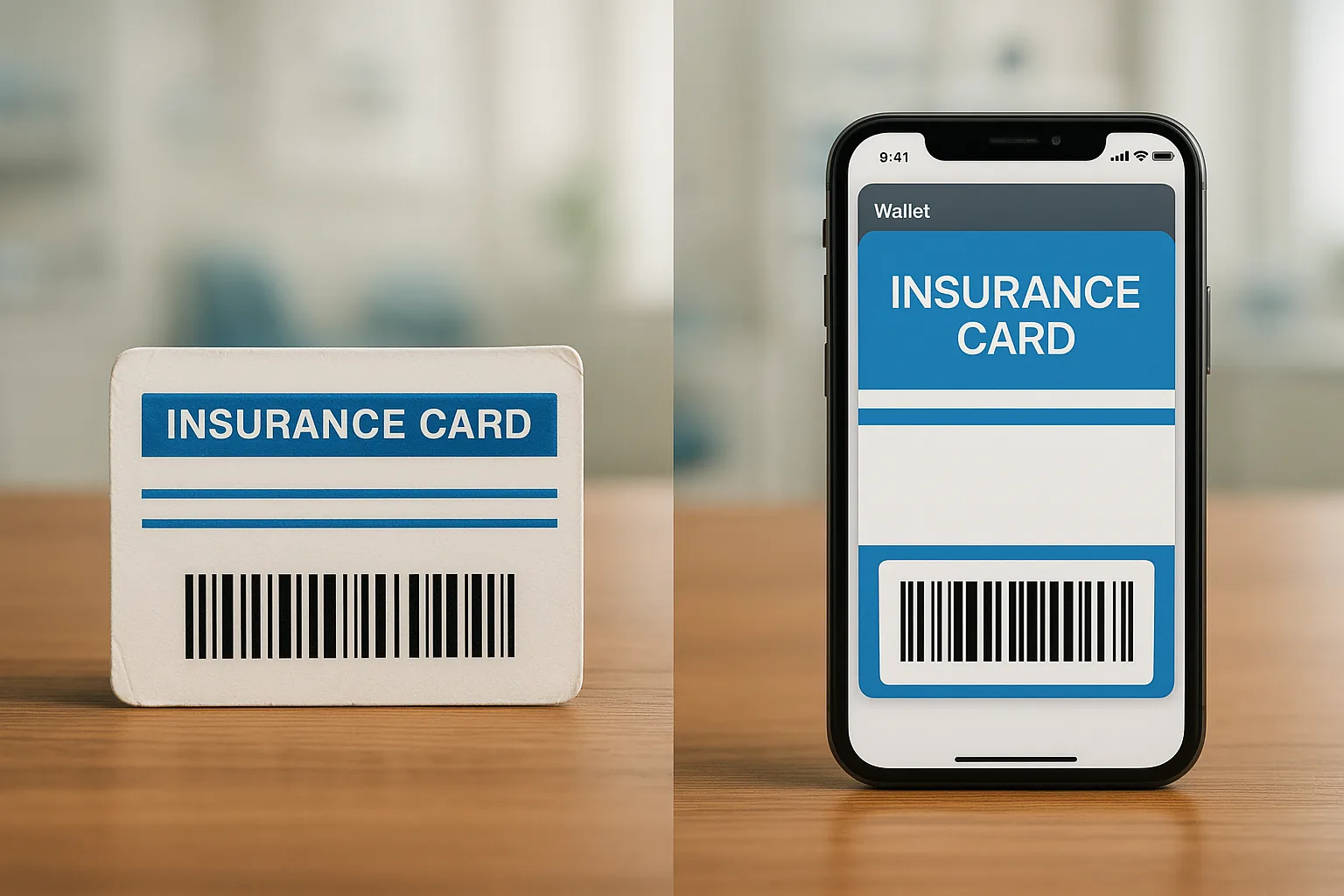
The difference between a static paper card and a dynamic digital pass becomes clear the moment a plan changes. New year, new copay, new employer. The wallet pass can update automatically via push from the issuer. No re-issuance. No confusion at the front desk with outdated information.
The three core use cases gaining traction
Three wallet pass applications are pulling ahead in healthcare adoption. Each solves a distinct problem. Together they reshape the patient-facing experience.
Digital insurance ID cards
Health plans and self-insured employers are issuing wallet passes that can contain member ID, group number, plan type, copay details, and pharmacy benefit information. The key differentiator versus a photo of a card is simple. When a plan changes, the pass can update automatically via push notification. No re-issuance. No patient showing up with a card from two plan years ago.
Aetna, some Blue Cross affiliates, and several digital-first health plans have piloted or launched wallet-based ID cards. In case studies from early adopters, issuers report fewer front-desk data entry errors and faster registration times.
Appointment reminder passes
Health systems issue a wallet pass when a patient schedules an appointment. The pass can include date, time, provider name, location, and prep instructions. For example: "No food after midnight for your imaging appointment." The pass can trigger a notification 24 hours before the visit, and again when the patient enters the facility's geofence.
Some systems encode a QR code on the pass that the front desk or a self-service kiosk scans to complete check-in. This can eliminate manual patient lookup entirely.
Vaccination and health record passes
COVID-19 vaccine cards proved the model. SMART Health Cards defined a standardized, QR-based way to deliver verifiable immunization records. Many jurisdictions made them easy to add to digital wallets like Apple Wallet and Google Wallet. That momentum is expanding to broader use cases. These include TB test results for healthcare workers, pediatric immunization tracking, and travel health certificates. The pass serves as a verifiable, always-accessible portable health credential.
How a regional health system reimagined patient check-in
Here is a composite case study based on patterns from early-adopter health systems. Picture a 12-hospital regional system that serves over 2 million patients each year. It integrated wallet passes into its Epic MyChart patient portal workflow.
The integration architecture works like this. A patient schedules through MyChart. The system triggers wallet pass creation through API using a platform like Passmint. The pass is delivered through an SMS or email link. The patient adds it to Apple Wallet or Google Wallet. If the appointment is rescheduled, the pass auto-updates. When the patient arrives at the facility, a geofence triggers a check-in prompt. A QR scan at a kiosk completes check-in and updates the EHR.
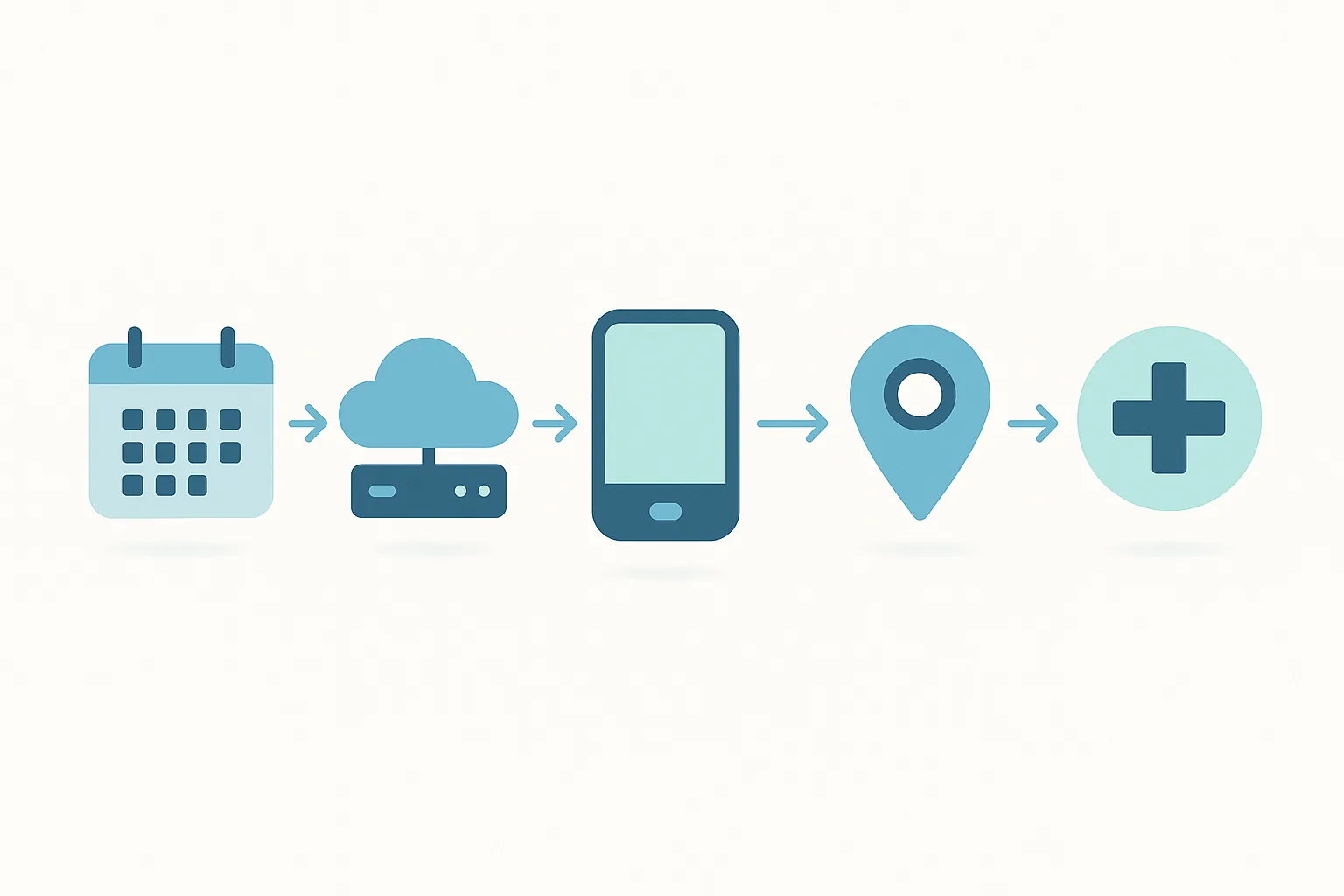
In anonymized pilots that follow this pattern, health systems have reported substantial improvements. These include reductions in front-desk check-in time, lower no-show rates in departments using wallet-based reminders compared with SMS-only controls, and higher patient satisfaction scores for the check-in experience.
One useful implementation detail stands out. The system created different pass designs for different visit types. Primary care, imaging, and surgery pre-op each had type-specific prep instructions in the pass back fields. This reduced day-of cancellations caused by patients not following prep protocols, such as eating before a procedure that requires fasting.
Patient adoption: who is actually using these passes?
This is where assumptions often break down. You might expect wallet passes to resonate only with younger, tech-savvy patients. Internal pilots from early adopters tell a different story.
Some programs see strong adoption among the 55-70 age group. The likely reason is that wallet passes are simpler than downloading and navigating a hospital app. This group is also highly motivated to keep insurance and appointment information accessible on their phone.
Adoption rates also vary by delivery channel. In some internal programs:
- SMS-delivered links: roughly 40-55% add-to-wallet rates
- Email-delivered links: often around a third of the SMS rate
- In-person delivery at registration desks where staff help the patient add the pass: adoption can exceed 70%
The demographic breakdown is revealing. The highest raw adoption often sits with the 35-54 age group, who combine smartphone comfort with frequent healthcare visits. The fastest-growing adoption is often among patients 65 and older, especially when staff assist them. The lowest adoption tends to be the 18-24 group. It is not a tech comfort issue. They simply use healthcare less often.
Wallet passes also bring built-in accessibility advantages. They inherit VoiceOver support on iOS and TalkBack support on Android. Large text on lock screens helps many low-vision patients. Multilingual pass content is also straightforward to implement.
Compare this to patient portal app adoption. Many health systems see only about 30-40% of patients actively using their portal app. Wallet passes bypass the app adoption problem entirely.
HIPAA and compliance: what healthcare teams need to know
Every healthcare compliance officer asks the same question. Is patient data on a wallet pass a HIPAA concern?
The short answer is that wallet passes are presented on the user's device in a way that is similar to a physical card in a physical wallet. Apple and Google design Wallet so that issuers cannot see other passes, and payment details are protected. The pass content is mainly stored on or synced to the device. However, both companies may process some wallet data and metadata under their own privacy policies. Google Wallet objects are also managed on Google's servers.
For covered entities, a pass that only includes what is already on a physical insurance card or a standard appointment reminder is conceptually similar to information patients already carry in a purse or pocket. The patient chooses to store it on a personal device.
The infrastructure that creates and delivers passes is different. It must be HIPAA-compliant. The key distinction is between the pass payload, which is what appears on or is synced to the device, and the pass delivery pipeline, which includes API calls, pass generation servers, and push notification services. The pipeline must meet HIPAA standards when PHI is involved.
That means Business Associate Agreements with pass platform providers, encryption of data in transit and at rest, and audit logging of pass creation events when PHI is present.
There are also clear rules about what to avoid on a wallet pass. Do not include diagnosis information, detailed treatment records, medication lists, or anything beyond what would typically appear on a physical insurance card or appointment reminder card. Treat the pass as an access and identification tool, not as a detailed medical record.
Platforms like Passmint are designed to support HIPAA-aligned deployments. They can provide encryption, audit logging, and Business Associate Agreements when they handle PHI. This makes it realistic for healthcare organizations to build compliant wallet pass workflows without building all the infrastructure from scratch.
Recent regulations also support this shift. CMS and ONC rules that push for patient access to digital health information, including the 21st Century Cures Act and information blocking rules, create a supportive environment for digital credentials.
Why healthcare's digital adoption is accelerating now
Several forces are converging to make this the right moment for wallet passes in healthcare.
COVID-19 permanently shifted patient expectations. Telehealth went from a small share of visits to well over 40% at peak in many systems in a short time. Patients will adopt digital tools when the value is clear and the friction is low. Wallet passes follow the same pattern.
The staffing crisis creates urgency. Healthcare systems face severe front-desk and administrative staffing shortages. The U.S. Bureau of Labor Statistics projects large numbers of annual openings for medical secretaries and related roles. Health systems need to automate check-in, not only digitize it.
EHR vendors are building wallet pass hooks. Epic MyChart and Oracle Health (Cerner) now support more integrations that trigger external notifications and digital credentials. This makes wallet pass integration easier than it was a few years ago.
Consumer expectations from other industries carry over. Patients already use wallet passes for airline boarding passes, hotel keys, and event tickets. Many now ask why their doctor's office cannot offer the same experience.
Cost pressure is intensifying. With reimbursement rates tightening and operational costs rising, spending on scheduling and check-in administration is under more scrutiny. In some pilots, organizations have measured ROI on scheduling and check-in costs within a quarter, although results vary.
Getting started: a practical roadmap for healthcare product teams
If you are building for healthcare or leading a health system's digital experience, you can take a phased approach that lowers risk and increases impact.
Phase 1: appointment reminders
Start here. Appointment reminder passes are the lowest-risk, highest-impact entry point. They do not need to contain more PHI than a standard printed or emailed appointment confirmation. The impact on no-show rates is often immediate and measurable. Patients see the value as soon as they receive their first pass.
Phase 2: digital insurance and member ID cards
Coordinate with payer partners or, for self-insured systems, build directly. The real-time update capability is the differentiator versus a static PDF or a photo of a card. Focus your messaging on that dynamic quality: "Your card is always current."
Phase 3: check-in integration
Connect wallet pass QR codes to your registration and EHR system for scan-to-check-in workflows. This phase requires deeper integration but delivers the largest operational savings. This is where Sarah's 12-second check-in becomes real.
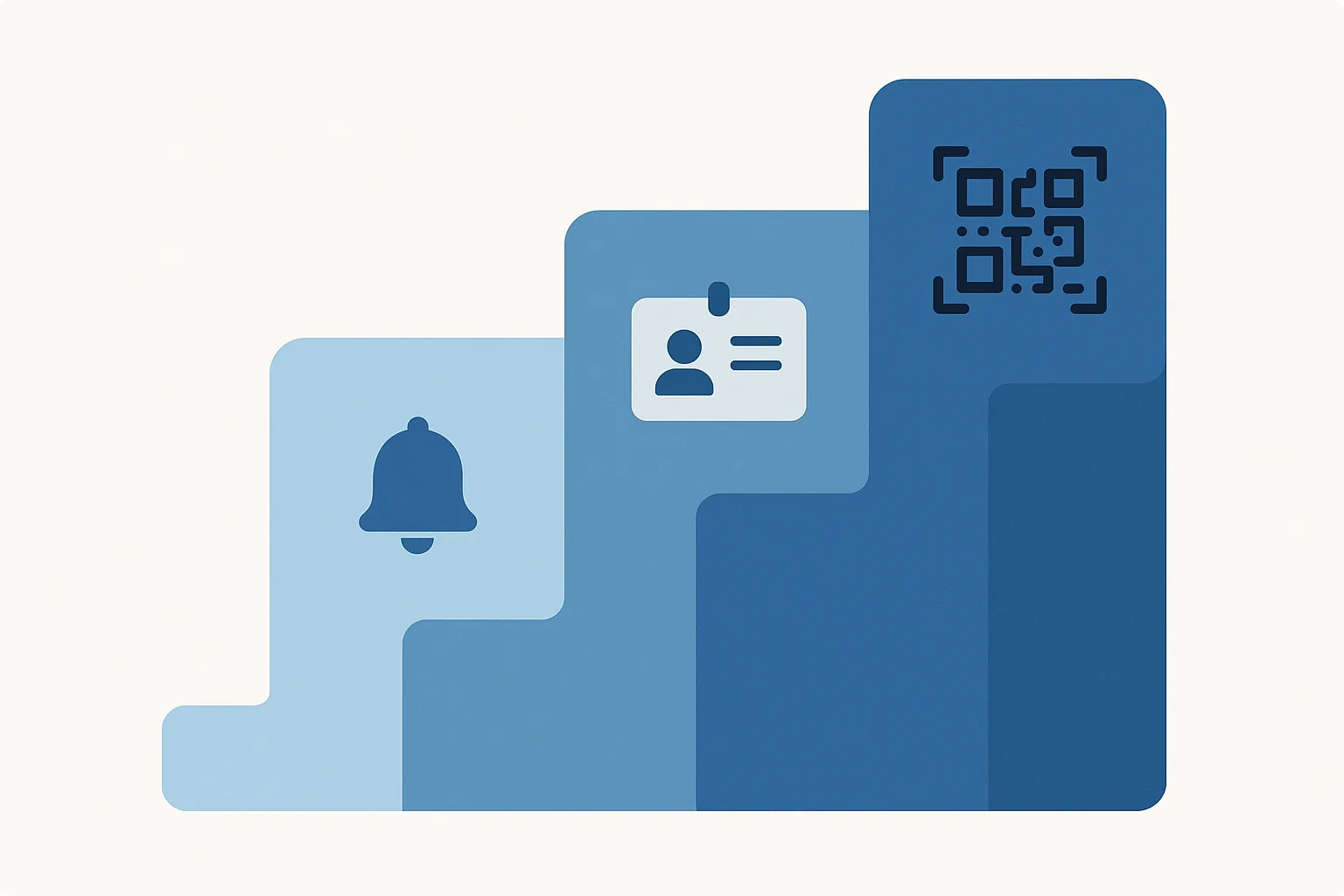
For each phase, your technical foundation matters. Use a wallet pass platform with an API-first architecture that supports pass updates, push notifications, geofence configuration, and pass analytics. Make sure the platform can sign Apple Wallet passes and generate Google Wallet objects. For healthcare, confirm that the provider offers a Business Associate Agreement for HIPAA use cases.
The 12-second check-in starts here
Sarah's 12-second check-in is not a concept demo. It is achievable today with existing wallet pass infrastructure and standard EHR integrations.
Healthcare has spent decades digitizing the back office, including EHRs, billing systems, and claims processing. The patient-facing experience is still mostly analog. Wallet passes use technology that is already in many patients' pockets. They do not require a separate app download. They update in real time. With careful design, they can work within HIPAA constraints. Many early adopters report measurable ROI soon after deployment.
Health systems that move now improve patient experience and reduce manual work. They also set expectations for digital patient interactions in their markets.
For healthcare product leaders evaluating this space, the barrier to entry has never been lower and the case for action is strong. Passmint's API helps teams go from concept to live wallet passes quickly, often in days once integrations and approvals are in place, even in healthcare's complex compliance environment.
Wallet passes are likely to become standard in healthcare. The key question is whether you lead the shift or follow it later.
Primary sources
Common questions
Technical content writer, Passmint
Julio is a technical content writer at Passmint. He writes about Apple PassKit, the Google Wallet API, and what breaks when wallet passes meet production traffic.
More from Julio Song →