
It's 12:47 a.m. Your flight landed two hours late. You're exhausted, your phone battery is clinging to 14%, and all you want is a bed. But instead of standing at a front desk while someone hunts for your reservation and re-encodes a key card that may or may not work on the first swipe, you walk straight past the lobby. You tap your iPhone on the door lock. The lock clicks green. You're in bed within four minutes of stepping off the elevator.
No plastic. No queue. No small talk.
Five years ago, this was a novelty reserved for a handful of tech pilots. Today it's happening at scale. Hilton's Digital Key has been used more than 100 million times. And the plastic key card, the thing hotels have handed out billions of times, is quietly on its way out. When you account for replacement, encoding hardware, and disposal, the average hotel spends somewhere between $0.30 and $1.00 per card. Multiply that across a full property calendar and the number stops being trivial.
This isn't a gadget story. It's an operational, financial, and guest-satisfaction shift picking up speed. Wallet-native passes, the ones that live in Apple Wallet and Google Wallet without any app download, represent the next leap beyond proprietary hotel apps. If you're a product manager, a hospitality marketer, or someone in the business of issuing passes, this piece shows you where the industry stands right now and gives you a framework for deciding whether a wallet pass program belongs on your 2025 to 2027 roadmap.
From magnetic stripe to mobile wallet: a brief history of hotel room access
Hotel room access has been evolving for a long time, and each step removed a little more friction.
It started with metal keys. Then came the magnetic stripe card in the 1970s and 80s, which let hotels re-key rooms instantly between guests. RFID and NFC key fobs followed, killing the demagnetization problem that plagued mag-stripe cards. Around 2014 to 2019, the big chains launched digital keys inside their own apps. Hilton Honors and Marriott Bonvoy led that wave. Then, starting around 2022, we entered the current era: wallet-native passes.
Here's the distinction that matters. A hotel's branded app digital key still requires the guest to download and log into that app. A wallet pass lives directly inside Apple Wallet or Google Wallet, with zero install required. That difference is significant, because more than 60% of guests simply won't download a hotel's app for a one or two night stay. A wallet pass meets them where they already are.
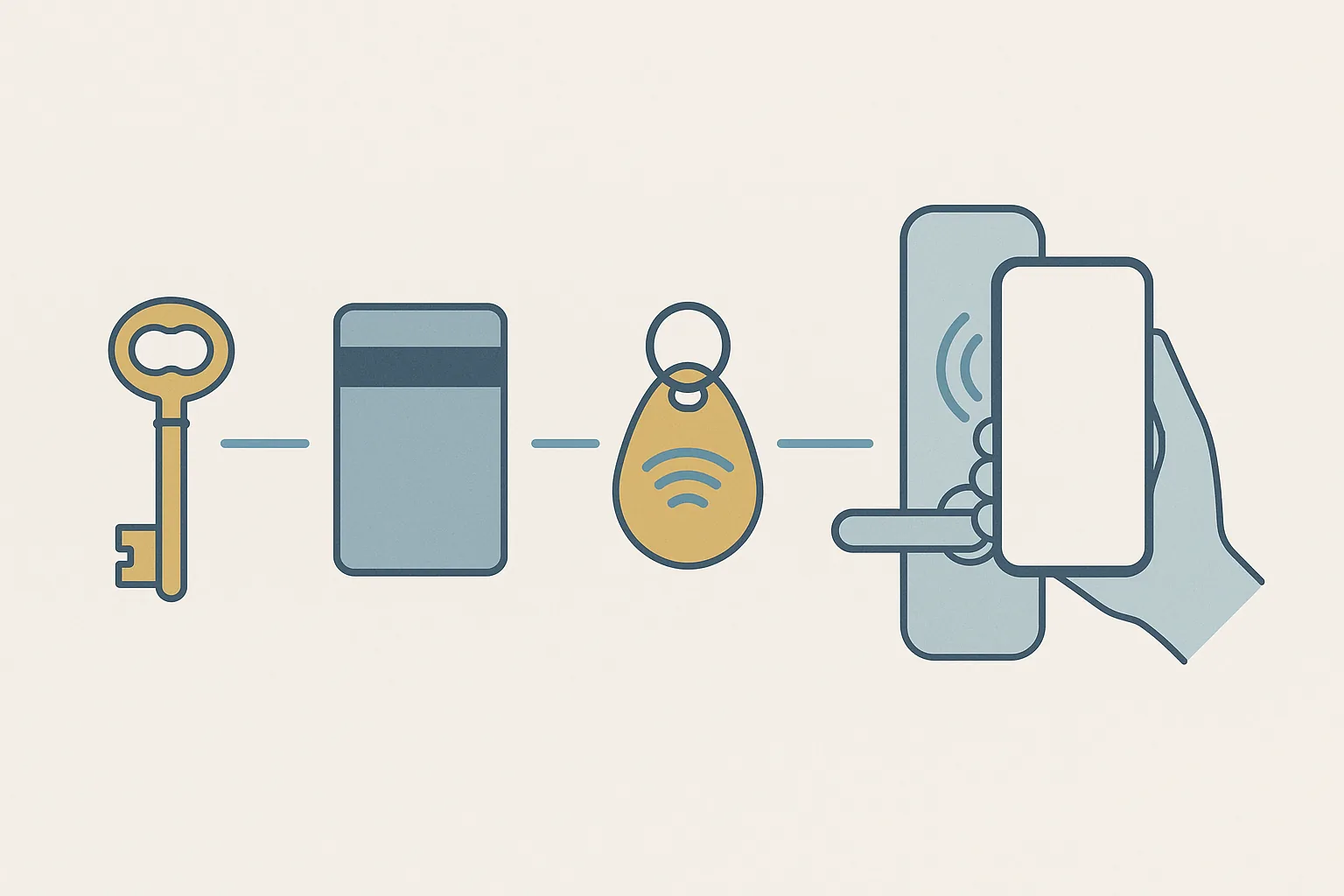
None of this works without the locks. Companies like ASSA ABLOY, Allegion, and Dormakaba supply the door hardware behind most of the world's hotel rooms. Their firmware upgrades are what make wallet pass compatibility possible at scale. Their NFC and UWB lock lines are the foundation everything else sits on.
The pandemic accelerated all of it. Contactless demand spiked in 2020 and 2021, and roadmaps penciled in for the late 2020s got pulled forward by an estimated two to three years across the major chains.
Who's already doing it: real-world adoption
Let's look at who's actually shipping this today.
Hilton pioneered the digital key through the Hilton Honors app back in 2015. Since then they've expanded across 7,000-plus properties and moved steadily toward wallet pass compatibility, including Apple Wallet room key support at select locations. Hilton is the reference case for the whole category.
Marriott Bonvoy rolled out its own Digital Key, but its story reveals a real business tension. Marriott wants guests inside the Bonvoy app, where it can market, upsell, and reinforce loyalty. A wallet pass is lower friction for the guest but pulls them out of that owned experience. Keeping guests in the loyalty app versus giving them the easier wallet path is a strategic decision as much as an engineering one.
IHG and Hyatt sit a step behind Hilton and Marriott. The lag usually comes down to two things: lock hardware refresh cycles and integration complexity. You can't offer a wallet key on a door that can't read one.
Independent and boutique properties are the surprising part of the story. They can't afford Hilton-scale custom development. But pass-issuance platforms like Passmint and PassKit are making wallet passes accessible to properties of any size. That levels the field. A 90-room boutique hotel can now offer the same tap-to-enter experience as a global chain.
The data backs the momentum. Where properties report pilot results, roughly 30% to 40% of guests choose the digital key on the first offer, and those rates climb once front-desk staff learn to explain it well.
The guest experience data: what actually improves
So what actually gets better, and by how much? The numbers are more concrete than you might expect.
Check-in speed. Mobile and digital check-in reduces front-desk interaction time by roughly 3 to 5 minutes per guest, according to operator reports. That sounds small until you picture a 300-room property during a 6 p.m. rush. Those minutes compound into shorter queues and a calmer lobby.
Lost and dead cards. Hotels report that about 1 in 4 guests returns to the front desk because of a demagnetized or misplaced card. A wallet pass removes that failure mode entirely. Your phone doesn't demagnetize in your back pocket.
Push notifications. Most operators miss this one. A plastic card is static. A wallet pass is dynamic. It can push a room number change, a late-checkout confirmation, or an upgrade notice straight to the guest's lock screen, with no app engagement required. That's a genuinely new communication channel between hotel and guest.
Satisfaction scores. Hilton has reported higher satisfaction among Digital Key users compared to non-users. If app-based keys already lift scores, it's reasonable to expect wallet passes, with even less friction, to perform at least as well.
Accessibility. Wallet passes can be pre-loaded and shared, so a caregiver could hold access to a guest's room. They also work offline, which matters when the hotel Wi-Fi is spotty or a phone has no signal in a stairwell.
A case study in wallet pass implementation
Let's make this concrete with a realistic walkthrough.
Picture a 200-room independent hotel. It partners with a pass-issuance platform, connects to its Property Management System (PMS) through an API, and starts issuing Apple Wallet and Google Wallet passes automatically at booking confirmation. No app for the guest to download. The pass just arrives.
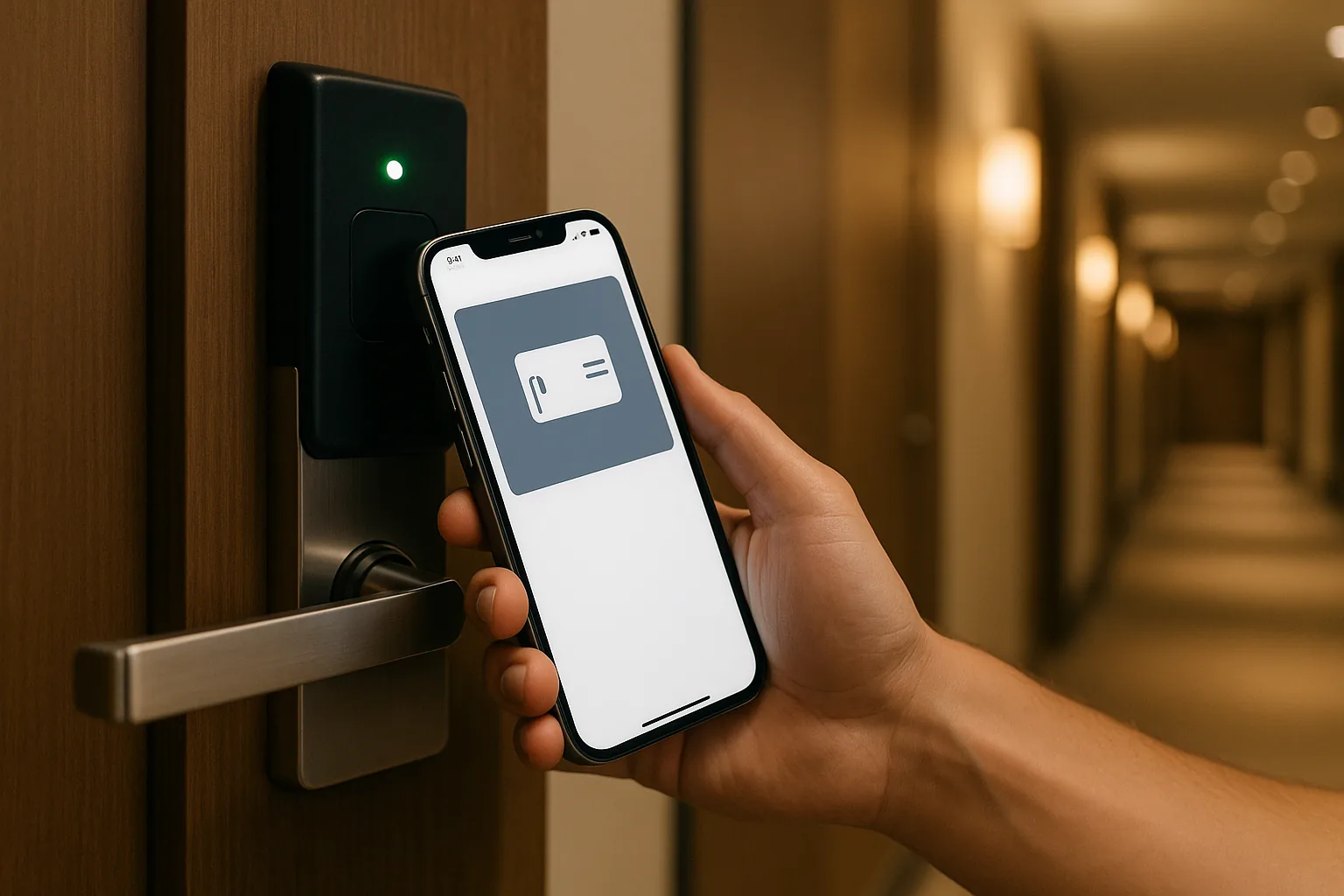
Here's the pass lifecycle:
- At booking: the pass is issued and lands in the guest's wallet.
- At check-in: the pass updates with the assigned room number.
- On the door: the NFC credential activates, and the guest taps in.
- Near departure: the pass updates with the checkout time.
- After the stay: the pass expires and archives.
Every one of those touchpoints can carry a personalized message: a welcome note, a spa offer, a thank-you with a loyalty signup link.
On the back end, staff get capabilities plastic never offered. They can revoke a pass remotely, issue a replacement instantly through a link, and watch real-time analytics on wallet adds, pass opens, and tap events. If a guest reports a problem, the front desk can act in seconds without re-encoding anything.
Here's what most decision-makers miss. The pass is a persistent, updatable surface that stays on the guest's phone for the entire stay, and it can be repurposed for loyalty enrollment after checkout. You issued a key. You also gained a marketing channel.
The operational and sustainability business case
Now for the money and the math.
Start with the true cost of a plastic key card. The card itself runs $0.30 to $1.00. Add encoder and printer hardware, ongoing maintenance, housekeeping labor to collect and re-stock cards, and the landfill impact of cards that mostly get tossed. A wallet-based system replaces most of that with a per-pass platform cost and no printing hardware at all.
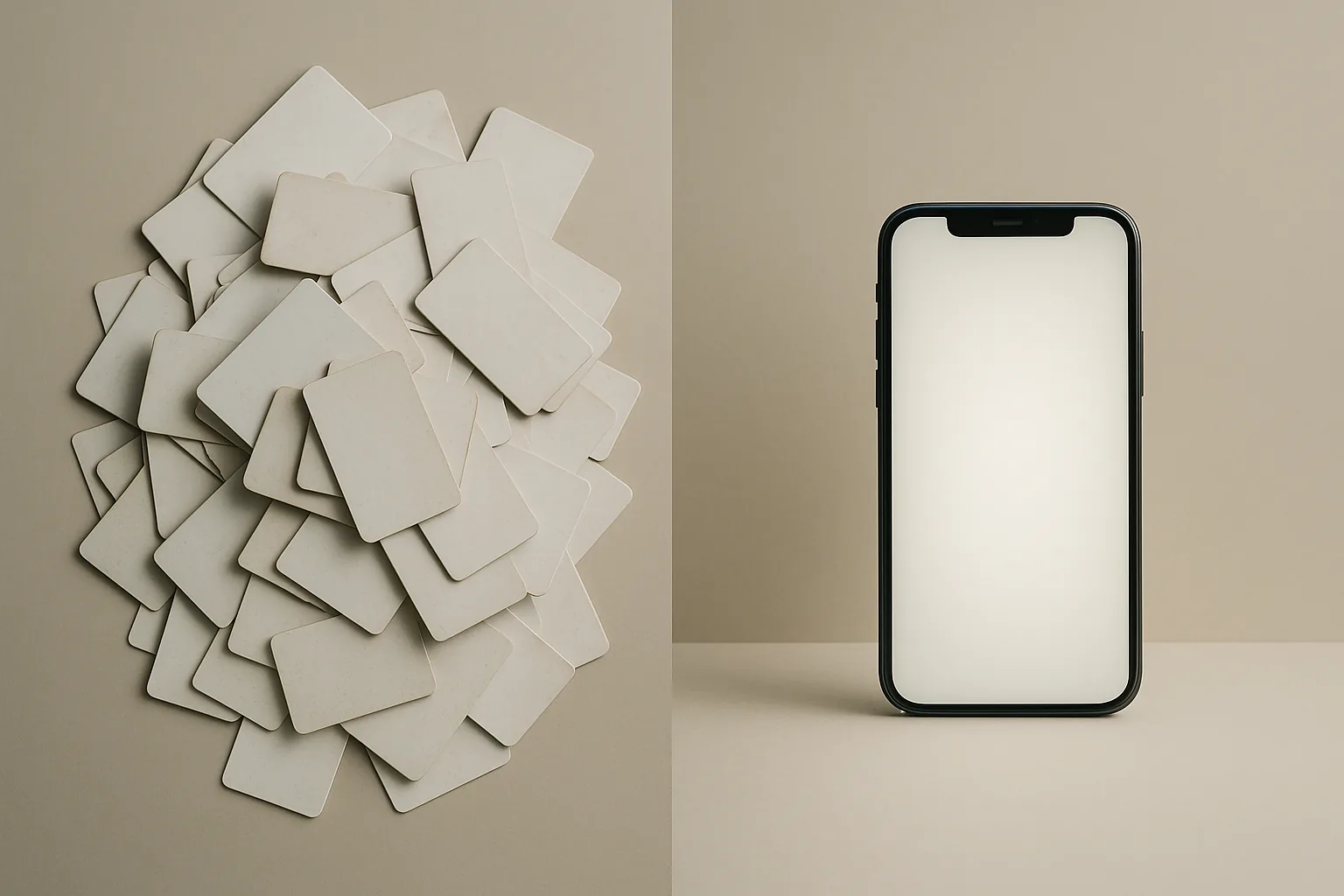
The sustainability case is direct. A 300-room hotel issuing two cards per room per night generates more than 200,000 plastic cards a year. Cutting that is a real, quantifiable waste reduction, and it maps directly to ESG reporting goals that carry growing weight for hotel brands.
There's a staffing upside too. Front-desk employees freed from encoding and re-keying can spend that time on guest interactions that actually build loyalty. In a labor-constrained market, that reallocation matters.
Now the honest part: the capital hurdle. Properties running older RFID-only locks face a hardware refresh to get NFC capability, and that can cost $200 to $500 per door. That's real money. But model it against years of card costs, reduced labor, fewer front-desk interruptions, and higher satisfaction scores, and the payback period is often shorter than operators expect.
The friction points: what's still holding the industry back
This shift is real, but it isn't frictionless. A few things are genuinely slowing it down.
Lock compatibility. A large share of the global installed base is RFID-only, using 125 kHz or 13.56 MHz MIFARE hardware that can't handle NFC or UWB wallet interactions. Replacing those locks is the single biggest infrastructure barrier. Full stop.
Opt-in rates and the digital divide. Younger, tech-forward travelers adopt eagerly. Across all demographics, though, adoption rates in most pilots land around 30% to 40%. That means hotels must keep running parallel plastic-card infrastructure. Removing plastic entirely is still years off.
Front-desk retraining. Staff need to explain wallet passes with confidence, troubleshoot add-to-wallet failures, and handle guests with dead or incompatible phones. Most rollout plans underestimate this change-management work.
Android variability. Apple Wallet's NFC behavior is very consistent. Google Wallet's NFC pass implementation varies more across Android manufacturers and OS versions, which creates a less predictable experience that hospitality tech teams need to plan around.
Privacy. Some guests will have questions about location or credential data tied to a wallet pass. Clear privacy language and transparency in the add-to-wallet flow are not optional. Trust is the whole point.
Where is this heading? The 2025 to 2027 outlook
Look a couple of years out and the trends become clearer.
The lock refresh wave is the big one. As major chains finish their NFC upgrades, and Hilton has publicly targeted full-estate compatibility, the biggest barrier starts to disappear. Expect the compatibility gap to close significantly by 2026 to 2027.
Then there's the "super pass" idea. Picture one wallet pass that holds your room key, your F&B charges, spa access, parking, and loyalty points, all updating live. The entire stay living inside the wallet, not scattered across cards and apps.
Standardization is coming too. Industry bodies like AHLA and HTNG, along with Apple and Google's own hospitality partner programs, are pushing toward interoperability. That will lower the cost of bespoke integrations over time.
And there's a window for independents. While the big chains build proprietary systems, independent properties using platforms like Passmint can reach guest-experience parity today, at a fraction of the cost. That window will close as enterprise solutions mature. Properties that move now build integration depth and guest familiarity before the market standardizes.
Here's the prediction for decision-makers: by 2027, wallet pass room keys will be table stakes for upper-midscale and above properties. The question stops being whether to adopt. It becomes how early you want to move.
The full picture behind one tap
Come back to that guest arriving at 12:47 a.m. Behind that single tap is a chain of systems working together.
A PMS API call issued her wallet pass at booking. An NFC lock authenticated it at the door. A push notification told her she'd been upgraded to a room with a view. And a plastic card was never printed, never encoded, never tossed in a bin.
That's not a cosmetic upgrade. It's a rethink of the guest relationship, the front-desk role, and the hotel's operating model.
For pass-issuers, hospitality marketers, and product managers, the takeaway is simple. Wallet passes are not a feature. They're an infrastructure layer. Hotels that treat them that way, building the integration depth to make passes truly dynamic and data-rich, will hold a guest-experience advantage that no loyalty points program can replicate.
The technology is ready. Guest appetite is proven. The barriers that remain are operational, not technical. Which means the next move belongs to hospitality leaders, not engineers.
Primary sources
Common questions
Technical content writer, Passmint
Julio is a technical content writer at Passmint. He writes about Apple PassKit, the Google Wallet API, and what breaks when wallet passes meet production traffic.
More from Julio Song →