A brand sinks $200K into a new loyalty app. The launch goes great. Eighty thousand downloads land in the first quarter, and the marketing team celebrates. Then, within 90 days, roughly 60% of those users have deleted the app. No angry emails. No cancellation notices. They just vanish.
Here's the uncomfortable part. That program didn't fail because customers stopped caring about rewards. It failed because of friction built into the QR-app model itself. The rewards were fine. The infrastructure was the problem.
QR-based loyalty is still the dominant way brands run rewards programs. But the retention data piling up across retail and food and beverage tells a different story than the launch-day dashboards do. This post breaks down that data, explains the mechanics behind it, and walks through a case study that makes the argument hard to wave away. The short version: Apple and Google Wallet passes aren't just a nicer user experience. They're a better loyalty infrastructure.
The QR code loyalty trap: how brands mistake adoption for retention
Most QR loyalty programs fall into one of two buckets. The first is the app-embedded QR code, the Starbucks-style model where customers open a branded app and show a scannable code at checkout. The second is the receipt or print QR code that sends people to a web enrollment flow. Both work on paper. Both carry friction that compounds over time.
Start with the app abandonment problem. Industry data from Localytics shows 71% of app users churn within 90 days of install. Loyalty apps aren't exempt from this. If anything, they get hit harder, because a loyalty app offers almost no daily utility outside the moment of purchase. Nobody opens their coffee rewards app to pass the time.
Then there's the enrollment versus engagement gap. Brands love to report sign-up numbers. Big enrollment figures look great in a board deck. But converting enrolled members into repeat redeemers is a different battle entirely, and QR programs hide the losses. The friction is invisible. Customers don't quit. They just stop showing the code.
Call it passive disengagement. A cancelled subscription sends a signal. A QR loyalty dropout sends nothing. The customer simply fades, and the brand only notices quarters later when redemption rates flatten and cohort lifetime value stops growing. By then the damage compounds silently.
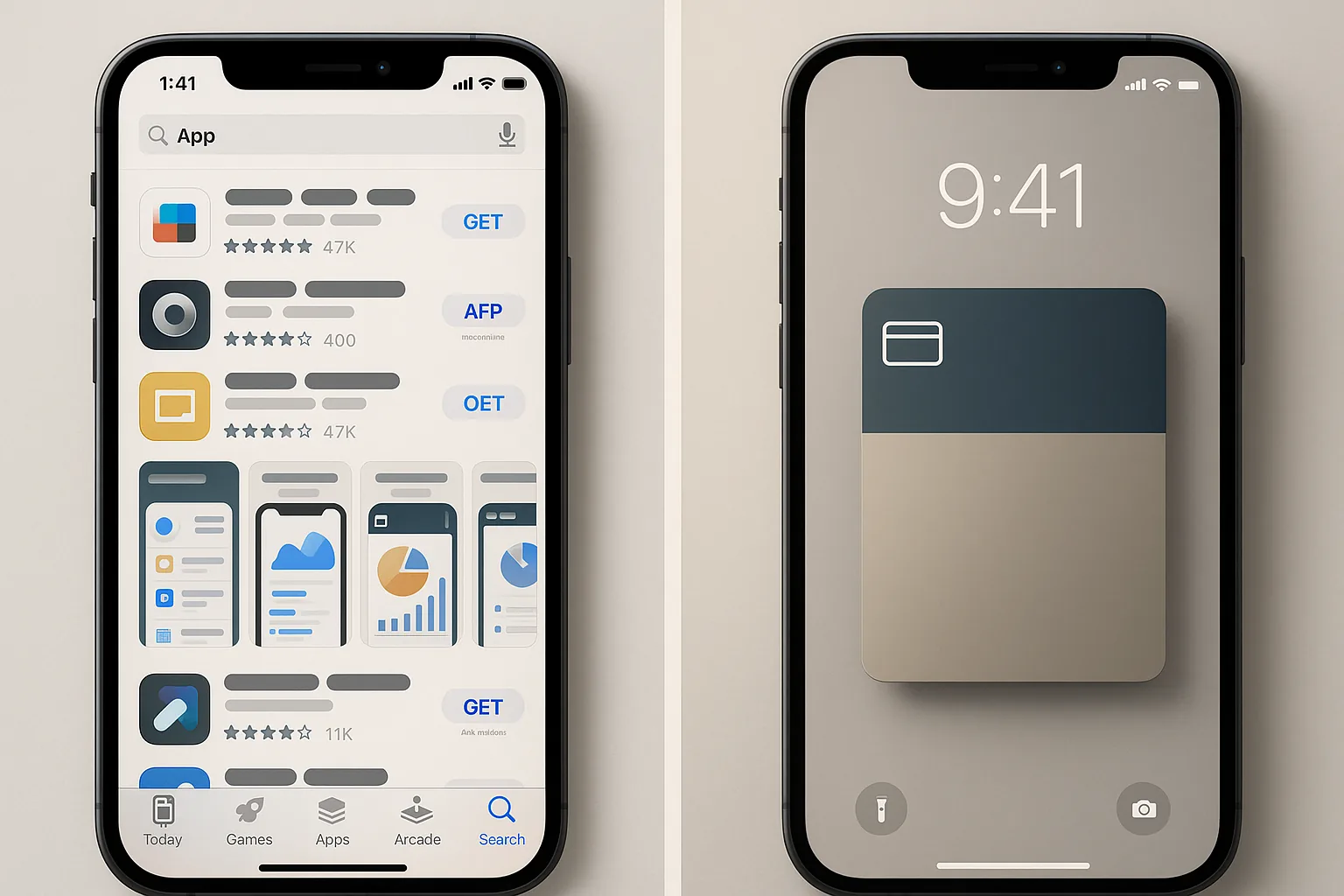
Wallet passes change the starting conditions. They skip the app install completely and live natively on the device lock screen. That's a structural advantage before a single notification ever goes out.
The three structural disadvantages killing QR loyalty ROI
| QR code loyalty | Wallet pass loyalty | |
|---|---|---|
| Where it lives | A screenshot, an email, or a printed card the customer must find | Apple Wallet or Google Wallet, one swipe from the lock screen |
| Staying current | Static image, so a changed balance or offer needs a reissue | Push a field update and every installed pass changes silently |
| Re-engagement | None, because the brand cannot reach the customer through the code | Lock-screen notifications and location triggers |
| Install friction | Low, but so is retention | One tap, and it persists |
| Measurability | Scan counts only | Installs, removals, updates, and per-campaign attribution |
QR loyalty struggles for three specific reasons. Each one leaks members. Together, they drain ROI.
Disadvantage 1: The app install wall. Every drop-off in the install funnel is a lost member before the program even starts. App Store friction, storage anxiety, and permission prompts all bleed users. Mobile landing pages for app-based loyalty programs convert at just 15 to 25%. That means brands lose 75 to 85% of interested customers at the point of entry.
Disadvantage 2: No native push channel without app permissions. A branded loyalty app has to request notification permission. On iOS, push opt-in rates hover around 43%, according to Airship's 2023 data. So even after someone installs your app, more than half of them become permanently unreachable. Wallet passes work differently. They deliver lock-screen notifications natively through Apple and Google Wallet, with no separate permission required. Your reachable audience expands immediately.
Disadvantage 3: Point-of-sale friction. Showing a QR code means unlocking the phone, opening the app, finding the code, and presenting it. That's a five-to-seven-step process under real checkout pressure, with a line forming behind you. Staff have to remember to prompt for it. Customers feel awkward fumbling. Both factors quietly suppress how often the code actually gets shown. Wallet passes surface with an NFC tap or a single lock-screen swipe.
Now stack the friction. A program with a 20% install rate, a 43% push opt-in rate, and a 60% QR-presentation rate at checkout reaches an effective engagement audience of about 5% of the original interested crowd. That's multiplicative friction in action. Ninety-five percent of your interest, gone.
The disadvantages are not in dispute. What matters is whether wallet passes measurably fix them, so look at brands that made the switch.
What the retention data actually shows
Head-to-head, the numbers favor wallet passes across every core loyalty metric.
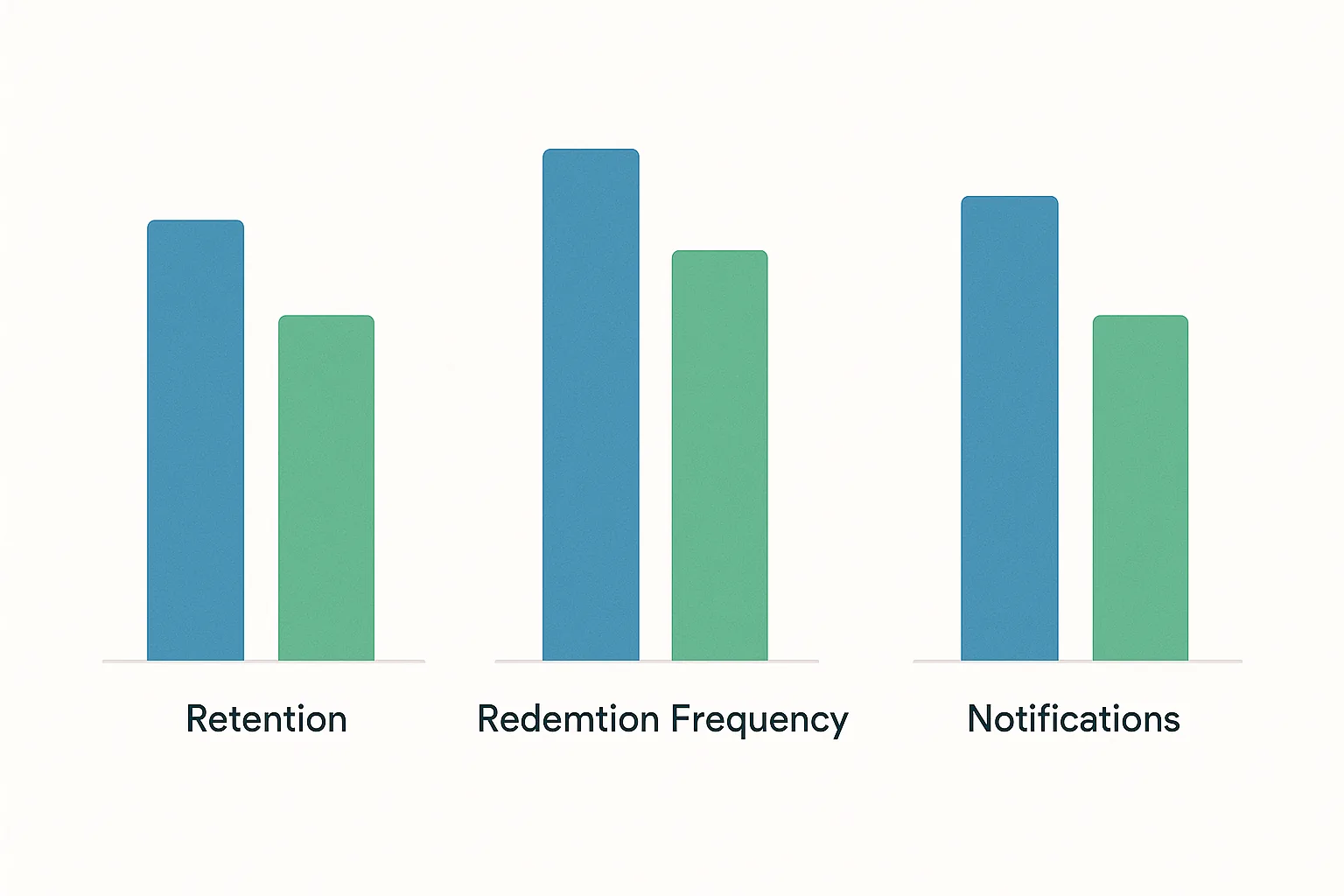
Start with retention. Wallet pass loyalty programs report 2x to 4x higher 90-day retention than app-based QR programs. The reason is straightforward. There's no uninstall action. A pass lives in Wallet until someone deliberately deletes it, and deleting a pass takes real effort most people never bother with.
Redemption frequency tells a similar story. Brands moving from a QR app to wallet passes report redemption frequency climbing 30 to 60% within the first two quarters. Credit lock-screen visibility and frictionless checkout presentation.
Push notification open rates widen the gap further. Wallet pass update notifications, triggered through PassKit-style pushes, land open rates around 10 to 15%. Branded loyalty app push notifications sit at 3 to 5%. The difference comes from the delivery surface and far less notification fatigue.
There's also the ongoing value signal. Because wallet passes update dynamically with point balances, tier status, and personalized offers, customers keep getting nudges of value without opening anything. Your brand stays visible between purchases, which is exactly when most loyalty programs lose contact.
One honest caveat. Large-scale, peer-reviewed longitudinal studies on this are still thin. Much of the data comes from platform providers and early adopter case studies. That doesn't erase the directional signal, but it's worth naming. The numbers point one way, consistently.
Case study: from 12% to 41% active member rate
Consider a mid-sized fast-casual F&B brand with 45 locations. It ran a QR-based loyalty program through a white-label app for 18 months before switching to Apple and Google Wallet passes. This composite case draws from documented outcomes across brands using wallet pass infrastructure, but the pattern holds.
Before migration, the picture was familiar. The brand had 38,000 app downloads and a 12% active member rate, defined as a redemption in the last 60 days. Staff rarely prompted QR scans at the counter. Notification opt-in sat at 38%. A lot of enrolled members were, functionally, inactive.
The migration approach was straightforward. The brand issued wallet passes to its existing member base by SMS and email. It integrated PassKit-style dynamic updates so passes reflected real-time point balances. And it configured geo-triggered lock-screen notifications for members within 500 meters of a store.
Six months later, the cohort results were hard to argue with. Active member rate climbed from 12% to 41%. Average visit frequency for active members rose by 1.8 visits per quarter. And the brand shut down its loyalty app entirely, trimming an estimated $60K a year in maintenance costs.
The standout lesson? Geo-triggered notifications alone produced a roughly 8% walk-in lift during promotional windows. A QR-only program can't do that without an active app session running, which almost never happens. That capability is structurally out of reach for QR.
The retail angle: winning on ticket size, not just visits
F&B loyalty is about frequency. Retail loyalty is about ticket size. Wallet passes win on both, just through different mechanics.
In retail, the value driver is bigger baskets and tier-based spending incentives, not daily visits. This is where dynamic pass updates become a significant advantage. A wallet pass can show a customer exactly how close they are to the next reward tier. Something like "$42 away from Gold status," sitting right on the lock screen. That creates a pull-forward spending incentive a static QR code simply can't replicate without an app open.
The data backs the psychology. Specialty retail brands using wallet passes with dynamic tier-progress messaging report average transaction value increases of 12 to 18% among loyalty members versus control groups. The "almost there" trigger, surfaced at lock-screen level, does real work.
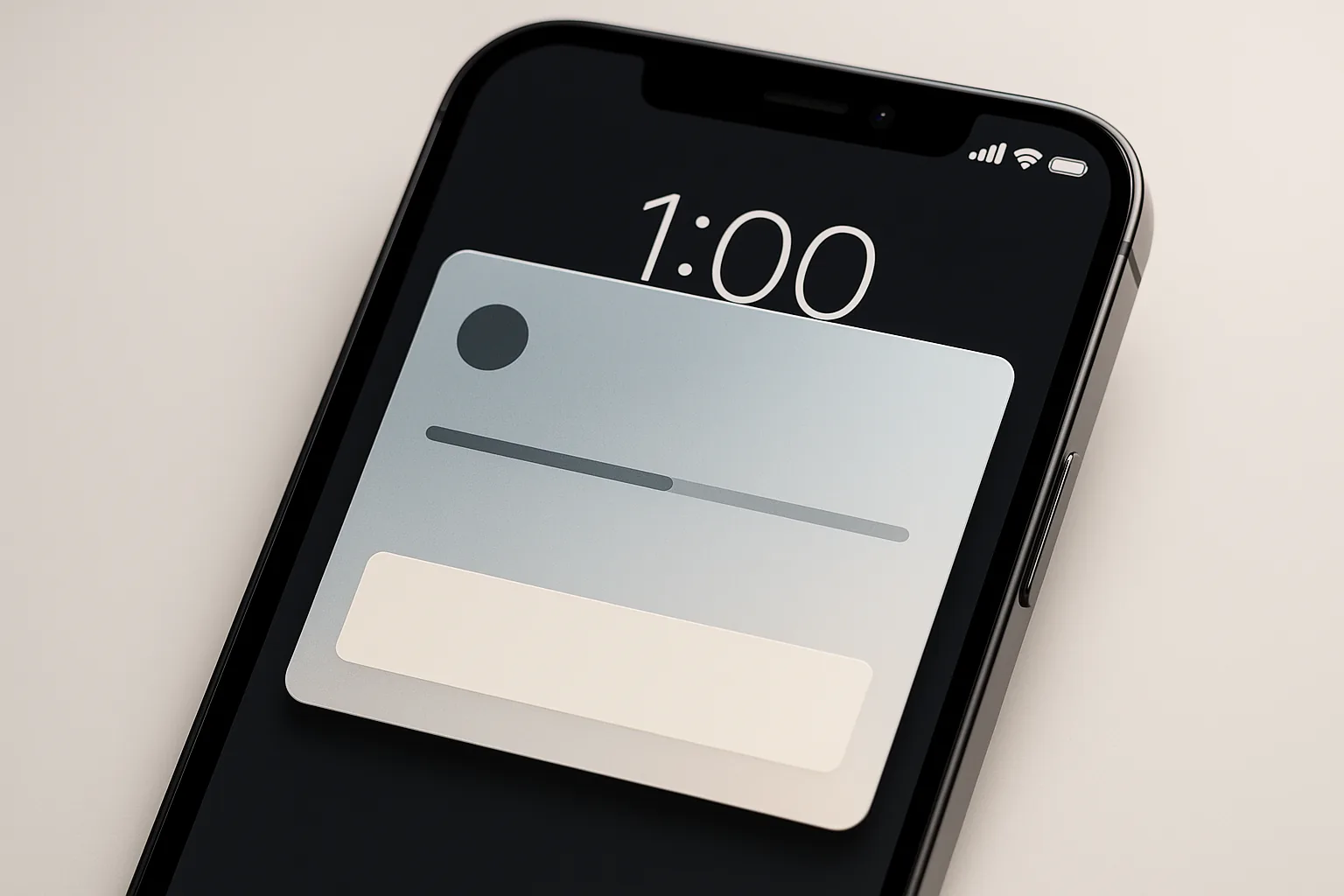
Personalization scales cleanly, too. Because wallet passes update server-side through push, retailers can drop personalized offers onto the lock screen with zero customer action. A birthday discount. A win-back offer for a lapsed shopper. These appear without anyone opening anything. QR programs can only match this with active app engagement, which brings us right back to the install and notification permission walls.
Across F&B and retail, the data lands in the same place. Wallet passes outperform on every measurable loyalty KPI. So why are so many brands still on QR? Three reasons: inertia, an overblown fear of migration complexity, and no clear framework for deciding.
The migration complexity myth
The number one objection sounds reasonable. "We can't migrate. We'd lose our member data and our app integrations." It's a myth. Wallet pass platforms like Passmint are built to ingest existing member records, map loyalty fields to pass templates, and issue passes en masse by email or SMS. Customers don't re-enroll. Their data comes with them.
The technical lift is smaller than most product managers assume. Issuing a wallet pass needs three things: a pass template, a signing certificate (Apple WWDR or Google Pay API credentials), and a delivery mechanism. Passmint abstracts all three layers. For most loyalty use cases, that pulls integration time down from months to days.
What about the "we still need a QR code for POS scanning" concern? Wallet passes handle that natively. A pass can embed a QR or barcode directly, so your existing POS scanners keep working exactly as they do now. The pass just becomes the delivery vehicle for the code instead of a separate app.
Then there's cost. Running a loyalty app means dev resources, App Store compliance, OS update compatibility, and push infrastructure. For mid-market brands, that runs $80K to $300K a year. Wallet pass programs at the same member volume cost a fraction of that, which frees budget to spend on actual rewards instead of maintenance.
Reframe the whole thing. This isn't a platform switch. It's a loyalty infrastructure upgrade. Your loyalty logic, member data, and POS integrations stay intact. Only the customer-facing surface changes.
The decision framework: should you switch?
Here's a four-question diagnostic you can run today.
- What's your 90-day active member rate? Below 25%, and your engagement infrastructure is the likely culprit, not your rewards.
- What's your app push notification rate? Below 50%, and you're structurally unreachable to most of your enrolled members.
- What's your QR presentation rate at POS? If staff or customers skip it more than 30% of the time, friction is quietly suppressing your data and your ROI.
- What's your annual app maintenance cost? If it's larger than your annual loyalty incentive budget, you have a cost structure problem.
Now map the results. Score poorly on three or four questions, and wallet pass migration should be a priority, not a someday roadmap item. Score poorly on one or two, and a pilot for a new member segment makes sense before you commit fully.
Not ready to kill the app? There's a hybrid path. Run wallet passes as your primary loyalty surface and keep the app as an optional layer for high-intent users. Lower risk, and you still capture most of the retention gains.
To be fair, QR can still win in one scenario. If your app has very high daily active users because the app itself is a core product rather than a loyalty vehicle, the incremental gains from wallet passes may not justify the migration. That's a real exception. It's also rare.
If your metrics look shaky against this framework, the logical next step is simple. Evaluate your numbers, then explore what a wallet pass pilot would cost and deliver. A platform like Passmint keeps the technical overhead low enough to test fast.
The real failure wasn't the rewards
Return to that brand from the opening. The one that spent $200K and watched 60% of users disappear in 90 days. It didn't fail because loyalty doesn't work. It failed because it confused infrastructure with strategy.
QR loyalty isn't broken because customers don't want rewards. It's broken because every layer of the QR model adds friction that silently erodes the engagement the brand is working to build. Wallet passes remove that friction at the install step, at the notification step, and at the checkout counter.
The retention data, the redemption frequency data, and the cost data all point the same way. The brands still clinging to QR aren't protecting a working system. They're protecting a familiar one.
For product managers ready to move, the path is clearer than it's ever been. The tools exist. The migration is easier than the myths suggest. And being early to wallet-pass-native loyalty is still a real competitive edge. The only open question is how long you can afford to wait.
Primary sources
Common questions
Technical content writer, Passmint
Julio is a technical content writer at Passmint. He writes about Apple PassKit, the Google Wallet API, and what breaks when wallet passes meet production traffic.
More from Julio Song →