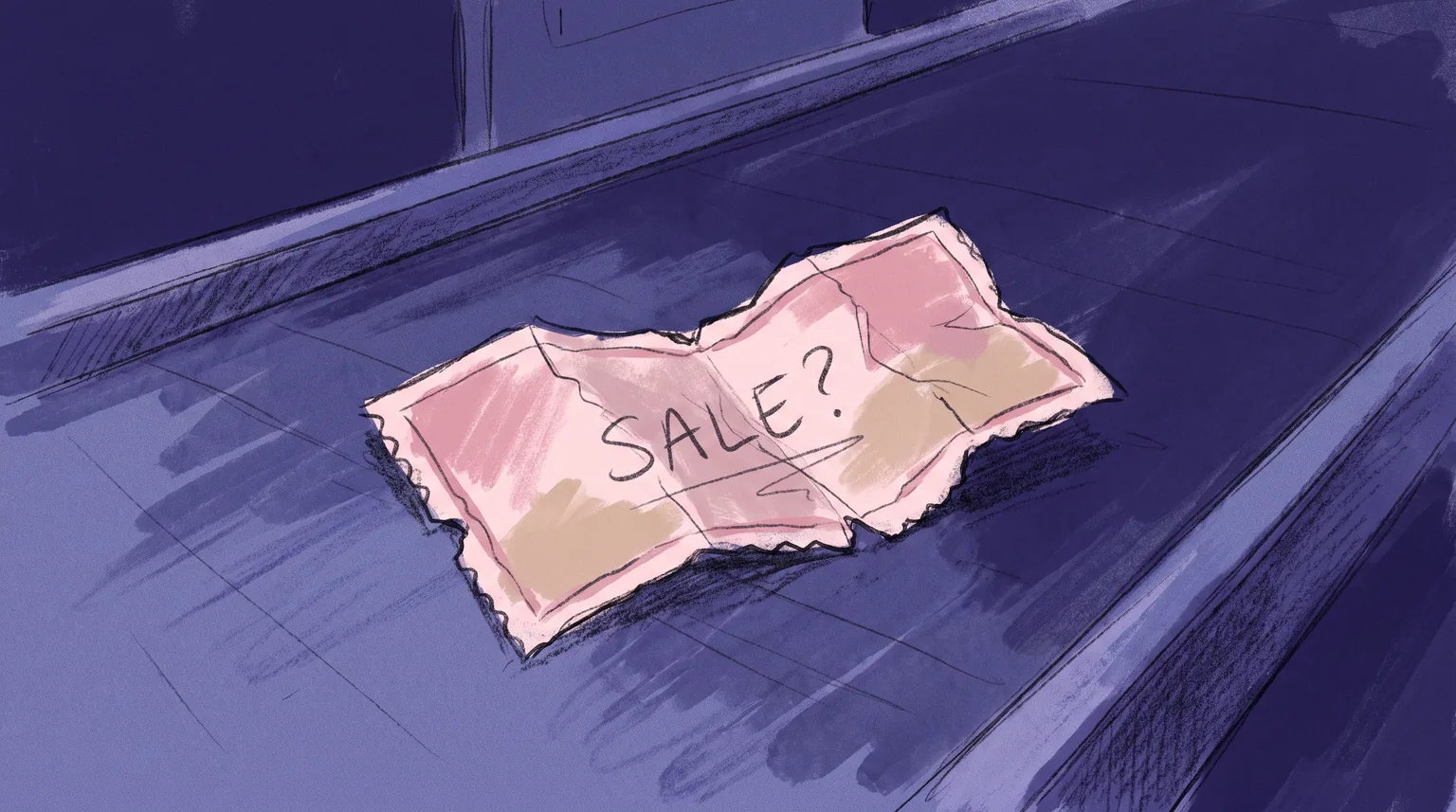
A major grocery chain prints 50 million paper coupons for a quarterly promotion. Less than 1% get redeemed. The rest end up in landfill, recycling bins, or the bottom of a junk drawer next to expired takeout menus.
Now picture a mid-sized apparel retailer running the same promotion. No printing. No inserts. Just a link that drops the offer straight into a customer's Apple Wallet or Google Wallet. Redemption lands between 12 and 18%. Print cost: zero.
That gap isn't luck. It isn't a fluke of one clever campaign. It's infrastructure.
Paper coupons are a broadcast tool, not a loyalty tool. You print, you distribute, you hope. Wallet passes work differently. A pass lives on someone's phone. You can update it server-side, fire a notification when the customer walks near your store, and log every single scan. It behaves less like a coupon and more like a CRM touchpoint you happen to hand out.
This post goes past the surface pitch. We'll look at what the redemption data actually shows, why the architecture matters, and what specifically separates a wallet pass program that hits 20% redemption from one that lands at 3%.
The paper coupon is dying. Here's what the numbers actually say
The decline isn't subtle. Free-standing insert (FSI) coupon distribution, those glossy sheets stuffed into your Sunday paper, has dropped more than 40% since 2015 according to Inmar Intelligence. And the redemption rate? Stuck below 1% for over a decade. Kantar's tracking tells the same story year after year.
Here's what makes it worse: the print cost is only the visible part of the bill. Add design, distribution logistics, and fraud losses estimated north of $300 million annually in the US alone. Then factor in the operational drag of manual POS reconciliation, cashiers keying in codes, stores mailing back stacks of clipped coupons for clearinghouse processing. It's an expensive, inefficient system from end to end.
So retailers went digital. Email coupons became the assumed upgrade. But email has a hard ceiling. Retail open rates hover around 20 to 25%. Click-through sits between 2 and 5%. And a PDF coupon in an inbox invites two familiar problems: screenshot fraud and forwarding abuse. One loyal customer shares a code in a family group chat and suddenly your "targeted" offer belongs to fifteen people who were never in your segment.
Here's the tension nobody names. Retailers digitized the delivery of coupons. They never digitized the experience. A PDF in your inbox is a paper coupon with extra steps. You still have to remember it, find it, and show it.
A wallet pass is the genuine structural shift. It lives in the device's native wallet app. You can update it after issuance. It can trigger a notification based on location. And every scan feeds back into your analytics. That last part is the bridge to everything else, so let's look at how these passes actually work.
How wallet pass coupons actually work (and why that architecture matters)
Strip away the jargon and a wallet pass is a structured JSON payload. Apple calls its framework PassKit. Google has the Google Wallet API (formerly the Google Pay API for Passes). Both render the pass natively on the device. No app download. No install prompt. The pass just appears in the wallet the customer already has.
For a marketer or PM, three capabilities make this format fundamentally different from paper or email.
First, push updates. You can change the offer, extend the expiry, or swap an image without reissuing anything. The pass on the customer's phone updates itself. Try that with a printed coupon.
Second, geofencing. A pass can trigger a lock-screen notification when the customer's device enters a defined zone around your store. No separate push permission needed beyond adding the pass.
Third, redemption scanning. When a barcode or QR code gets scanned at the register, that event can fire a real-time webhook. The attribution loop closes. You know who redeemed, when, and where.
The distribution funnel is refreshingly simple. You deliver the pass via a URL. That link can live in an SMS, an email, a QR code printed on a receipt, or a sticker on product packaging. The customer taps "Add to Wallet." Done.
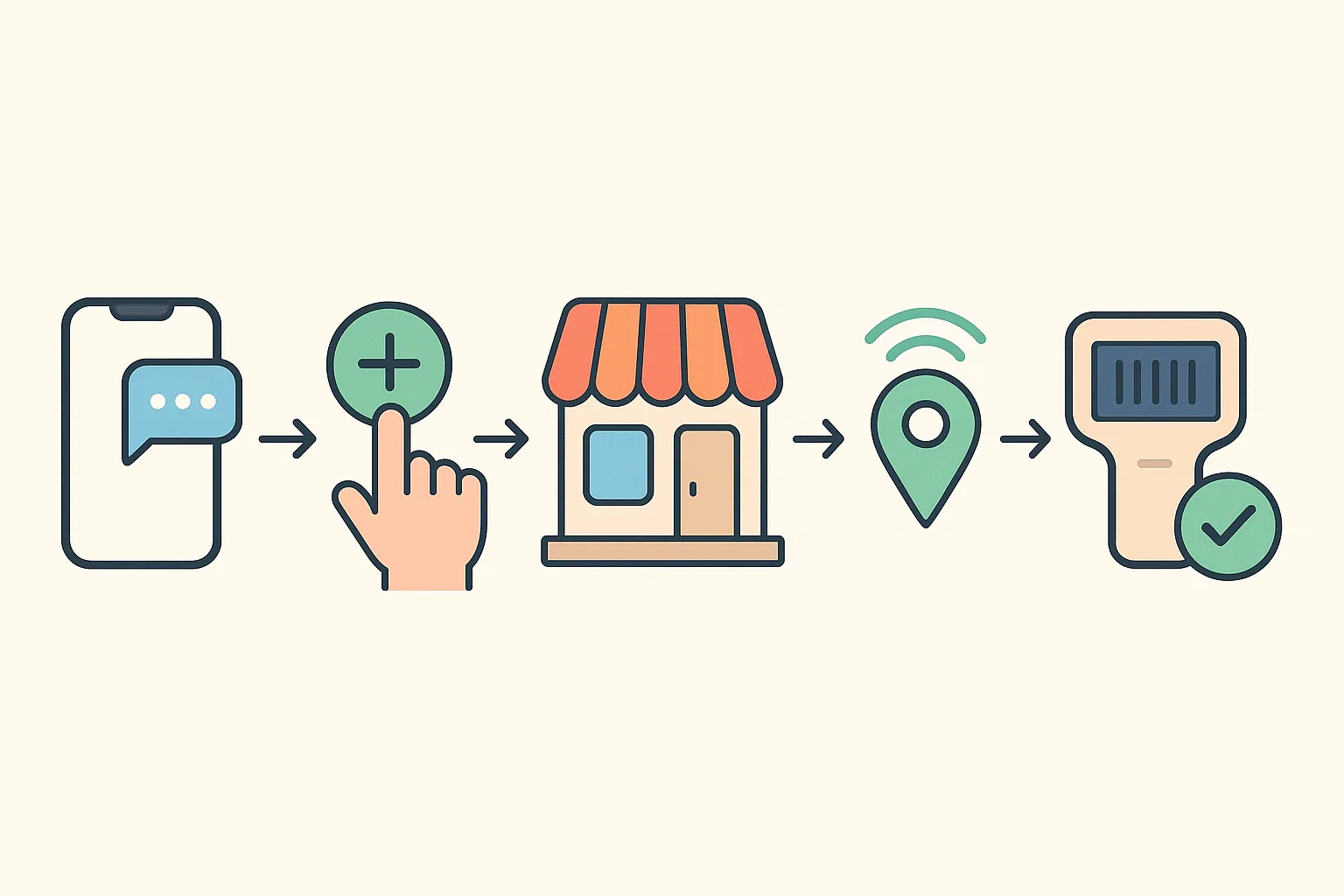
And the install base removes the usual adoption excuse. Apple Wallet ships pre-installed on every iPhone, over a billion active devices worldwide. Google Wallet is pre-installed on hundreds of millions of Android devices globally. You're not asking customers to learn a new habit. You're meeting them inside a tool they already open several times a week.
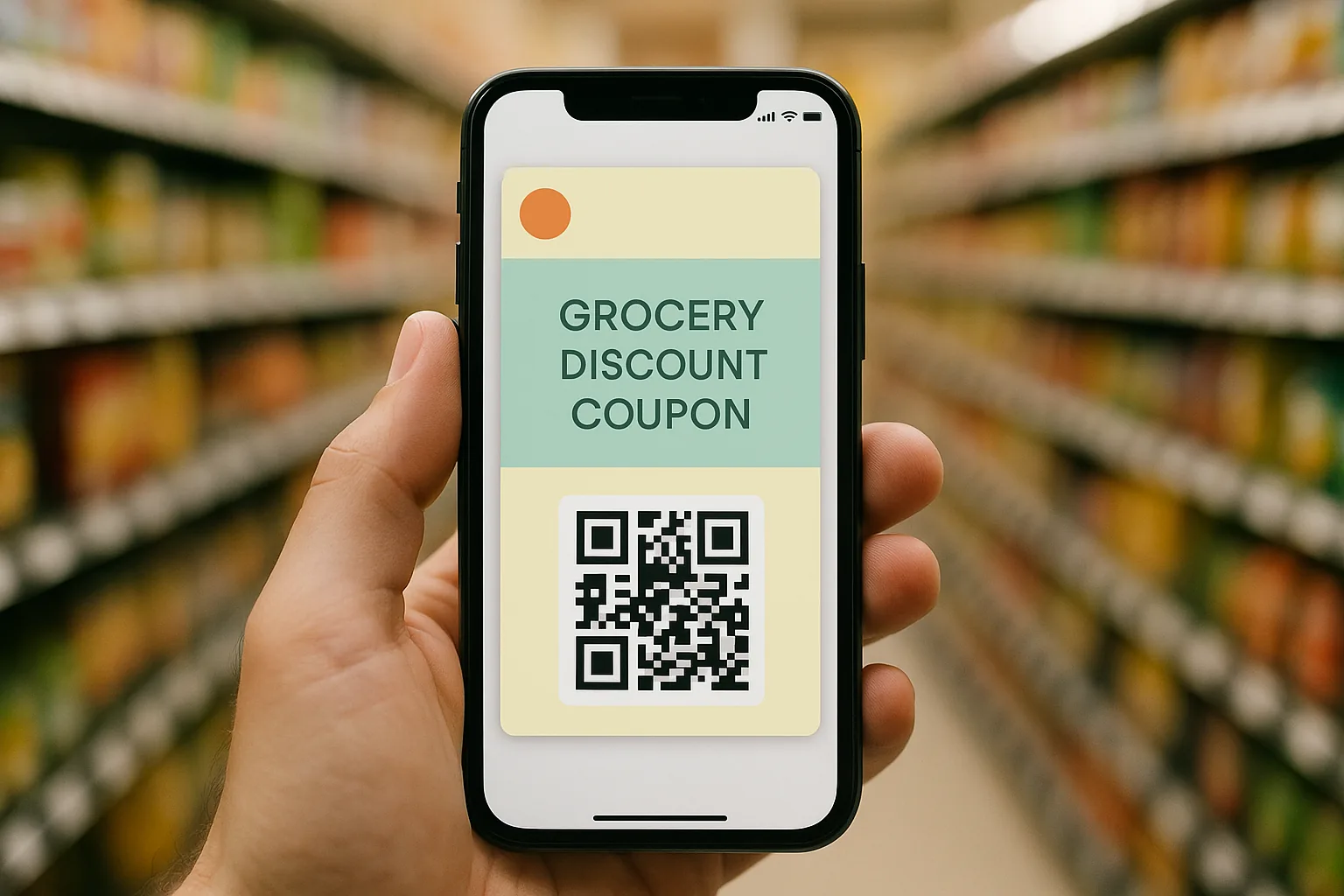
The redemption data: what wallet passes deliver that paper can't
Wallet pass coupon redemption rates consistently land between 10 and 25% across retail verticals. Compare that to sub-1% for paper FSIs and 1 to 3% for email-delivered coupons. That's a 10 to 20x lift, and it rewrites the ROI math entirely.
This isn't a single-category quirk. Break it down and the pattern holds:
- Grocery: high frequency, loyalty-driven, roughly 15% average redemption on targeted passes.
- Apparel: lower frequency but higher average order value impact, around 12% on seasonal passes.
- Home goods: longer consideration cycles, but geofence notifications show a strong effect near big-box locations.
Then there's cart abandonment recovery, one of the most underrated use cases. Retailers who issue a wallet pass at the abandoned-cart moment, embedded in the recovery SMS or email, report 8 to 14% recovery rates on transactions that were otherwise gone. The reason is persistence. An abandoned-cart email gets buried within an hour. A pass sits in the wallet, and the geofence re-engages the customer when they're physically near the store.
Time-decay expiry logic adds another lever. Passes with a visible countdown timer, updated dynamically through server push, show a measurable spike in redemptions during the final 48 hours. Urgency mechanics that email can only fake by resending the same message and annoying everyone.
And the attribution advantage is the quiet winner. Every redemption generates a timestamped, device-linked event. You can measure redemption by campaign segment, store location, and day of week, then correlate it with basket size. Paper coupons never gave you that. Ever.
Vertical deep-dive: how a mid-sized apparel retailer rebuilt its coupon program
Let's make this concrete with an illustrative case. Picture a mid-sized apparel chain: 200 stores, a solid loyalty base, and a quarterly email coupon blast they've been running for years.
The before state. The blast went to 2 million subscribers. Open rate: 22%. Click-through: 3.1%. Redemption: 1.8%. Screenshot fraud was rampant, with an estimated 30% of redeemed codes forwarded to people who weren't even loyalty members. And after the campaign ended, they had zero data on basket composition. They knew a code was used. They knew nothing else.
The transition decisions. They moved to segmented pass issuance, where loyalty tier determined both the pass design and the offer value. They used dynamic updates to adjust the offer mid-campaign based on early redemption signals. And they set a geofence radius of 500 meters around each store.
The after state. Over a 60-day campaign, redemption hit 18.4% on passes that got added to the wallet. Geofence notifications achieved a 34% open rate, with 11% converting to a same-day in-store visit. Fraud dropped to near zero because each pass was unique and single-use, invalidated the moment it was scanned. And for the first time, the retailer could see which store locations were underperforming.

The strategic lesson matters more than the numbers. The lift didn't come from the channel switch alone. It came from pairing the channel with segmentation logic, expiry urgency, and closed-loop attribution. A wallet pass issued with no strategy performs like a digital paper coupon. The architecture enables the strategy. The strategy drives the results.
Location-based notifications: the feature retailers are underusing most
If there's one capability that separates wallet passes from every other coupon format, it's geofencing. It's also the most ignored. Most retailers who issue passes never configure geofencing at all, which means they leave the highest-intent touchpoint completely untouched.
The mechanics are straightforward. Apple Wallet supports up to 10 geofence locations per pass, each defined by latitude, longitude, and a radius. When the device enters the zone, a native lock-screen notification fires. No app required. No extra push permission beyond adding the pass.
The performance gap is stark. Standard promotional push notifications from retail apps average 2 to 5% open rates. Wallet pass geofence notifications have been reported to significantly outperform standard push, often coming in at 28 to 40% in operator-reported data. Why the difference? They fire at the moment of physical proximity. The customer is already in the decision-making context.
Grocery is the strongest example. A customer holds a wallet pass for $1.50 off olive oil. As they pull into the supermarket parking lot, a notification appears on their lock screen. The coupon is already in their wallet. The friction to redeem is basically nothing.
But calibration is everything. Set the radius too wide, say 1 kilometer or more, and notifications fire when people are just driving past. They dismiss it, get annoyed, and eventually delete the pass. Set it too narrow and the trigger fires inside the store when the customer has already committed to their basket. For many retail formats, practitioners report a sweet spot between 100 and 300 meters, tuned by store type and surrounding retail density.
What separates high-performing wallet pass programs from mediocre ones
So you're sold on the channel. Here's the checklist to make sure you actually hit your targets instead of quietly building a digital paper coupon.
Segmentation logic. Offer relevance is the biggest predictor of redemption rate, full stop. Retailers who blast a single pass to their entire database consistently underperform those who segment by purchase history, loyalty tier, or geography. Wallet passes support multiple concurrent campaigns. Use them.
Expiry design. A pass with no visible expiry gets treated as permanent, which means it gets deferred forever. A pass with a hard expiry date, dynamically updated with a countdown visible right on the pass face, drives urgency. Practitioners report a reliable pattern: open with a 21 to 30 day window, then push an update at T-minus-7-days to reinforce the deadline.
Dynamic content updates. This is the most powerful feature and the most ignored. High-performing programs use server-side updates to personalize the offer after issuance based on behavior, swap in a secondary offer when the primary is near sell-through, and extend expiry for high-value segments who haven't redeemed yet.
Redemption webhook integration. A program without POS webhook integration has no closed loop between issuance and redemption. The webhook feeds data back into your CRM and enables real cohort analysis. Retailers who close this loop report significantly better campaign optimization in later cycles compared to those relying on plain coupon-code matching.
The pass is the vehicle. Strategy is the engine.
Go back to where we started. Fifty million paper coupons. Sub-1% redemption. A landfill's worth of glossy inserts nobody clipped.
Now hold that against what the data shows: a coupon infrastructure that is measurable, updatable, fraud-resistant, and able to reach customers at the exact moment they're standing in your parking lot with the right offer already in their pocket.
This isn't cosmetic digitization. Moving from paper and email to wallet passes is a structural upgrade to how coupons work as a marketing channel.
But an honest caveat closes the case. The channel alone doesn't produce the results. The retailers hitting 15 to 25% redemption aren't just issuing passes. They pair them with segmentation discipline, expiry urgency, careful geofence configuration, and closed-loop attribution. The pass is the vehicle. Strategy is the engine.
If you're ready to move past the paper coupon model, or you want to figure out why your existing wallet pass program isn't hitting its targets, Passmint gives you the starting point. Try the pass builder, read through the API documentation, and check the case study library to see what a well-built program looks like in practice.
Primary sources
Common questions
Technical content writer, Passmint
Julio is a technical content writer at Passmint. He writes about Apple PassKit, the Google Wallet API, and what breaks when wallet passes meet production traffic.
More from Julio Song →